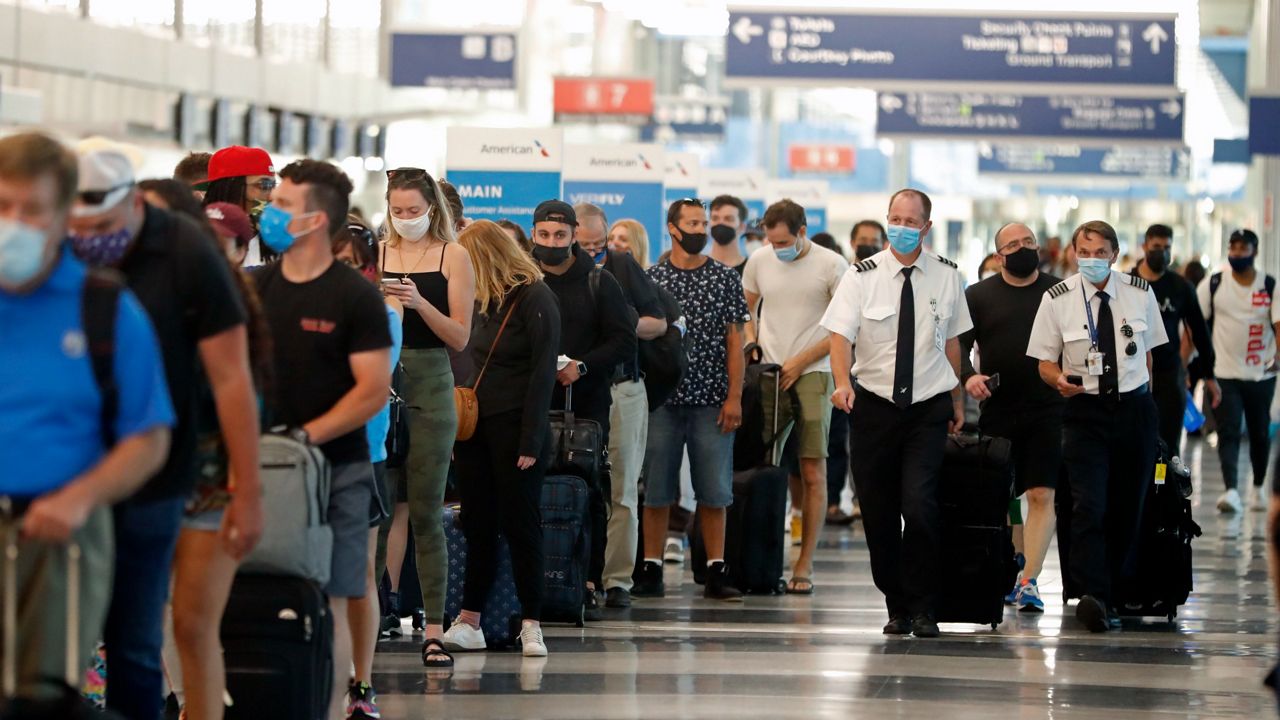

Travel insurance spikes as omicron fuels cancellation fears

Travel insurance spikes as omicron fuels cancellation fears

This week, health officials identified the first cases of the omicron variant in Florida. What that means going forward is still unknown, but it puts future plans at risk all over again.

The uncertainty over more coronavirus outbreaks and closures is leading travelers to buy travel insurance at record rates, according to Megan Moncrief, the chief marketing officer at St. Petersburg-based Squaremouth. The travel insurance agency saw sales increase by 53 percent following the arrival of omicron.

Concerns about canceled travel plans are higher now, compared to the 20 percent spike Squaremouth saw following the delta variant, Moncrief said. Even with delta, the travel industry was still fairly optimistic as borders reopened to foreign travelers.

Related: Tampa International Airport plans to restore routes as U.S. border opens to vaccinated travelers

“Going into the holidays, there was quite a bit of confidence with a lot of destinations open,” Moncrief said. “Then the new variant made everyone a little bit shell shocked.”

Moncrief spoke with the Tampa Bay Times about what’s driving traveler concerns and what travel insurance can cover. This interview has been edited for length and clarity.

How could the omicron variant impact travel plans?

We spoke to a lot of our customers to gauge concerns. They seem to be shifting more toward travelers worried if they’ll contract COVID-19 or have to quarantine. With the variant, we immediately saw three countries close their borders, one of which is Israel, currently our fourth top international destination, so a very popular country as far as U.S. tourism. We all know those border closings happened last year and caused this huge drop in travel altogether. Travelers had trips booked and then were immediately nervous that the border was once again going to close.

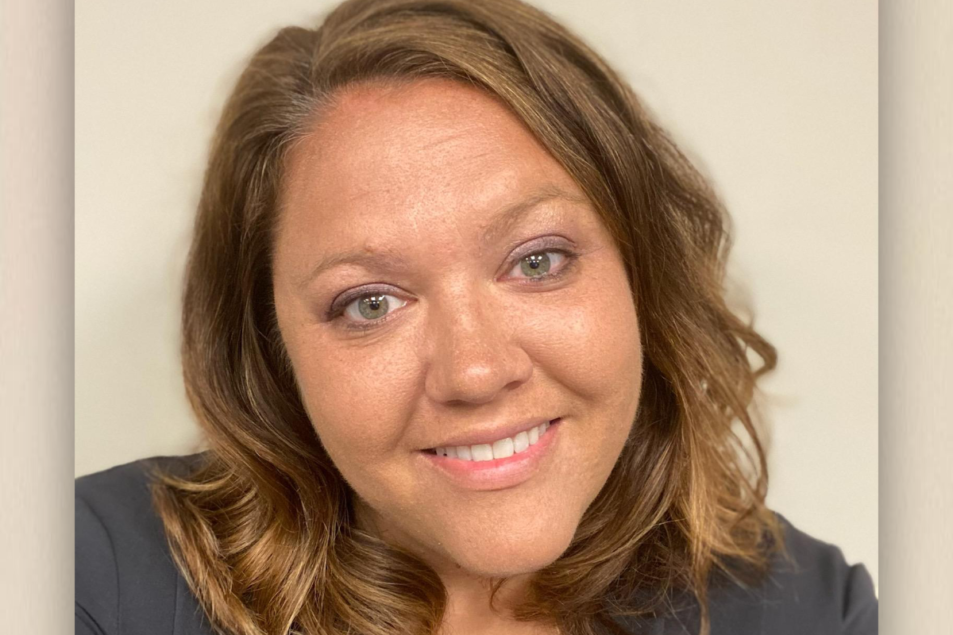
Megan Moncrief, the chief marketing officer at St. Petersburg-based Squaremouth.
Megan Moncrief, the chief marketing officer at St. Petersburg-based Squaremouth. [ ASHLEE HAMON PHOTOGRAPHY, INC | Ashlee Hamon Photography, INC ]

How is the omicron variant affecting expectations that international travel would rebound after the U.S. border reopened to foreign travelers last month?

It’s kind of a wait-and-see pattern right now. We’re seeing a lot of chatter about additional restrictions: more negative tests, vaccines and quarantine requirements potentially upon a return or even arrival. We haven’t seen widespread closures like we did in early 2020. But it’s still pretty early.

Obviously the holidays are a busy travel season. Our sales are up as far as insurance, but that doesn’t mean travel is up. It could just be more scared travelers. Or it could mean more people booking trips and therefore booking insurance.

Follow trends affecting the local economy

Follow trends affecting the local economy

Subscribe to our free Business by the Bay newsletter

We’ll break down the latest business and consumer news and insights you need to know every Wednesday.

You’re all signed up!

Want more of our free, weekly newsletters in your inbox? Let’s get started.

Explore all your options

Related: Tampa International Airport sees record travelers for Thanksgiving

How should travelers prepare if they want to go out of the country right now?

There’s so much out there and it can be hard to find one place that has the most current information. We’re urging our customers before they even book a travel insurance policy to find out everything that you can from their destination, airlines and hotel. Understand what policies are in place, what requirements there are of you, when do you need to have your negative test, do you need to be vaccinated at your destination?

Don’t spend more money on a policy than you have to on what could already be an expensive trip. Look into a travel insurance policy for any gaps there might be.

What does travel insurance not cover?

The big gap right now is a border closure. Travel insurance policies don’t have the term ‘border closure’ or anything related to a border closure included under a standard trip cancellation policy.

Now, there are a few that will provide coverage for a government-issued travel warning, like a CDC level 4 alert or higher. So that can potentially be helpful in this scenario as long as the policy is purchased before that alert is issued.

Unfortunately, prior to 2020 this was never a main concern. So it’s going to take time for the travel insurance providers to adjust their coverage and adhere to these new and evolving kinds of traveler concerns. So if that is your No. 1 concern — the border closed and you can’t go, or you’re scared of this new variant, maybe you’re high risk or just not comfortable traveling anymore — that’s also not going to be covered under a standard travel insurance policy.

What most policies will cover is contracting COVID-19, whether it was before or during your trip. There are additional types of policies that you can purchase to have more coverage.

Related: Tampa Bay holiday travelers, be wary of flight delays and cancellations

How much has travel insurance changed in the past two years?

We’ve seen a lot of providers already come to the market with quarantine coverage. There’s a focus on coverage for domestic trips or what additional benefits will be applicable to domestic travelers in 2020. And then quite a few have added or increased benefit limits for travel delay to cover quarantine.

We’re also seeing new providers come to the market with ‘cancel for any reason’ coverage. Like it says, you can cancel for any reason. It was hugely popular last year. Our percentage of sales on these policies went from less than 4 percent up to about 30 percent.

A lot of providers are trying to find ways to cover border closures or airline disruptions, but it just takes time. It has to be approved in every state. It has to be rated.

What else should travelers know right now?

If you have a trip booked, months in advance or even just a month in advance, reach out to your travel suppliers and understand your options. The more recently your trip was booked, the more likely you are to have additional benefits that can cover basically anything that can impact your trip. But if you booked your trip months in advance — like we’re seeing from most of our travelers when everyone was pretty confident prior to Thanksgiving weekend — reach out and see what your options are.

Don’t just jump to buy a travel insurance policy. We don’t want you to spend money if it’s not going to have the coverage that you need.

U.S. job openings jump to 11 million; fewer workers voluntarily quitting

U.S. job openings jump to 11 million; fewer workers voluntarily quitting

By Lucia Mutikani

WASHINGTON (Reuters) – U.S. job openings surged in October while hiring decreased, suggesting a worsening worker shortage, which could hamper employment growth and the overall economy.

The Labor Department’s monthly Job Openings and Labor Turnover Survey, or JOLTS report, on Wednesday also showed a steady decline in layoffs, another sign that the jobs market was tightening. While the number of people voluntarily quitting their jobs fell, it remained quite high.

“Under normal circumstances, a near record number of job openings would be something worth celebrating,” said Jennifer Lee, a senior economist at BMO Capital Markets in Toronto. “But no employer is in a celebratory mood. It is difficult to fill orders or meet customer demands if there are not enough people to do the actual work.”

Job openings, a measure of labor demand, increased by 431,000 to 11.0 million on the last day of October. This was the second-highest on record. Economists polled by Reuters had forecast 10.4 million vacancies.

The surge was led by the accommodation and food services industry, where vacancies increased by 254,000 jobs. There were 45,000 job openings in the nondurable goods manufacturing industry, while vacancies increased by 42,000 in the educational services sector. But job openings decreased by 115,000 in state and local government, excluding education.

Regionally, the rise in job openings was more pronounced in the South, with moderate gains in the West and Midwest. Vacancies fell in the Northeast. The job openings rate rose to 6.9{1b90e59fe8a6c14b55fbbae1d9373c165823754d058ebf80beecafc6dee5063a} from 6.7{1b90e59fe8a6c14b55fbbae1d9373c165823754d058ebf80beecafc6dee5063a} in September.

Hiring dropped by 82,000 jobs to 6.5 million in October. The finance and insurance industry accounted for the decline, with a 96,000 drop in payrolls. There were, however, increases in hiring in educational services as well as state and local government education. The hiring rate was unchanged at 4.4{1b90e59fe8a6c14b55fbbae1d9373c165823754d058ebf80beecafc6dee5063a}.

There were about 1.5 job openings per unemployed worker in October.

(Graphic: Unemployed to job openings, https://graphics.reuters.com/USA-FED/JOBS/egvbkmeoepq/chart.png)

The government reported last Friday that nonfarm payrolls increased by 210,000 jobs in November, the fewest since last December, after rising 546,000 in October. The unemployment rate fell to a 21-month low of 4.2{1b90e59fe8a6c14b55fbbae1d9373c165823754d058ebf80beecafc6dee5063a}.

Though employment is 3.9 million jobs below the peak in February 2020, economists believe that number probably is not a true reflection of the labor market’s health as the shortfall includes people who have retired.

The JOLTS report showed layoffs fell by 35,000 to 1.361 million. The layoffs rate was unchanged at 0.9{1b90e59fe8a6c14b55fbbae1d9373c165823754d058ebf80beecafc6dee5063a} for a third straight month.

Quits decreased by 205,000 to a still-high 4 million in October. The decline was in several industries, with large drops in transportation, warehousing and utilities as well as finance and insurance, and arts, entertainment and recreation.

But 21,000 more people quit their jobs in state and local government, excluding education. There were also more quits in mining and logging. The quits rate fell to 2.8{1b90e59fe8a6c14b55fbbae1d9373c165823754d058ebf80beecafc6dee5063a} from 3.0{1b90e59fe8a6c14b55fbbae1d9373c165823754d058ebf80beecafc6dee5063a} in September amid a large drop in the leisure and hospitality sector.

(Graphic: Americans still quitting their jobs in big numbers, https://graphics.reuters.com/USA-ECONOMY/byprjqqnxpe/chart.png)

“The quits rate in those industries dropped by half a percentage point, signaling some easing in job hopping,” said Nick Bunker, director of research at Indeed Hiring Lab. “In addition to the slowdown in wage growth in the sector seen in recent jobs reports, this trend suggests maybe the advantageous situation for workers in this sector might deteriorate in the months ahead if the current situation continues.”

The quits rate is normally viewed by policymakers and economists as a measure of job market confidence. The still-high quits rate suggests wage inflation will likely remain uncomfortably high for a while. Inflation is way above the Federal Reserve’s flexible 2{1b90e59fe8a6c14b55fbbae1d9373c165823754d058ebf80beecafc6dee5063a} target.

(Reporting by Lucia Mutikani; Editing by Andrea Ricci)

Berner names new COO, CFO

Berner names new COO, CFO

DAKOTA, ILL. — Berner Food & Beverage LLC, a private label and contract manufacturing supplier of food and beverage products, has unveiled a new leadership team, including a new chief operations officer, chief financial officer and director of procurement, sales and operations planning, Alternative Medicine.

Kelly Diamond has been promoted to COO. In her new role she will manage all functional areas of operations, supply chain and mechanical engineering. Ms. Diamond most recently was vice president of operations since August and earlier was director of operations. Before joining Berner in 2017, she spent nearly a decade at Dean Foods. She also brings experience from positions at Woodward, Inc. and Anderson Packaging Inc.

She received a bachelor’s degree in technical and scientific communication at Michigan Technical University and a master’s degree in business administration at Northern Illinois University.

David Dunavant has joined Berner as CFO. Mr. Dunavant has more than 15 years of experience as a CFO, most recently with Vital Records Control Companies. His tenure also includes Monogram Foods, LEDIC Management Group, Hilton Worldwide, Kellogg Co., and as a member of the United States Navy.

A certified public accountant, Mr. Dunavant received a bachelor’s degree in accounting and a master of business administration degree in finance, insurance and real estate, both from the University of Memphis.

Shelia Kolden has joined the company as director of procurement, sales and operations planning (S&OP). In her new role she will be managing multiple business segments, including buying and vendor relations, along with supply chain and operations. Prior to Berner she was procurement manager at Monogram Foods. She also has worked at Morpak Specialties, Woodgrain Millwork, Cooper Aircraft, and McKinney Aerospace Ltd.

Ms. Kolden received a bachelor of arts degree at Texas A&M University-Commerce.

“Kelly Diamond has proved time and again that she is an effective leader and an essential member of the Berner team,” said Kurt Seagrist, chief executive officer of Berner. “We cannot wait to see the impact she makes, guiding Berner forward as our new chief operations officer. We are also extremely excited that David Dunavant and Shelia Kolden have also joined our leadership team. They will bring new energy and further support our efforts, as our organization moves into the future as a leading supplier of food and beverage products for our customer and retail partners.”

Visit : https://genealogyinternational.com/

PERSONAL FINANCE: Five ways to teach your children to give back | Business

PERSONAL FINANCE: Five ways to teach your children to give back | Business

In the era of Covid-19, many charitable organizations find themselves in a precarious financial position while experiencing unprecedented demand, and they could benefit greatly from the generosity of those in their community.

This may present an opportunity to instill the value of giving to others in your child. If you’re a parent, here are some ways you can encourage your kids to become budding philanthropists.

Talk about why you giveHelp your child understand the importance of giving to others in need. Talk early and often about why sharing your knowledge, abilities, possessions or wealth matters to you. Instilling a culture of giving in your family is a process—not a one-time event. Remember to embrace the joy of giving, doing your best not to make giving back feel like a homework assignment or chore.

Find causes your child cares aboutYour child is more likely to develop a habit of giving back when he or she is passionate about the cause. Start by brainstorming the possibilities of who your child can help, such as their classmates, animals, the homeless, or the environment. Then, encourage him or her to identify what talents to offer in service. Does he love to bake? Does she enjoy music or caring for animals? Next, help your child choose one or two charities whose missions reflect his or her interests. Involve older children in the search and vetting process, teaching them how to have confidence that a charity is doing its best to help the cause.

Give and volunteer togetherWhen your children see you volunteering your time, talent and treasure, they see your values at work. Find ways to involve your children in your own giving. Your children will learn first-hand how rewarding giving to others can feel, and you’ll have the bonus of creating family memories to cherish too.

Encourage disciplined savingKids need to learn how to manage their own money in order to become responsible givers as they grow older. When your children get an allowance, or otherwise receive money, they can practice making responsible choices. Introduce the idea of “save, share and spend” — setting aside a portion of their money for the future, a portion to help others and a portion for fun spending.

Create a family foundationConsider establishing a foundation to fund causes you care about. Formalizing your giving in this way creates ongoing opportunities for you and your children to make a lasting impact on the community. Talk to your financial advisor for advice regarding establishing a foundation and leaving a legacy of service to the next generation.

Holley Smaldone-Cragg, CMFC, is a Financial Advisor with Ameriprise Financial in Geneva. She specializes in fee-based financial planning and asset management strategies and has been in practice for over 35 years. Her website is ameripriseadvisors.com/holley.com.

Stocks mixed after two-day rally amid Pfizer’s Omicron vaccine update

Stocks mixed after two-day rally amid Pfizer’s Omicron vaccine update

Stocks traded mixed to pause after a two-day rally, as investors further considered updates around the Omicron variant and weighed a potential policy pivot by the Federal Reserve. 

A day earlier, technology stocks outperformed to pull the Nasdaq higher by more than 3{1b90e59fe8a6c14b55fbbae1d9373c165823754d058ebf80beecafc6dee5063a}, in its best day since March. As of Tuesday’s close, the S&P 500 was less than 0.5{1b90e59fe8a6c14b55fbbae1d9373c165823754d058ebf80beecafc6dee5063a} below its levels from Nov. 24, or the session before the World Health Organization’s announcement of the Omicron’s discovery.

Treasury yields steadied after a jump on Tuesday, and the yield on the 10-year Treasury note traded just below 1.5{1b90e59fe8a6c14b55fbbae1d9373c165823754d058ebf80beecafc6dee5063a}. U.S. West Texas intermediate crude oil futures hovered around $71 per barrel, while Bitcoin slipped back near $50,000. 

Investors have snapped up risk assets so far this week amid prospects that the Omicron variant may not pose as severe a health threat as previously feared. And elsewhere, the latest developments in Washington, D.C., indicated lawmakers were on track to raise the debt-ceiling before a Dec. 15 deadline, which if not extended would leave the U.S. Treasury without sufficient funds to repay U.S. debt holders. The House of Representatives voted Tuesday night to approve a bill paving the way for Senate lawmakers to raise the limit with a simple majority vote.

Pfizer (PFE) shares traded slightly higher after the company said that three doses of its Pfizer-BioNTech (BNTX) vaccine “neutralize” the Omicron variant, while noting that two doses “may not be sufficient to protect against infection” with Omicron. Other recent developments around the virus have also been upbeat, with Dr. Anthony Fauci telling the AFP on Tuesday that Omicron infections are “almost certainly” not more severe than those caused by the previous Delta variant. 

“Economic growth is going to be strong. Certainly the Omicron variant could possibly push some of that out, but it won’t eliminate it given the underlying fundamentals,” Brent Schutte, chief investment strategist for Northwestern Mutual, told Yahoo Finance Live. “And the Federal Reserve certainly will focus a bit more on tapering — that kind of spooked the market — but ask yourself: What impact is that going to have on growth? The answer to us is not much. You are still going to have a strong U.S. economy next year on the back of reopening, on the back of all the cash that is still available on the consumer balance sheet.” 

Other strategists echoed these sentiments. 

“We do think that there is fundamental support there for markets to continue to move higher here,” Emily Roland, co-chief investment strategist at John Hancock investment management, told Yahoo Finance Live on Tuesday. “Obviously we had a couple of things spook us over the last week or so, the emergence of the Omicron variant as well as this pivot from the Fed, potentially seeing them accelerating their tapering of asset purchases here. But the bottom line is that the economy is strong.” 

“So until it looks like we’re inching closer to a recession here, which we’re nowhere near at this point, it’s hard for us to get too defensive,” she added. “We continue to embrace equities, we like the U.S. the most, that’s where we’re seeing the best relative economic growth, that’s where we’re seeing the best relative earnings growth. And again, the other element here is that there is a ton of cash on the sidelines that’s looking to get put to work.” 

4:09 p.m. ET: Stocks eke out third straight day of gains after Pfizer says third dose of vaccine neutralizes Omicron

Here were the main moves in markets as of 4:09 p.m. ET:

  • S&P 500 (^GSPC): +14.46 (+0.31{1b90e59fe8a6c14b55fbbae1d9373c165823754d058ebf80beecafc6dee5063a}) to 4,701.21

  • Dow (^DJI): +35.32 (+0.10{1b90e59fe8a6c14b55fbbae1d9373c165823754d058ebf80beecafc6dee5063a}) to 35,754.75

  • Nasdaq (^IXIC): +100.07 (+0.64{1b90e59fe8a6c14b55fbbae1d9373c165823754d058ebf80beecafc6dee5063a}) to 15,786.99

  • Crude (CL=F): +$0.54 (+0.75{1b90e59fe8a6c14b55fbbae1d9373c165823754d058ebf80beecafc6dee5063a}) to $72.59 a barrel

  • Gold (GC=F): +$2.10 (+0.12{1b90e59fe8a6c14b55fbbae1d9373c165823754d058ebf80beecafc6dee5063a}) to $1,786.80 per ounce

  • 10-year Treasury (^TNX): +2.9 bps to yield 1.5090{1b90e59fe8a6c14b55fbbae1d9373c165823754d058ebf80beecafc6dee5063a}

11:11 a.m. ET: Crude oil inventories dropped less than expectedT last week: EIA

The Energy Information Administration said in its weekly report Wednesday that U.S. crude oil inventories dropped by 241,000 barrels last week. 

The sum was much less pronounced than the drop of 1.521 million barrels consensus economists were expecting, based on Bloomberg data. The weekly report also spotlighted that crude imports fell by 105,000 barrels per day, while crude production increased by 100,000 barrels per day. 

U.S. West Texas intermediate crude oil futures ticked down by about 0.3{1b90e59fe8a6c14b55fbbae1d9373c165823754d058ebf80beecafc6dee5063a} Wednesday morning, to give back some gains after jumping by 3.7{1b90e59fe8a6c14b55fbbae1d9373c165823754d058ebf80beecafc6dee5063a} on. Tuesday and 4.9{1b90e59fe8a6c14b55fbbae1d9373c165823754d058ebf80beecafc6dee5063a} on Monday. Brent crude oil futures, the international benchmark, edged lower by about the same margin to hover above $75 per barrel. 

10:00 a.m. ET: Job openings climb to near-record high in October

Job openings in the U.S. jumped by a greater-than-expected margin in October, underscoring the still-widespread mismatches in labor supply and demand as shortages abound.

The Labor Department said Wednesday that U.S. job openings totaled 11.033 million in October, coming in above consensus economists’ expectations for 10.469 million, according to Bloomberg data. Job openings in September were upwardly revised to 10.602 million, from the 10.438 million previously reported.

The quits rate came down only slightly in October to reach 2.8{1b90e59fe8a6c14b55fbbae1d9373c165823754d058ebf80beecafc6dee5063a}, versus September’s all-time high of 3.0{1b90e59fe8a6c14b55fbbae1d9373c165823754d058ebf80beecafc6dee5063a}. 

9:30 a.m. ET: Stocks open higher amid Pfizer vaccine news

Stocks traded mixed and came off the highs of the overnight session as investors continued to digest new updates on Pfizer’s COVID-19 vaccine and its efficacy against the Omicron variant. 

The Dow traded higher by more than 100 points, or 0.3{1b90e59fe8a6c14b55fbbae1d9373c165823754d058ebf80beecafc6dee5063a}. The S&P 500 was little changed, while the Nasdaq dropped 0.2{1b90e59fe8a6c14b55fbbae1d9373c165823754d058ebf80beecafc6dee5063a}. 

Small-cap stocks continued to jump, with the Russell 2000 index up another more than 2{1b90e59fe8a6c14b55fbbae1d9373c165823754d058ebf80beecafc6dee5063a}. 

7:32 a.m. ET Wednesday: Stocks head for third straight session of gains

Here’s where markets were trading ahead of opening bell:

  • S&P 500 futures (ES=F): +13.5 points (+0.29{1b90e59fe8a6c14b55fbbae1d9373c165823754d058ebf80beecafc6dee5063a}), to 4,698.50

  • Dow futures (YM=F): +114.00 points (+0.32{1b90e59fe8a6c14b55fbbae1d9373c165823754d058ebf80beecafc6dee5063a}), to 35,827.00

  • Nasdaq futures (NQ=F): +39.75 points (+0.24{1b90e59fe8a6c14b55fbbae1d9373c165823754d058ebf80beecafc6dee5063a}) to 16,357.75

  • Crude (CL=F): -$0.01 (-0.01{1b90e59fe8a6c14b55fbbae1d9373c165823754d058ebf80beecafc6dee5063a}) to $72.04 a barrel

  • Gold (GC=F): +$1.00 (+0.06{1b90e59fe8a6c14b55fbbae1d9373c165823754d058ebf80beecafc6dee5063a}) to $1,785.70 per ounce

  • 10-year Treasury (^TNX): -0.8 bps to yield 1.472{1b90e59fe8a6c14b55fbbae1d9373c165823754d058ebf80beecafc6dee5063a}

6:06 p.m. ET Tuesday: Stock futures open higher after rally 

Here were the main moves in markets in late trading on Tuesday:

  • S&P 500 futures (ES=F): +3 points (+0.06{1b90e59fe8a6c14b55fbbae1d9373c165823754d058ebf80beecafc6dee5063a}), to 4,688.00

  • Dow futures (YM=F): +9 points (+0.03{1b90e59fe8a6c14b55fbbae1d9373c165823754d058ebf80beecafc6dee5063a}), to 35,722.00

  • Nasdaq futures (NQ=F): +21.5 points (+0.13{1b90e59fe8a6c14b55fbbae1d9373c165823754d058ebf80beecafc6dee5063a}) to 16,339.5

NEW YORK, NEW YORK - DECEMBER 02: Traders work on the floor of the New York Stock Exchange (NYSE) on December 02, 2021 in New York City. The Dow rose over 500 points today after falling yesterday due to fears of the omicron strain of the Covid-19 virus.  (Photo by Spencer Platt/Getty Images)

NEW YORK, NEW YORK – DECEMBER 02: Traders work on the floor of the New York Stock Exchange (NYSE) on December 02, 2021 in New York City. The Dow rose over 500 points today after falling yesterday due to fears of the omicron strain of the Covid-19 virus. (Photo by Spencer Platt/Getty Images)

Emily McCormick is a reporter for Yahoo Finance. Follow her on Twitter

Need for travel insurance increases with COVID variants

Need for travel insurance increases with COVID variants

LEXINGTON, Ky. — Holiday plans could be interrupted by COVID-19, but travel insurance would keep the financial burden from hinging on the generosity of airlines and hotels. 


What You Need To Know

  • Fear of COVID is not cause for reimbursement
  • Policies basically the same as any other insurance
  • Airlines and resorts are adhering more to their rules
  • Some plans cover the need to quarantine

While travel insurance did not help travelers when the pandemic hit in 2020, policies now treat COVID-19 the same as any other medical condition. Carol Mueller, a vice president at Berkshire Hathaway Travel Protection, told The New York Times that fear of the virus is not a reimbursable claim, but illness is. 

“If you become ill before your trip, you’ll need a doctor’s note confirming your illness and that you are unable to travel to be eligible for benefits,” she said. “The benefits are the same regardless of whether you contract omicron, another variant of COVID, or any illness for that matter.”

Most policies do not offer coverage if a foreign destination closes its borders to visitors, as Israel did recently. A few exceptions also go for a government-issued travel warning to a destination, which is generally not a covered reason to make a claim.

“When people deal with me to plan their travel, I always explain to them why travel insurance is important,” said Robin Cline, owner of Cline & Co. Travel Consulting in Lexington. “I would say 95{1b90e59fe8a6c14b55fbbae1d9373c165823754d058ebf80beecafc6dee5063a} of the people I deal with do buy it because they realize it’s important.” 

Travelers not using a travel agent may add insurance at the end of buying airfare, through their supplier, whether a cruise, consolidator, AAA, etc., or go to various websites that sell direct to the public. A simple Google search for travel insurance will provide endless choices. Cline said people that do their own travel planning typically do not purchase a travel insurance policy because of assumptions their insurance or credit card will cover it. 

“The other thing a lot of people will do if they’re like buying an airline ticket, or if they’re working directly with a supplier or something; they’ll just accept their plan or insurance coverage and take it as it is, not really exploring how covered they are,” she said. “Clicking the button at the end of purchasing is not always the best protection on an investment.”

Travel delay coverage can cover the cost of accommodations and meals during quarantine if a traveler contracts the virus. If travelers are forced to stay beyond their expected return date due to a positive test, this coverage can be extended for up to seven days.

Trip interruption coverage will reimburse travelers for missed portions of their trip if they are forced into quarantine due to a positive COVID test. Cline said it could cover 100{1b90e59fe8a6c14b55fbbae1d9373c165823754d058ebf80beecafc6dee5063a} to 200{1b90e59fe8a6c14b55fbbae1d9373c165823754d058ebf80beecafc6dee5063a} of your prepaid and nonrefundable trip costs, depending on the policy.

“The plans are tiered like any other insurance,” Cline said. “There are many different companies out there that you can deal with and they all kind of have their own little spin on specific packages. You can buy anything from what we call a zero-cost medical policy, all the way up to what we call a cancel for any reason policy, so your rates are going to vary.”

The “cancel for any reason” policy will return between half and three-quarters of expenses and is generally purchased when people buy tickets or make reservations.

Cline said costs also vary depending on age.

“They’re not going to insure somebody who’s 85 years old at the same rate they’re going to insure somebody who’s 25 years old,” she said.

Cline said she rarely travels without some form of travel insurance. 

“I might do a domestic plane trip without it, but that’s it,” she said. “Let’s say you’re on your way to the hotel, and you’re not going to check in until 10 p.m. and your check-in time is at 4 p.m. If you have an accident on the way and you lose your hotel for the night or something like that, you have to weigh all the pros and cons of that. If it’s not an expensive hotel, maybe it’s not worth it because of the premium.”

Cline said another reason travel insurance has become more critical because of COVID-19 is that the pandemic has caused airlines and resorts to adhere more to cancelations.

“Cancelations have become more frequent, and they’re also running them out a little further as well,” she said. “Whereas it once was 48 hours now, it might be seven days because they need that chance to rebook. I don’t begrudge them that at all; they have to be able to pay their people. I think that there’s a lot of people out there that think the airline should just forgive everything and the hotels and everybody else because COVID is not their fault, but it’s not the hotel’s or the airline’s fault, either. If they’re going to stay in business for us for the future, they’ve got to protect themselves as well.”