Remarks by Under Secretary for Domestic Finance Nellie Liang at the Atlantic Council on the Next Steps in the Future of Money and Payments

Remarks by Under Secretary for Domestic Finance Nellie Liang at the Atlantic Council on the Next Steps in the Future of Money and Payments

As Prepared for Delivery


Thank you to the organizers of today’s conference for inviting me to speak about next steps in the future of money and payments. 


Roughly one year ago, President Biden signed an Executive Order (EO) calling for a government-wide approach to the responsible development of digital assets.[1]  The goal of the EO is to promote responsible innovation, while also mitigating risks to users, the financial system, the economy, and national security.  Per the EO, Treasury prepared reports on the future of money and payments; current use cases of crypto-assets and their effects on consumers, investors, and businesses; and an action plan to mitigate the illicit finance risks of these assets.  The Financial Stability Oversight Council, which the Treasury Secretary chairs, published a report on the financial stability risks of digital assets and identified regulatory gaps.

Failures of large crypto firms, runs on stablecoins, and substantial investor losses in the past   year confirmed many of the concerns raised in the reports. Commingling of customer and firm assets, conflicts of interests, and a chronic lack of risk management, controls, and disclosure contributed to these episodes.  They reinforce the recommendations that were made for regulators to vigorously enforce existing laws to protect consumers, and for Congress to legislate to fill the regulatory gaps that have been identified, including with respect to regulation of stablecoins.  We also recognize that there are significant illicit finance risks related to crypto assets, and that the U.S. must continue to strengthen enforcement of existing illicit finance regulation, as well as continuously monitor whether emerging products or services require new regulations.


My remarks today will focus on the future of money and payments and, more specifically, on central bank digital currency (CBDC).  Central banks are at the heart of the global monetary system. Central bank money anchors the value of commercial bank money, and provides a risk-free asset for settling interbank transactions.  Central bank payment systems serve as the backbone for payment systems more generally.  Given the central bank’s key roles, changes in the design of central bank money and payments are likely to have profound implications for financial health of consumers and the economy.


CBDC is one of several options for upgrading the legacy capabilities of central bank money.  Another is real time payment systems:  The Federal Reserve has indicated that it expects to launch the FedNow Service this year, which will be designed to allow for near-instantaneous retail payments on a 24x7x365 basis, using an existing form of central bank money (i.e., central bank reserves) as an interbank settlement asset.  In contrast, a CBDC would involve both a new form of central bank money and, potentially, a new set of payment rails.  Both real time payment systems and CBDCs present opportunities to build a more efficient, competitive, and inclusive U.S. payment system. 


In the United States, policymakers are continuing to deliberate about whether to have a CBDC, and if so, what form it would take.  The Fed has also emphasized that it would only issue a CBDC with the support of the executive branch and Congress, and more broadly the public.[2]  Even as policy deliberations continue, we are engaging in the technological development of a CBDC so that we would be able to move forward rapidly if a CBDC were determined to be in the national interest. 


With that frame in mind, let me describe the steps we are taking to advance work on policy issues posed by the prospect of a U.S. CBDC, and to engage internationally to support responsible development of global CBDCs.


Advancing Work on Policy Issues for a U.S. CBDC

Treasury’s Report on the Future of Money and Payments called for a Treasury-led interagency working group to advance work on CBDC.  One of the central tasks for the Working Group is to complement the Fed’s work on CBDC policy issues by considering the implications of a U.S. CBDC for policy objectives for which a broader Administration perspective is helpful.  To give you a sense of how we are pursuing this work, I will describe our approach to thinking about CBDC options, the policy questions we are attempting to answer, and the kinds of recommendations we hope to develop. 


CBDC Options

As a digital form of a country’s currency, a CBDC would likely have three core features.  First, a CBDC would be legal tender.  Second, a CBDC would be convertible one-for-one into other forms of central bank money—reserve balances or paper currency.  Third, a CBDC would clear and settle nearly instantly.[3]  Beyond these core features, creating a CBDC involves many design choices.  An especially important decision is whether to have a wholesale CBDC, retail CBDC or, both.  In characterizing wholesale and retail options, we have found it useful to think about how each would differ from central bank reserves – in particular, whether the core differences relate to “technological features” or “access features,” i.e., the user base that is able to access the CBDC.


For wholesale CBDC, the basic difference from central bank reserves would relate to technology. For example, a wholesale CBDC could be a tokenized central bank lability, which potentially could support around-the-clock payment activity, atomic settlement of transactions, certain types of programmability, or other benefits.  By contrast, the access-related features of a wholesale CBDC may or may not differ from central bank reserves.  A wholesale CBDC could be accessible to the set of financial institutions that are currently eligible for central bank accounts, or to a wider range of financial intermediaries.  But while policymakers might consider granting access to a wholesale CBDC to institutions not currently eligible for central bank accounts, that decision would be an independent choice, rather than a necessary consequence of having a wholesale CBDC. 


Of course, technological differences between a wholesale CBDC and reserves could still have significant practical implications.  For example, a wholesale CBDC could support interbank settlement among commercial banks if they were to issue tokenized deposits, or provide a risk-free settlement asset for tokenized securities transactions.  A wholesale CBDC might also be used as a backing asset for stablecoins, which could make it easier to transfer value among stablecoins,  in addition to supporting greater interoperability and choice.   Depending on design, a wholesale CBDC may also enable more efficient cross-border payments by increasing the speed of settlement or through participation in new multilateral platforms for payments.[4]  At the same time, some of the potential benefits of a wholesale CBDC might also be possible through upgrades to real time payment systems, including interlinkages between real time payment systems in different jurisdictions. 


With retail CBDC, by contrast, the most important difference from central bank reserves is related to access features, not technology features.  Unlike central bank reserves,  a retail CBDC would complement, not replace, cash as a digital liability of the central bank that is accessible to the general public.   In its CBDC discussion paper, the Fed has stated that a potential U.S. CBDC, if one were created, would best serve the United States by being “intermediated,” meaning that the private sector would offer accounts or digital wallets to facilitate the management of CBDC holdings and payments.[5]  In terms of technology, a retail CBDC might involve a different architecture compared to a CBDC that is intended solely for wholesale use. 

A retail CBDC could contribute to a more competitive and innovative payment system; support financial inclusion; and help preserve the singleness of the currency.[6]  The extent to which a retail CBDC would promote these objectives would depend on many further design decisions, including decisions about the range of intermediaries that would act as service providers in the CBDC ecosystem, and the requirements to which those intermediaries would be subject. There are also risks of a retail CBDC, including the potential for runs into a retail CBDC that could destabilize private sector lending during stress periods.


Policy Questions for the CBDC working group

As I mentioned a few moments ago, the CBDC Working Group is intended to complement the Fed’s efforts by considering the implications of a U.S. CBDC for policy objectives for which a broader Administration perspective is helpful.  Those objectives fall into a few main areas.

The first set of objectives relate to global financial leadership, including the global role of the U.S. dollar.  This role confers both economic and strategic benefits on the United States.  Economic benefits include lower transaction and borrowing costs for U.S. households, businesses and government, while strategic benefits include influence over the architecture of the international financial system.[7]  In my view, global demand for the dollar stems from structural factors – such as our respect for the rule of law, the strength of our economy, and the depth, breadth, and openness of U.S. financial markets – that are fundamentally independent of whether the United States has a CBDC.  Nevertheless, we are thinking about whether a U.S. CBDC, to the extent it has functionality that traditional forms of central bank money lack, could help to preserve the dollar’s global role.  We are also thinking about whether a U.S. CBDC could help reduce undesirable frictions in cross-border payments or other activities.


The second set of objectives relate to national security.  The United States uses sanctions and other financial measures to address national security threats and deny criminals and other illicit actors’ access to the U.S. and international financial system. The effectiveness of these tools rests in part on the strength and centrality of the U.S. financial system and the role of the dollar.  Some have suggested that the development of foreign CBDCs, including multi-CBDC platforms, could diminish the use of the dollar and effectiveness of our tools in this space.  In addition, the U.S. and the global financial system benefit from secure and resilient payment systems that have strong cyber security protections and protect user data. Yet new payment systems, including foreign CBDCs, may be designed without appropriate consideration of cybersecurity and resilience measures. We are assessing the magnitude of these and other potential national security risks, and whether a U.S. CBDC or other tools could help to counter these risks.

The third set of objectives relate to privacy, illicit finance, and financial inclusion.  A U.S. CBDC would need to both protect the privacy of users and minimize the risk of illicit financial transactions.  In addition, given that the United States has the largest unbanked population among G-7 countries on a per capita basis and that payments are expensive for some users, a potential U.S. CBDC should be evaluated on whether it can promote inclusion and equity in the delivery of financial services. 


Across these three interests – global financial leadership; national security; and privacy, illicit finance, and inclusion – CBDC design choices are likely to involve trade-offs.  As an example, one way of reconciling privacy with illicit finance concerns in a retail CBDC might be to have a tiered structure in which less data is collected for small dollar transactions or small volume accounts.  But limits on the amount or number of transactions could make a retail CBDC less useful to end-users.[8]  This suggests a three-way trade-off among privacy, countering illicit finance goals, and inclusion.  The CBDC Working Group is focused on identifying such trade-offs and possible ways of reconciling objectives, including looking ahead to possible technological advances that could reduce the size of any trade-offs.

Next steps for U.S. CBDC

In the coming months, leaders from Treasury, the Federal Reserve, and White House offices, including the Council of Economic Advisors, National Economic Council, National Security Council, and Office of Science and Technology Policy, will begin to meet regularly to discuss a possible CDBC and other payments innovations.  To support these discussions, the CBDC Working Group is developing an initial set of findings and recommendations.  These may relate to whether a U.S. CBDC would help to advance the policy objectives described above; the features that a U.S. CBDC would need to advance these objectives; options for resolving CBDC design trade-offs; and areas where additional technological R&D would be useful.  Full consideration of these issues for a possible CBDC – wholesale, retail, or both – will take some time to complete, but the Working Group plans to provide interim public updates.  Also, as recommended in the Future of Money and Payments report, the Federal Reserve is encouraged to provide periodic public updates as it continues its research and technical experimentation on CBDCs.


Advancing Work on International Engagement

In addition to advancing work on the policy implications of a U.S. CBDC, another purpose of the CBDC Working Group is to engage with allies and partners to promote shared learning and responsible development of CBDCs. 


As others have observed, jurisdictions around the world are exploring CBDCs.  According to the Atlantic Council’s tracker, 114 countries, representing over 95 percent of global GDP, are exploring CBDC.  11 countries have fully launched CBDCs, while central banks in other major jurisdictions are researching and experimenting with CBDCs, with some at a fairly advanced stage.  The Bank of England (BOE) and HM Treasury (HMT) recently published a consultation paper assessing the case for a retail CBDC and outlining a proposed technological model.[9]  BOE and HMT now are entering the design phase of their work, estimated to take two to three years, after which the BOE and the UK government will decide whether to build “a digital pound.”  In addition, there are multiple cross-border CBDC pilots, which involve central banks, international organizations such as the Bank for International Settlements, and private financial institutions. 

Regardless of whether the United States decides to adopt a CBDC, the United States has an important set of interests in this work.   We have an interest in ensuring that CBDCs interact safely and efficiently with the existing financial infrastructure; that they support financial stability and the integrity of the international financial system; that global payment systems are efficient, innovative, competitive, secure, and resilient; and that global payments systems continue to reflect broader shared democratic values, like openness, privacy, accessibility, and accountability to the communities that rely upon them.


To inform global efforts to explore CBDCs, we plan to make contributions in two critical areas: international standard-setting, and technical expertise.


Engagement on standards

International standards help promote efficient and sound domestic financial systems and global financial stability.  They are both regulatory, like those standards developed by the Committee on Payments and Market Infrastructure at the Bank for International Settlements, and technical in nature, like those created at the International Organization for Standardization.  With respect to payments, these standards support technical, business practice, and legal and regulatory interoperability and alignment.  While CBDC-related technical standards such as digital identifiers and messaging formats may sound esoteric, they have important policy implications such as for privacy.  Governance standards, including those linked to participation in cross-border CBDC arrangements, are also critically important.  


Treasury is working closely with our colleagues at the Fed and in other parts of the U.S. government to ensure that U.S. interests are being effectively represented in standard setting processes.  Fortunately, we are not starting from a blank slate.  While CBDCs are themselves new, there are longstanding standards for financial activity, many of which can apply to CBDC no less than they do to legacy systems.  Global anti-money laundering and counter-terrorist financing standards, as set by the Financial Action Task Force, would apply to CBDCs, and the U.S. government is working bilaterally and multilaterally to encourage countries to apply and enforce the standards. We are also actively working with allies and partners to identify where new standards may be needed.  Our efforts to shape international standards are a key part of the framework for international engagement on digital assets that Treasury delivered to the President in July pursuant to the Digital Assets EO. 


As we develop standards for CBDCs, it is important to acknowledge that countries may make different CBDC design choices based on their policy goals, factors related to legacy payment systems, and other differences in national facts and circumstances.[10]  Especially in the context of a young technology, there are also likely to be opportunities to learn from a diverse set of approaches.  At the same time, there are significant benefits to supporting the interoperability of new payment systems, including CBDCs.[11]   We should continue to work with o[12]ur allies and partners during our exploration and development of CBDCs with these considerations in mind.


Sharing technology and technical expertise

In terms of sharing technology and technical expertise with other countries that are developing CBDCs, the Federal Reserve plays a key role.   This reflects the Federal Reserve’s expertise in developing and running payment systems, as well as the Fed’s existing relationships with central banks around the world.  Others also have important roles.  The National Science Foundation and the White House Office of Science and Technology Policy (OSTP) currently are leading an interagency process to develop a national R&D agenda for digital assets, including CBDCs.  As part of this process, OSTP recently published a request for information that, among other things, sought feedback on technologies that could protect the privacy of CBDC users while also preventing the CBDC from being used by bad actors.  As with other new technological innovations, beneficial innovations with respect to CBDC are more likely if we harness the expertise that exists across governments, universities, and the private sector.


Conclusion

In summary, U.S. policymakers are still evaluating whether a U.S. CBDC is in the national interest.  To advance further work and support the Federal Reserve’s efforts, evaluation, Treasury is leading an interagency CBDC Working Group to develop recommendations related to the implications of a U.S. CBDC for policy objectives for which a broader Administration perspective is helpful: global financial leadership; national security; and privacy, illicit finance, and inclusion.  Even as these deliberations continue, we recognize the importance of helping to shape global CBDC outcomes by actively participating in global standard setting initiatives and by sharing technology and technical expertise with other jurisdictions that are developing CBDCs.


###


[4] It is important to note, however, that frictions in cross-border payments reflect factors – such as differences in technical, business, and regulatory standards across jurisdictions — that new technology by itself would not automatically overcome.

[5] In addition to being intermediated, the Fed stated that a potential U.S. CBDC would best serve the United States by being privacy protected, identity verified, and transferable.  See Board of Governors, “Money and Payments,” in note 2.  Some of these principles might also apply to a wholesale CBDC. 

[6] Preserving the singleness of the currency would mean ensuring that money used in the U.S. economy is dollar-denominated and convertible at par from one form or issuer to another.  On the role of central bank money in supporting the singleness of the currency, see Committee on Payment and Settlement Systems, “The role of central bank money in payment systems” (August 2003).

[7] See Board of Governors, “Money and Payments,” in note 2.

Inside JPMorgan’s Asian job cuts

Inside JPMorgan’s Asian job cuts

JP Morgan has turn into the hottest massive financial institution to reduce careers in the Asia-Pacific region, but contrary to rivals it has stored redundancies to a minimum.

The US financial institution is comprehended to have created all around 30 men and women redundant, and resources say a lot of of the reductions impacting China-focused team based mostly in Shanghai and Hong Kong.

But whilst Goldman Sachs and Morgan Stanley have both equally reduce senior bankers, JP Morgan’s price tag-reduction workout has concentrated on a lot more junior employees.

Two sources claimed that the occupation cuts have afflicted team in fairness cash markets, as very well as business teams targeted on ‘new economy’ sectors these types of as health care, and technological innovation, media and telecoms, which have borne the brunt of the slide in offer exercise.

The bank would not remark on the seniority of individuals most influenced, or in which regions of the organization the cuts experienced arrive, but a spokesperson mentioned: “We regularly evaluate our enterprise desires and a small variety of staff across Asia Pacific have been affected.”

JPMorgan fell two spots to sixth in global China investment banking price tables previous year, while Goldman was second and Morgan Stanley was fourth, in accordance to Dealogic. It was rated fourth overall in APAC. 

Bankers say that more cuts could come depending on irrespective of whether deal activity returns in the initially quarter but proposed that any reductions would be a lot more in line with JPMorgan’s low-critical technique. One particular banker at a European organization stated:  “I really don’t assume you’ll see Goldman-fashion cuts, the place they fired 40 China bankers.  It will be on a substantially-scaled-down scale because China stays a prolonged-phrase motivation for US banking companies.”

Soaring Sino-US tensions around Taiwan and Beijing’s refusal to condemn Russia for its invasion of the Ukraine, have fuelled fears that US banking companies may well retrench, but lender bosses are hopeful of an upturn in deal-stream now that China has calm its Covid restrictions

In January, JPMorgan Chase CEO Jamie Dimon explained to Fox News that he does not see U.S. banks pulling out of China in the in the vicinity of upcoming, saying the U.S. govt sets foreign policy and American business needs to compete, “so we want to make absolutely sure regardless of what trade negotiations are beneficial to American business enterprise.”

Click on listed here to create a profile on eFinancialCareers. Make oneself obvious to recruiters choosing for finance and know-how jobs exactly where boomers share the awareness. 

Have a confidential tale, tip, or remark you’d like to share? Make contact with: sbutcher@efinancialcareers.com in the to start with occasion. Whatsapp/Signal/Telegram also available (Telegram: @SarahButcher)

Bear with us if you leave a comment at the base of this post: all our comments are moderated by human beings. In some cases these human beings may be asleep, or absent from their desks, so it could acquire a while for your comment to surface. Inevitably it will – unless it’s offensive or libelous (in which circumstance it will not.)

Picture by Andres Garcia on Unsplash

How to automate your personal finances

How to automate your personal finances

Number of factors are a lot more nerve-racking than funds. Among spending costs, buying necessities, investing for retirement, and saving up for a wet day, particular finance can feel like a complete-time occupation. But it doesn’t have to be. The greatest part about online banking is that all the things can be automated — even if you’re living paycheck to paycheck.

There are several added benefits to automating your income. You will usually pay back your costs on time, which in convert gets rid of late fees and shields your credit rating score. If you’re negative at saving dollars, you can immediately transfer a set amount for every week or thirty day period to a financial savings or retirement account. Budgeting sound like a overall nightmare? That can be automated, much too.

But although automating your finances can be handy, you nonetheless have to be intentional about it. The place of automation isn’t to be wholly arms-off. (That can basically harm you if you are not careful.) It’s much more that by automating your funds, you can shift your attitude from actively dealing with your income to passively supervising it.

Everyone’s requirements will be various, but listed here are a couple guidelines and guidelines to assistance you get begun. And, of study course, come to feel absolutely free to tweak what doesn’t function to superior match your life-style.

Figure out what you’re operating with

Right before you automate, you require to get stock of where you are at. Publish a record of any accounts you use on a regular basis. For most individuals, this’ll consist of examining accounts and credit score cards. For now, leave out anything that you keep an eye on or only sometimes interact with (e.g., discounts accounts, stocks, 401(k) accounts, etcetera.).

Subsequent, listing any every month expenditure you shell out for using a certain account and its thanks date. If it doesn’t have a thanks date, really don’t include things like it. For instance, involve utilities, hire, credit history card costs, and motor vehicle payments, but leave out your regular grocery expending.

When you are done, you must have anything like this:

Examining Acct: Hire (1st), renter’s coverage (17th), Credit score Card A (21st), Credit card B (30th), Student personal loan (25th)
Credit rating card A: Netflix (8th), Hulu (15th)
Credit card B: Car financial loan payment (30th), electricity bill (1st), pet insurance coverage (12th)

There’s a fantastic opportunity you have possibly automatic some of these payments currently. For case in point, most apps and solutions have you submit your credit score card data when you indication up for a membership. Loan companies also often offer incentives — like lower desire fees — for enrolling in autopay throughout set up as very well. But even if you are element of the way there, there are a couple of issues you can do to streamline your automatic payments.

  • Consolidate your invoice owing dates. Not every institution lets you transform your billing due dates, but the huge greater part do. That consists of credit history card issuers, utilities, and creditors. Some will permit you adjust dates on-line, whilst other individuals will need calling customer company or filling out paperwork. Rearranging thanks dates to the exact one particular or two times just about every thirty day period is a good transfer. It minimizes what you need to have to maintain observe of and gives you greater handle more than your cash stream. Say you are residing paycheck to paycheck — you can sync your most significant bills for the day just after payday to lessen the hazard of about-drafting.
  • Attempt not to demand your most crucial costs on credit rating. Credit history cards are beneficial instruments, but they can also be perilous. If you pay out your lease by card, for instance, you could find you paying desire on that hire though shelling out down your credit history card credit card debt. Same goes for loans that you’re previously spending fascination on.
  • Designate a single credit history card as the subscription card. This can be a headache up entrance, but accomplishing this will make it much easier to keep observe of all your subscriptions. (It also arrives in handy when you are seeking for what to lower.) That, and lumping all your subscriptions onto one particular credit score card — as opposed to a debit card — usually means you only have to spend when, regardless of when you’re billed.

Reminder: if these strategies never do the job for you, that’s fine. You have comprehensive management above how you break up up which accounts to pay out for which charges and when. The stage of this work out is to have a activity prepare penned down just before you start off automating.

Established up autopay, alerts, and reminders

Enabling autopay is a straightforward method, even though the steps will a little bit vary based on your financial institution or credit history card issuer. Normally, you can log in to your account both online or in the cell app. From there, you need to see a payments tab or menu that consists of autopay configurations. The identical goes for utilities and financial loan providers. If you have difficulties obtaining it, try moving into “autopay” or “automatic payments” into the site’s research bar.

For credit score cards, you’ll be prompted to website link to a examining account. At the time you do that, you can usually pick one particular of many payment options: your present-day balance, your very last assertion balance, the least payment, or a tailor made quantity. Select whichever you are most self-confident you can pay just about every month. If funds is restricted, you can choose for the minimum amount (or a customized sum) and make a single-off payments whenever you have some additional funds. Dependent on the issuer, you may then be prompted to established the payment date. Usually, it’ll quickly be paid on your due day (an additional explanation why it may possibly enable to consolidate thanks dates). And do not be concerned — you can normally go back and edit your configurations afterwards.

Most creditors, utilities, and banking institutions give autopay these days.
Illustration by Alex Castro / The Verge

The course of action is very similar for utilities. Again, it’s distinct for just about every provider, but utilities commonly have a Payments or “Ways to Pay” site on their internet sites. If they guidance autopay, you’ll discover stage-by-action guidelines there. Personal loan vendors and other varieties of creditors will very likely inspire you to set up autopay when you first use. But if you skipped that system, you can ordinarily discover it in the payments menu on the web page or within just the application. If not, hold an eye out for a “more” button or a few-dot icon near the “Make a Payment” button. Generally, you’ll uncover a “set up autopay” or “manage autopay” location there.

Alerts are an additional beneficial automation resource. Say you want to know if your examining harmony falls beneath $1,000. Most banks will let you established up textual content, e mail, or application alerts to immediately notify you when that happens. You can also choose into reminders for each time an computerized payment is coming up if which is a lot less anxiousness-inducing. Either is a terrific choice if you are worried about accidental more than-drafting. Account notify settings are usually found on the web or in-app in your Profile tab, underneath both Settings or a individual Alerts/Notifications menu.

Automate your spending plan

Expenditures aren’t the only points you can automate — it can assistance with creating up savings and with budgeting, much too. The course of action doesn’t have to be challenging, both.

Here’s a person straightforward approach for instantly allocating 50 p.c of your paycheck for rent and other expenditures, 30 {1b90e59fe8a6c14b55fbbae1d9373c165823754d058ebf80beecafc6dee5063a} for versatile expending, and 20 percent for discounts.

  • If you fork out your lease out of your existing checking account, open up a next checking account for discretionary shelling out and a significant-yield personal savings account for, well, price savings.
  • Call your company’s HR and inquire them how to possibly set up or edit direct deposit options for your paycheck. The reward of direct deposit is you can have your organization divvy up your paycheck for you.
  • Fill out the needed paperwork and mail 50 {1b90e59fe8a6c14b55fbbae1d9373c165823754d058ebf80beecafc6dee5063a} of your paycheck to your to start with checking account, 30 per cent to your 2nd checking account, and the relaxation to your discounts account. Most payroll software program will determine the exact total for you, so you can just place in percentages.
  • Starting up with your subsequent paycheck, every thing will be instantly budgeted with the specified amount in the correct accounts.

Alternatively, if you’d instead not deal with HR (or perhaps do not have an HR division), you can established up recurring transfers from your main checking account to your other accounts. Recurring transfers or payment configurations are typically in the Payments menu on your bank’s web-site.

You can make automatic budgeting and preserving as uncomplicated or elaborate as you like

You can make automated budgeting and saving as very simple or intricate as you like. For case in point, you can set up a number of examining and cost savings accounts for specific functions, like holiday vacation and emergency money. If you have received investment accounts, you can also established up recurring payments to them. It may well mean more prep get the job done and far more accounts to maintain an eye on, but some men and women appreciate the increased customizability.

Periodically assessment your set up

Automating admittedly includes a ton of perform upfront. But you can loosen up once it’s all done, correct? Well, certainly and no. You will not have to do as significantly, but it is even now very important to preserve an eye on how very well your process is doing the job and make adjustments as wanted. Circumstances adjust. Maybe you have a notably massive credit card invoice 1 month that involves you to change from paying out in whole to producing a lesser payment. Possibly a especially incredibly hot summer time causes your electric powered bill to soar. Whatever the motive, it is a great deal easier to tweak automatic funds than remembering to shell out and help you save manually.

Accelerate Change, Shaping Smarter Greener Finance Together

Accelerate Change, Shaping Smarter Greener Finance Together

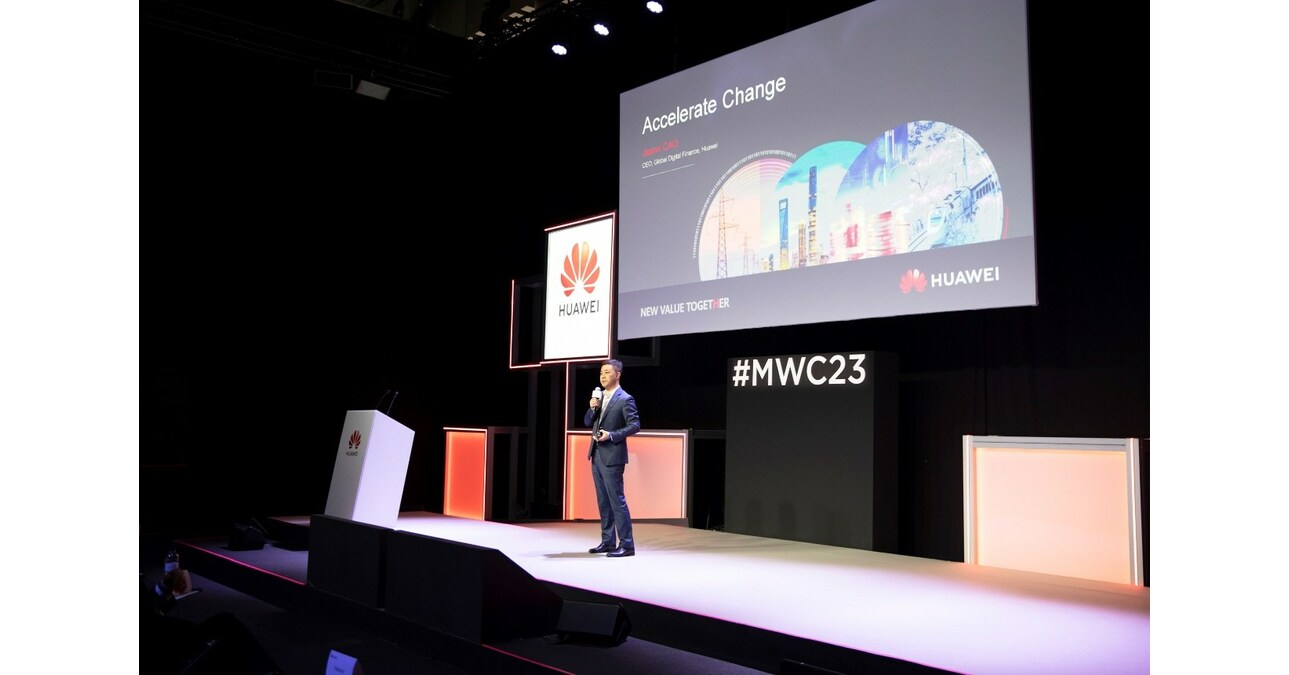
BARCELONA, Spain, March 1, 2023 /PRNewswire/ — A monetary marketplace discussion board titled “Speed up Change, Shaping Smarter Greener Finance Alongside one another” is productively held through the 2023 Cellular Entire world Congress (MWC 2023). World money consumers and associates collected to talk about the acceleration of know-how application and revolutionary enhancement of efficiency.

The world-wide economic system is now faced with a new norm. The finance sector is observing new changes. How do we accelerate the software of new technologies and innovatively improve efficiency? As Jason Cao, CEO of Huawei Global Digital Finance, said, “You will fully grasp if you analyze the craze, be clever if you abide by the development, and be a winner if you adapt to the craze.” Huawei strives to accelerate technology software in six fields, which include shifting from transaction to digital engagement, acquiring cloud-indigenous applications and information, evolving infrastructure to MEGA, industrializing facts and AI application, maximizing actual-time details evaluation, and transferring in direction of a reducing-edge AI brain. In this way, we help money clients accelerate changes, innovatively increase productivity, make productiveness visible, and pace up evolution in direction of the future.

To improve client interaction and practical experience, Huawei works with associates to rapidly build tremendous app platforms with general public cloud SaaS, driving the improvement of additional adaptable and agile digital products. With new purchaser acquisition, service, and interaction modes, Huawei will help fiscal establishments drastically decrease customer acquisition costs, accelerating business transformation from transaction to digital engagement. The thorough mobility and intelligence of monetary companies speed up the modernization of core purposes and knowledge, bringing cloud-indigenous advancement into actuality. Huawei employs really trusted infrastructure, cloud, GaussDB, and facts migration to assist Postal Cost savings Lender of China (PSBC) reform its core techniques and provide 650 million retail end users in a cloud-native way.

Information and AI are getting to be progressively inclusive, encompassing all services scenarios and processes. Huawei is committed to building a main details intelligence option to aid China Retailers Financial institution (CMB) acquire the cloud-native data system. This clever system will improve CMB’s conclusion-earning and small business operations in 3 ways: a better system, improved performance, and by masking extra situations. Accelerated authentic-time evaluation supports everyone’s use of details, unleashes the power of information, and allows quicker business enterprise advancement. Huawei constantly increases the NLP (All-natural Language Processing), CV (Laptop Vision), graph, and information computing styles which entail hundreds of billions of parameters. With extra computing electricity, a a single-stop AI system, and optimized massive info styles, Huawei accelerates the development of a strong AI mind, integrates AI into user knowledge and products, and extends innovations from solitary providers to the overall business approach and much more, allowing for inclusive innovation.

These modernized cloud-indigenous applications continually optimize person connections and touch factors. Meanwhile, via the collaborative innovation of storage, computing, community, and cloud systems, Huawei accelerates the evolution of infrastructure to MEGA (Multi-area Collaboration, Knowledge, Inexperienced, and Autonomous). This aids monetary institutions acquire digital infrastructure with superior general performance, availability, stability, O&M performance, and sustainability.

Digitalization is the potential. Huawei Digital Finance embraces transform and ongoing innovation as it dives deep into the finance sector. It adapts to the scenarios at hand, joins hands with prospects and companions, upgrades assistance capabilities, and delivers at any time a lot more modern options to speed up the application of new systems and innovatively boost productiveness for environmentally friendly, digital, and smart finance.

Up to now, Huawei has served around 2,500 financial buyers in extra than 60 nations around the world and areas, which includes 50 of the world’s leading 100 banking companies. For more data about Huawei’s digital finance alternatives, please visit: https://e.huawei.com/en/industries/finance

For media enquiries, remember to get in touch with [email protected]

Image – https://mma.prnewswire.com/media/2012426/image_986294_75759467.jpg

Supply Huawei

Axon Stock Lights Up On Big Earnings Beat, Taser News

Axon Stock Lights Up On Big Earnings Beat, Taser News

Axon, the provider of Tasers, physique cameras and cloud-primarily based software program to law enforcement, trounced Q4 earnings estimates right after Tuesday’s close and available upbeat guidance. Axon stock, which gained steam all through frequent buying and selling, rose solidly after several hours.


X


In late January, Axon (AXON) unveiled its next-technology Taser touted as a “large leap” in advance for the weapon that offers law enforcement a less-deadly choice to bullets. The Q4 earnings statement commenced to fill in some facts.

Axon mentioned the Taser 10 system will be gross margin neutral when manufacturing reaches scale in the next 50 {1b90e59fe8a6c14b55fbbae1d9373c165823754d058ebf80beecafc6dee5063a} of 2023, then increase revenue margins around time. Pricing will start at $50 for every person for every month.

Axon Earnings

Estimates: Analysts envisioned Axon earnings to improve 11{1b90e59fe8a6c14b55fbbae1d9373c165823754d058ebf80beecafc6dee5063a} to 51 cents a share, according to FactSet. Profits was seen increasing 41{1b90e59fe8a6c14b55fbbae1d9373c165823754d058ebf80beecafc6dee5063a} to $305.9 million.

Outcomes: Axon earnings for each share jumped 52{1b90e59fe8a6c14b55fbbae1d9373c165823754d058ebf80beecafc6dee5063a} to 70 cents. Revenue grew 54.5{1b90e59fe8a6c14b55fbbae1d9373c165823754d058ebf80beecafc6dee5063a} to $336.1 million, the next straight quarter of accelerating advancement.

Outlook: The firm expects profits of at least $1.43 billion, or 20{1b90e59fe8a6c14b55fbbae1d9373c165823754d058ebf80beecafc6dee5063a} progress, in 2023. Analysts had been forecasting $1.38 billion. Axon said it is really focusing on a gross margin of 20{1b90e59fe8a6c14b55fbbae1d9373c165823754d058ebf80beecafc6dee5063a} vs. 19.5{1b90e59fe8a6c14b55fbbae1d9373c165823754d058ebf80beecafc6dee5063a} in 2022. Money paying will range from $50 million to $65 million, such as Taser 10 automation and potential enlargement.

Axon also offered more time-term steering, declaring it is aiming for income of at least $2 billion in 2025 and altered EBITDA margins of 25{1b90e59fe8a6c14b55fbbae1d9373c165823754d058ebf80beecafc6dee5063a}.

AXON Inventory

Axon stock rose 2.8{1b90e59fe8a6c14b55fbbae1d9373c165823754d058ebf80beecafc6dee5063a} to 200.35 in Tuesday’s typical stock market motion. In after-hours trading, Axon inventory included a different 4.3{1b90e59fe8a6c14b55fbbae1d9373c165823754d058ebf80beecafc6dee5063a} to 209. If it retains, that will be a new 52-week superior. Axon stock’s all-time substantial of 212.37 came in February 2021.

Axon’s 4-7 days consolidation since it ran up to 204.99 on Feb. 2 is a bit small to rely as an formal foundation. Traders might use 201.07 or 205.09 as alternate entries.

Having said that, from a extended point of view, Axon inventory has created many runs that have stalled ideal about the 200 stage dating back to February 2021. It seems like that ceiling might finally give way.

Axon’s relative energy line, the blue line in IBD charts that tracks its progress vs. the S&P 500, had currently strike a 52-7 days substantial in advance of earnings, confirming its industry leadership.

Axon stock is portion of the flagship IBD 50 checklist of major shares.

Be confident to examine IBD’s The Major Picture every working day to remain in sync with the marketplace route and what it implies for your investing selections.


AutoZone Earnings Demonstrate Surprise Obtain Advance Auto Parts Also Beats


Taser 10 Advancements

The new Taser released in late January approximately doubles the range of prior weapons to 45 ft. It carries up to 10 probes vs. 4 for the Taser 7. The Taser 10 fires a single probe at a time. The Taser 10, with its individually focused probes, “drastically improves precision and efficiency, expanding the eventualities in which it can be applied,” Axon said in a information release.

In the meantime, its Taser 7 fires two probes at a time, which means an officer has just two attempts to thrive. With each units, two probes are necessary to land on their focus on to supply a demand that makes neuromuscular incapacitation.

Axon’s new Taser also builds in features to de-escalate confrontations. These involve a 1,000-lumen pulsing gentle and loud alerts to warn a topic to comply.

Lengthy-phrase, Axon sees a huge possibility in advertising Tasers not just to legislation enforcement and security staff, but also to individuals. The organization is working to make the Taser the defensive weapon of alternative, obsoleting the bullet.

YOU Might ALSO LIKE:

These Are The Most effective 5 Stocks To Acquire And Watch Now

Be part of IBD Reside And Understand Leading Chart-Reading And Investing Techniques From The Execs

Uncover The Very best Advancement Shares To Invest in And Observe

IBD Electronic: Unlock IBD’s High quality Stock Lists, Instruments And Analysis Right now

Futures Slide Just after Sector Closes Poorly Tesla Sets Up For Investor Working day

How Much Does Small Business Insurance Cost?

How Much Does Small Business Insurance Cost?

The cost of a business owner’s policy, which is a package of coverages that many businesses need, can start as low as $300 annually based on our team’s research. But the annual premium your business pays will depend on factors like your location and industry. The coverages you choose and any endorsements you add will also influence your cost. 

We’ll cover the types of business insurance you may need, the factors influencing their cost, and other common questions about getting business insurance so you can make the right decisions for your budget. 

How Much Is Business Insurance?

Insurers tailor their business insurance policies to individual businesses, and factors such as coverage type can influence pricing. However, many business insurance companies cite a starting premium used for lower-risk small businesses. Our data show a range of starting costs for the most common types of business insurance.

Type of Coverage Lowest Cost (per year) 
Business Owner’s Policy (BOP) $300 to $500
Professional Liability  $300 to $500 
General Liability  $200 to $381 

Here are the lowest premiums that some of the best small business insurance companies charge for a few different types of policies.

  Lowest Annual Premium for Small Business BOP Lowest Annual Premium for Professional Liability  Lowest Annual Premium for General Liability 
NEXT Insurance  $400 $300 $200
CoverWallet  $450  $500  $250 
The Hartford  $300  Not disclosed  Not disclosed 
BiBerk  $500  $300  $330 
Thimble  Not disclosed  $432  $263 
Hiscox  $500  $400  $381 

Cost is an important consideration when choosing an insurance company, but the cheapest option may not be the best fit for you. Companies’ ratings and customer reviews vary, some provide more digital tools than others, and some policies may have gaps in coverage while others come with needed endorsements. It’s important to consider all these factors when comparing business insurance quotes. 

Factors Influencing Cost

Industry or Profession

How much business insurance costs is based on the level of risk your business presents. For example, a construction company or restaurant will have many more liability risks than a retail store or office. Businesses that use expensive equipment will have higher commercial property costs, and businesses that own and operate vehicles will have additional commercial auto costs. Your business income will also impact the cost of business insurance and whether you qualify for a small business owner’s policy.  

Business Location

Some locations expose businesses to greater risks than others. If your business is in an area prone to natural disasters or high crime rates, you’ll likely pay more for commercial property insurance than if your business was in a low-risk area. Your cost will also depend on whether you rent or own your space as well as its size. State regulations, such as workers’ compensation insurance requirements, can also impact your costs. 

Claims History

Business insurers check your prior claims history to identify trends that may indicate your business is high-risk. If you’ve battled frequent lawsuits, your insurance company may charge you a higher premium because it may assume your business isn’t taking the right precautions to avoid risk. 

Number of Employees and Customers

If your business has employees, you’ll likely need workers’ compensation insurance. The cost will be based on the number of workers your business employs. Business insurance companies also look at your annual revenue when determining your premiums, since serving a large customer base and handling a high volume of inventory inherently exposes your business to more liability and property risks. 

Coverage Needs

When purchasing a business insurance policy, you’ll select the coverage options your business needs, add any necessary endorsements, choose your annual coverage limits, and choose your deductible. Choosing higher annual aggregate liability limits will increase your premiums, as will choosing a $0 deductible for your property insurance. 

Types of Business Insurance

  • General liability insurance: General liability insurance overs legal fees and judgments for lawsuits related to bodily injury, personal and advertising injury, and property damage as a result of non-professional negligence 
  • Commercial property insurance: Covers rebuilding, repair, or replacement of buildings and their contents and equipment after a covered peril, like a fire or vandalism
  • Business interruption insurance: Helps pay for ongoing expenses and debts as well as replace lost business income after a covered event, like a windstorm
  • Business owner’s policy: A business owner’s policy is a package of coverages that includes general liability insurance, commercial property insurance, and business interruption insurance
  • Professional liability insurance: A professional liability policy covers legal fees and judgments from lawsuits brought by customers claiming professional negligence, such as inaccurate advice or misrepresentation
  • Workers’ compensation insurance: Required in most states for businesses with a certain number of employees, workers’ compensation insurance pays for medical bills and lost wages if an employee is injured or becomes ill while working. It typically also protects the business from employee lawsuits related to the injury. 
  • Commercial auto insurance: Commercial auto insurance covers medical bills and repairs to property for the other party in an accident, and can also pay for injuries to the driver and physical damage to the vehicle owned by the business
  • Hired and non-owned vehicle insurance: Works like commercial auto insurance, except that it covers personal or rented vehicles operated for business purposes
  • Inland marine insurance: Covers inventory and equipment you transport to job sites or ship to customers
  • Cyber liability insurance: Cyber liability insurance covers liabilities, recovery of reputation and lost data, lost business income, and other consequences of a cyber breach

How To Save Money on Business Insurance

  1. Compare quotes: Some insurance providers may offer the coverage you need for less than others. So it’s important to compare business insurance quotes on a site like Tivly before choosing a company. However, bear in mind that price isn’t the only consideration. Make sure the company has good financial strength and customer satisfaction ratings.  
  2. Bundle your coverages: Many insurers offer bundling discounts when you buy two or more policies. You can also save by buying pre-packaged coverages, like the business owner’s policy. 
  3. Opt for a higher deductible: The deductible you choose represents your share of the financial responsibility for a claim. Choosing a higher deductible means you’ll have greater out-of-pocket expenses if a loss occurs, but it can save you money on your monthly premiums. 
  4. Be proactive about preventing losses: Since your claims history can affect your premiums, you should take steps to limit your risk. Your insurance company will likely have resources available and may even provide training to help your business prevent costly incidents. 
  5. Update your coverage as needed: Keep your insurance company informed about changes to your business. If you expand your service area, hire more employees, or acquire another entity, you’ll likely need to add more coverage to protect your business. If you need to lay off employees or close down a location, you should also update your coverage to save money on your premiums. 

How Much Is Liability Insurance for a Business?

The cost of liability insurance for a small business varies depending on the type of work your business performs, where your business operates, your past claims history, and the limits you choose for your policy. Some small, low-risk businesses may pay as little as $200 per year for general liability insurance and $300 per year for professional liability insurance.

How Much Insurance Coverage Should a Business Have?

The Small Business Administration suggests that businesses buy business insurance for anything they wouldn’t be able to cover on their own. The U.S. Chamber of Commerce notes that you should insure the full value of your business property and buy enough liability coverage to protect your assets, which means you’ll need higher limits for a sole proprietorship and less liability coverage for an LLC. One of the most popular options for small businesses is a business owner’s policy (BOP) with $1 million in coverage per occurrence for general liability coverage and a $2 million aggregate.

Is Business Insurance Required?

Legal insurance requirements for businesses vary depending on the industry and the city and state where you operate. For most businesses with employees, workers’ compensation insurance is required. For businesses that own vehicles and drive or park them on public roads, commercial auto insurance is required. Professional liability insurance is mandatory for legal and medical professionals in some states.

Is Business Insurance Tax-Deductible?

Generally, yes. IRS Publication 535 lists several types of business insurance that you can deduct from your taxable income, including commercial property insurance, health insurance for employees, general and professional liability insurance, workers’ compensation insurance, and business interruption insurance. However, you can’t deduct certain life insurance and annuity premiums, nor can you deduct self-insurance reserve funds.

What Is a Business Owner’s Policy?

A business owner’s policy is a package of small business insurance coverages that may vary from one insurer to the next but generally includes commercial property insurance, general liability insurance, and business interruption coverage. A BOP will not cover professional liability insurance; you’ll have to buy that coverage separately.

Do I Need International Business Insurance?

If your business operates in foreign countries, you’ll likely need international business insurance since most policies won’t cover events that occur overseas. Whether you have international employees, customers, or suppliers, your exposure to global liability risks makes it essential to purchase a global insurance policy or multinational endorsement.