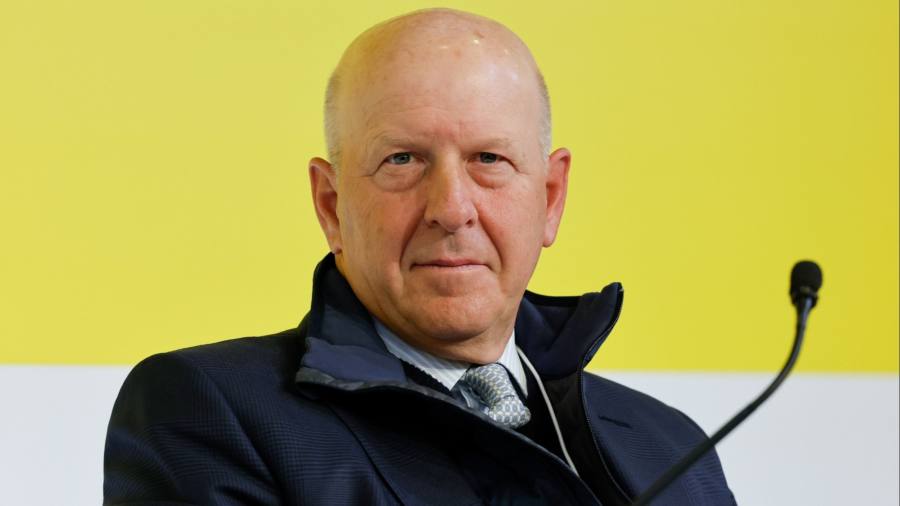
David Solomon told a private gathering of Goldman Sachs executives that he had erred by not cutting jobs earlier in 2022, according to people familiar with the remarks.
Speaking to about 400 Goldman partners at a closed-door meeting in Miami this week, the chief executive said he took responsibility for being slow to reduce headcount and pare back investment in new projects when it became apparent a significant business slowdown would happen.
“As the environment was growing more complicated in Q2 of last year, every bone in my body believed we should be much more aggressive in slowing hiring and reducing headcount,” Solomon said, according to one of the people with knowledge of the remarks.
Goldman waited until January to cut 3,200 jobs, roughly 6.5 per cent of its workforce, as part of the bank’s biggest cost-cutting exercise in years. Solomon acknowledged this would have been less drastic if he had taken action earlier.
Goldman’s net profits in 2022 fell almost 50 per cent from record earnings in 2021 on the back of sharply lower investment banking fees, markdowns at its asset management business and losses in its financial technology division.
A bank spokesperson said “it would have been unusual not to address the process on headcount reduction this year” at the partner meeting.
As the environment was growing more complicated in Q2 of last year, every bone in my body believed we should be much more aggressive in slowing hiring and reducing headcount
The job reductions followed rapid expansion as Goldman pushed into new businesses while also pausing an annual cull of the poorest-performing employees during the pandemic.
Solomon, who spoke to partners for around an hour, used his prepared remarks to stress the underlying strength of Goldman’s business in trading and investment banking, which have both gained market share in recent years.
“The hope is that through this meeting, we give the partners transparency and they feel empowered to go out and tell that story to the people they work with. I think we accomplished that,” Ericka Leslie, Goldman’s chief administrative officer and co-chair of the partnership committee, told the Financial Times.
Solomon also told partners that the number of leaks to the media about Goldman was damaging to the bank. He made the remark in response to a question, and it was not part of his prepared statements.
“David made the point that the leaks are damaging to the firm, and they are. I heard the same message from our partners all week,” the Goldman spokesperson said.
The comments reflect the difficulties Goldman has faced in the past 12 months as well as the torrent of critical media stories about the bank amid the job cuts and reductions to employee bonuses.
Goldman dispensed with its formal partnership structure in 1999 when it went public, but the bank still bestows the “partner” title on star performers and remains one of Wall Street’s most prestigious names.
Goldman has typically held partner meetings at least once every two years, in line with the biennial timeframe for naming new partners.
Last week, Goldman hosted the meeting in Miami over several days to discuss company strategy, hold training courses for newer partners and review presentations for Goldman’s forthcoming investor day, scheduled for February 28.
Solomon scheduled the shareholder event after reorganising the bank’s reporting structure in October. The changes included merging its crown-jewel businesses of investment banking and trading into one division and paring back its nascent digital retail bank.
Part of the pitch to shareholders at the February investor day will be highlighting the market share gains made over the past three years in investment banking and trading, according to the people familiar with the matter.
A move to re-emphasise Goldman’s legacy strengths could resonate well with the bank’s rank and file, some of whom have privately complained about Goldman’s focus on newer businesses such as retail banking.
Since taking over as Goldman CEO in 2018, Solomon has set goals of expanding market share in its existing businesses while also diversifying into newer areas such as consumer banking, wealth management and asset management.
Diversification into businesses which promise stable revenues could help Goldman attain a higher stock market multiple, with investors currently placing a lower valuation on the bank’s historical investment banking and trading strengths owing to their volatility.
The Miami meeting was scaled back compared with previous years, according to people with knowledge of the event, in a reflection of the more challenging economic conditions.
U.S. stocks ended sharply higher Thursday, led by technology shares as markets continued a comeback from steep losses earlier this week.
[Click here to read what’s moving markets heading into Friday, April 29]
The S&P 500 gained 2.5{1b90e59fe8a6c14b55fbbae1d9373c165823754d058ebf80beecafc6dee5063a}, and the Dow Jones Industrial Average jumped by more than 600 points, or 1.8{1b90e59fe8a6c14b55fbbae1d9373c165823754d058ebf80beecafc6dee5063a}. The tech-heavy Nasdaq Composite climbed 3.1{1b90e59fe8a6c14b55fbbae1d9373c165823754d058ebf80beecafc6dee5063a} to cap trading, marking its best rise since March on the heels of stronger-than-expected earnings from Facebook parent company Meta (FB) that sent shares up nearly 18{1b90e59fe8a6c14b55fbbae1d9373c165823754d058ebf80beecafc6dee5063a}.
Investors weighed fresh data out of Washington D.C. that showed U.S. economic activity unexpectedly contracted at the start of 2022 for the first time in nearly two years as lingering supply chain imbalances, inflationary pressures, and war in Eastern Europe weighed on growth. First-quarter U.S. gross domestic product (GDP) fell at a 1.4{1b90e59fe8a6c14b55fbbae1d9373c165823754d058ebf80beecafc6dee5063a} annualized rate after a 6.9{1b90e59fe8a6c14b55fbbae1d9373c165823754d058ebf80beecafc6dee5063a} pace of growth at the end of 2021.
“The latest snapshots of economic data remind us of the volatile and complicated times in which we live,” Bankrate Senior Economic Analyst Mark Hamrick said in an emailed note.
With just three trading days left in April, the typically-bullish month is on pace for its worst performance since logging a 9.0{1b90e59fe8a6c14b55fbbae1d9373c165823754d058ebf80beecafc6dee5063a} drop in 1970, according to data from LPL Financial Research.
“The usual suspects of a slowing economy, a hawkish Federal Reserve Bank, supply chain worries, war in Europe, and now another China shutdown have all combined to make this one of the worst starts to a year ever for both stocks and bonds,” LPL Financial Chief Market Strategist Ryan Detrick said in a commentary Tuesday.
Investors are in the throes of a lackluster earnings season, with 180 companies on the docket this week for quarterly reports. Traders are digesting mixed results from high-flying mega-cap tech giants: Apple (AAPL) and Amazon (AMZN) are set to round out Big Tech earnings after the closing bell on Thursday on the back of figures from Microsoft (MSFT), Alphabet (GOOGL), and Meta (FB) in recent days. The technology behemoths represent 22.2{1b90e59fe8a6c14b55fbbae1d9373c165823754d058ebf80beecafc6dee5063a} of the S&P 500’s market capitalization.
Shares of Meta Platforms were up roughly 17{1b90e59fe8a6c14b55fbbae1d9373c165823754d058ebf80beecafc6dee5063a} in early trading Thursday after the company reported first-quarter daily active users that beat expectations after Wednesday’s market close. Last quarter, Facebook lost $230 billion in market value, marking the worst single-day wipeout in history for any U.S. company after the social media giant reported a profit decline attributed in part to a drop-off of U.S. users on its flagship platform and competition from TikTok.
“The bar was super low for Facebook, and this report is likely to clear it,” analysts at Vital Knowledge said in a note following the earnings release.
Elsewhere in markets, investors continue to grapple with headwinds from Russia’s invasion of Ukraine, persisting supply chain snafus and inflationary pressures, and a further liftoff on interest rates as soon as next week when the Federal Reserve convenes for its next policy-setting on May 4. Adding to those crosscurrents are renewed worries over an ongoing COVID-19 resurgence in key regions across China that threaten to exacerbate the global economic outlook.
LPL Financial pointed out, however, that double-digit declines during a year are normal.
“After only one 5{1b90e59fe8a6c14b55fbbae1d9373c165823754d058ebf80beecafc6dee5063a} pullback all of last year, markets have provided an unfriendly reminder in 2022,” Detrick said in his Tuesday note, adding that since 1980, the average correction each year is 14.0{1b90e59fe8a6c14b55fbbae1d9373c165823754d058ebf80beecafc6dee5063a}, putting this year’s 13.0{1b90e59fe8a6c14b55fbbae1d9373c165823754d058ebf80beecafc6dee5063a} correction in perspective.
He also pointed out that during the 21 times since 1980 that the S&P 500 has seen double-digit declines from its peak, the index managed to come back and finish the year positive 12 of those years.
—
4:04 p.m. ET: Stocks jump as tech shares stage rebound from recent losses
Here were the main moves in markets as of 4:04 p.m. ET:
S&P 500 (^GSPC): +103.56 (+2.48{1b90e59fe8a6c14b55fbbae1d9373c165823754d058ebf80beecafc6dee5063a}) to 4,287.52
Dow (^DJI): +614.33 (+1.84{1b90e59fe8a6c14b55fbbae1d9373c165823754d058ebf80beecafc6dee5063a}) to 33,916.26
Nasdaq (^IXIC): +382.59 (+3.06{1b90e59fe8a6c14b55fbbae1d9373c165823754d058ebf80beecafc6dee5063a}) to 12,871.53
Crude (CL=F): +$3.37 (+3.30{1b90e59fe8a6c14b55fbbae1d9373c165823754d058ebf80beecafc6dee5063a}) to $105.39 a barrel
Gold (GC=F): +$7.60 (+0.40{1b90e59fe8a6c14b55fbbae1d9373c165823754d058ebf80beecafc6dee5063a}) to $1,896.30 per ounce
10-year Treasury (^TNX): +4.5 bps to yield 2.8630{1b90e59fe8a6c14b55fbbae1d9373c165823754d058ebf80beecafc6dee5063a}
Here were the main moves in markets as of 1:48 p.m. ET:
S&P 500 (^GSPC): +101.04 (+2.41{1b90e59fe8a6c14b55fbbae1d9373c165823754d058ebf80beecafc6dee5063a}) to 4,285.00
Dow (^DJI): +604.51 (+1.82{1b90e59fe8a6c14b55fbbae1d9373c165823754d058ebf80beecafc6dee5063a}) to 33,906.44
Nasdaq (^IXIC): +356.97 (+2.86{1b90e59fe8a6c14b55fbbae1d9373c165823754d058ebf80beecafc6dee5063a}) to 12,845.90
Crude (CL=F): +$2.62 (+2.57{1b90e59fe8a6c14b55fbbae1d9373c165823754d058ebf80beecafc6dee5063a}) to $104.64 a barrel
Gold (GC=F): +$2.70 (+0.14{1b90e59fe8a6c14b55fbbae1d9373c165823754d058ebf80beecafc6dee5063a}) to $1,891.40 per ounce
10-year Treasury (^TNX): +4.5 bps to yield 2.8630{1b90e59fe8a6c14b55fbbae1d9373c165823754d058ebf80beecafc6dee5063a}
—
12:10 p.m. ET: Stocks fall from session highs ahead of more tech earnings
Here’s where stocks were in midday trading Thursday:
S&P 500 (^GSPC): +32.90 (+0.79{1b90e59fe8a6c14b55fbbae1d9373c165823754d058ebf80beecafc6dee5063a}) to 4,216.86
Dow (^DJI): +147.32 (+0.44{1b90e59fe8a6c14b55fbbae1d9373c165823754d058ebf80beecafc6dee5063a}) to 33,449.25
Nasdaq (^IXIC): +76.46 (+0.61{1b90e59fe8a6c14b55fbbae1d9373c165823754d058ebf80beecafc6dee5063a}) to 12,565.40
Crude (CL=F): +$1.90 (+1.86{1b90e59fe8a6c14b55fbbae1d9373c165823754d058ebf80beecafc6dee5063a}) to $103.92 a barrel
Gold (GC=F): -$2.00 (-0.11{1b90e59fe8a6c14b55fbbae1d9373c165823754d058ebf80beecafc6dee5063a}) to $1,886.70 per ounce
10-year Treasury (^TNX): +5.1 bps to yield 2.8690{1b90e59fe8a6c14b55fbbae1d9373c165823754d058ebf80beecafc6dee5063a}
—
9:30 a.m. ET: Stocks jump as markets attempt to recover from sell-off
Here were the main moves in markets as of 9:30 a.m. ET:
S&P 500 (^GSPC): +54.92 (+1.31{1b90e59fe8a6c14b55fbbae1d9373c165823754d058ebf80beecafc6dee5063a}) to 4,238.88
Dow (^DJI): +200.09 (+0.60{1b90e59fe8a6c14b55fbbae1d9373c165823754d058ebf80beecafc6dee5063a}) to 33,502.02
Nasdaq (^IXIC): +227.07 (+1.82{1b90e59fe8a6c14b55fbbae1d9373c165823754d058ebf80beecafc6dee5063a}) to 12,716.00
Crude (CL=F): -$0.15 (-0.15{1b90e59fe8a6c14b55fbbae1d9373c165823754d058ebf80beecafc6dee5063a}) to $101.87 a barrel
Gold (GC=F): -$2.10 (-0.11{1b90e59fe8a6c14b55fbbae1d9373c165823754d058ebf80beecafc6dee5063a}) to $1,886.60 per ounce
10-year Treasury (^TNX): +5.9 bps to yield 2.8770{1b90e59fe8a6c14b55fbbae1d9373c165823754d058ebf80beecafc6dee5063a}
—
9:02 a.m. ET: Another 180,000 Americans filed new jobless claims last week
Applications for unemployment fell again in the latest weekly data, holding near their lowest levels since the 1960s, as a strong labor market and improving levels of unemployment remain a bright spot in the U.S. economy.
The Labor Department’s latest weekly jobless claims report showed 180,000 claims were filed in the week ended April 23, coming in below the 184,000 economists surveyed by Bloomberg had expected.
First-time filings for unemployment benefits held below 200,000 for a 10th consecutive week.
Given the surge and then decline in jobless claims, the Labor Department has also now reconfigured the way it adjusts the weekly data to account for seasonal factors. Starting last week, the Labor Department returned to using “multiplicative” seasonal adjustment factors for the data. For much of the pandemic, the department had been using “additive” seasonal adjustments that help smooth out large swings in the weekly numbers.
“As measured by a proxy for layoffs, the job market appears to be holding up just fine,” Bankrate Senior Economic Analyst Mark Hamrick said in an emailed note. “Seasonally adjusted new jobless claims declined from the previous week to 180,000. That’s a bit above the more than 50-year low of 166,000 last month.”
—
8:55 a.m. ET: US GDP unexpectedly contracted at a 1.4{1b90e59fe8a6c14b55fbbae1d9373c165823754d058ebf80beecafc6dee5063a} annualized rate in Q1
U.S. economic activity unexpectedly slowed in the first three months of 2022 for the first time in nearly two years as lingering supply chain imbalances, inflationary pressures, and war in Eastern Europe weighed on growth.
The Bureau of Economic Analysis (BEA) reported in a preliminary estimate that first-quarter U.S. gross domestic product (GDP) fell at a 1.4{1b90e59fe8a6c14b55fbbae1d9373c165823754d058ebf80beecafc6dee5063a} annualized rate after a 6.9{1b90e59fe8a6c14b55fbbae1d9373c165823754d058ebf80beecafc6dee5063a} pace of growth at the end of 2021. Economists surveyed by Bloomberg anticipated an increase of 1{1b90e59fe8a6c14b55fbbae1d9373c165823754d058ebf80beecafc6dee5063a}.
The GDP report serves as a backwards-looking overview of economic activity, capturing the January-through-March period, but the metric is an important indicator of the state of the U.S. economy at the start of this year — particularly as some strategists increasingly predict the possibility of a recession in the near to medium term. A recession is typically measured by two consecutive quarters of negative GDP growth.
“In the first quarter, an increase in COVID-19 cases related to the Omicron variant resulted in continued restrictions and disruptions in the operations of establishments in some parts of the country,” the BEA said in its report Thursday morning. “Government assistance payments in the form of forgivable loans to businesses, grants to state and local governments, and social benefits to households all decreased as provisions of several federal programs expired or tapered off.”
—
7:10 a.m. ET: Nasdaq futures rise 2{1b90e59fe8a6c14b55fbbae1d9373c165823754d058ebf80beecafc6dee5063a} on boost from better-than-expected Meta earnings
Here were the main moves in futures trading before the opening bell Thursday:
S&P 500 futures (ES=F): +61.50 (+1.47{1b90e59fe8a6c14b55fbbae1d9373c165823754d058ebf80beecafc6dee5063a}) to 4,241.75
Dow futures (YM=F): +277.00 (+0.83{1b90e59fe8a6c14b55fbbae1d9373c165823754d058ebf80beecafc6dee5063a}) to 33,503.00
Nasdaq futures (NQ=F): +268.50 (+2.06{1b90e59fe8a6c14b55fbbae1d9373c165823754d058ebf80beecafc6dee5063a}) to 13,277.50
Crude (CL=F): -$0.48 (+0.47{1b90e59fe8a6c14b55fbbae1d9373c165823754d058ebf80beecafc6dee5063a}) to $101.54
Gold (GC=F): +$0.20 (+0.01{1b90e59fe8a6c14b55fbbae1d9373c165823754d058ebf80beecafc6dee5063a}) to $1,888.90 per ounce
110-year Treasury (^TNX): 0.00 bps to yield 2.8180{1b90e59fe8a6c14b55fbbae1d9373c165823754d058ebf80beecafc6dee5063a}
—
6:14 p.m. ET Wednesday: Stock futures jump as markets attempt to claw back from sell-off
Here’s where stock futures were in post-market trading Wednesday evening:
S&P 500 futures (ES=F): +34.50 (+0.83{1b90e59fe8a6c14b55fbbae1d9373c165823754d058ebf80beecafc6dee5063a}) to 4,214.75
Dow futures (YM=F): +96.00 (+0.29{1b90e59fe8a6c14b55fbbae1d9373c165823754d058ebf80beecafc6dee5063a}) to 33,322.00
Nasdaq futures (NQ=F): +179.25 (-1.38{1b90e59fe8a6c14b55fbbae1d9373c165823754d058ebf80beecafc6dee5063a}) to 13,188.25
Crude (CL=F): +$0.01 (+0.01{1b90e59fe8a6c14b55fbbae1d9373c165823754d058ebf80beecafc6dee5063a}) to $102.03
Gold (GC=F): -$2.70 (-0.14{1b90e59fe8a6c14b55fbbae1d9373c165823754d058ebf80beecafc6dee5063a}) to $1,886.00 per ounce
110-year Treasury (^TNX): +4.6 bps to yield 2.8180{1b90e59fe8a6c14b55fbbae1d9373c165823754d058ebf80beecafc6dee5063a}
NEW YORK, NEW YORK – APRIL 25: People walk by the New York Stock Exchange (NYSE) on April 25, 2022 in New York City. Stocks fell in morning trading on Monday as investors continue to worry about inflation and global uncertainty over the Russian invasion of Ukraine. (Photo by Spencer Platt/Getty Images)
—
Alexandra Semenova is a reporter for Yahoo Finance. Follow her on Twitter @alexandraandnyc
Read the latest financial and business news from Yahoo Finance
U.S. stocks pared gains and fell in the final hour of trading Tuesday to close a second straight session in the red as investors assessed fresh inflation data out of Washington that showed prices in March further accelerated to a new 40-year high.
The S&P 500 retreated to fall 0.3{1b90e59fe8a6c14b55fbbae1d9373c165823754d058ebf80beecafc6dee5063a}, and the Dow Jones Industrial Average gave up an intraday climb to cap trading roughly 90 points lower. The Nasdaq Composite faltered after an earlier advance, declining 0.3{1b90e59fe8a6c14b55fbbae1d9373c165823754d058ebf80beecafc6dee5063a}. Meanwhile, Treasury yields slightly retreated, but the benchmark 10-year yield remained above 2.7{1b90e59fe8a6c14b55fbbae1d9373c165823754d058ebf80beecafc6dee5063a}, the highest level since January 2019.
The moves follow an earlier bounce in stocks after some key elements in the Tuesday’s read on the Consumer Price Index (CPI) came in less severe than anticipated, with the core figure coming in close to consensus numbers.
“While today’s inflation print hit a four-decade high, there was a sigh of relief as some components of core inflation weakened,” Allianz Investment Management senior investment strategist Charlie Ripley said in a note.
Investors were focused on the latest gauge on inflation in the U.S. in Tuesday’s session. The Bureau of Labor Statistics’ (BLS) CPI index rose 8.5{1b90e59fe8a6c14b55fbbae1d9373c165823754d058ebf80beecafc6dee5063a} in March compared to the same month last year, according to the latest report released Tuesday. The figure marks the fastest rise since December 1981 and follows a 7.9{1b90e59fe8a6c14b55fbbae1d9373c165823754d058ebf80beecafc6dee5063a} annual increase in February. Heading into the report, consensus economists were looking for an 8.4{1b90e59fe8a6c14b55fbbae1d9373c165823754d058ebf80beecafc6dee5063a} jump for March, according to Bloomberg data.
“Regarding peak inflation, we have been at this juncture before where subtle shifts within the data make it appear that the level of inflation has reached its peak for the cycle only to keep marching higher,” Ripley said. “Going forward, the greater concern is really around how entrenched inflation has become as Americans continue to worry about rising prices.”
The red-hot print comes as investors grapple with the likelihood Fed officials will act more aggressively to combat inflation after a hawkish readout of minutes last week from the central bank’s March meeting suggested “many” policymakers “would have preferred a 50 basis point increase” in benchmark interest rates last month.
“Investors are laser focused on what the Federal Reserve is going to do in its upcoming meetings and it’s looking like 50 basis point hikes are more and more likely,” Commonwealth Financial Network head of investment management Bill Price said in a reaction to the CPI print. “The market seems to be discounting 50 basis point hikes and several members of the Fed have been pretty vocal about their desire to curb inflation.”
Although investors are largely prepared for the likelihood Fed policymakers will be more combative in their inflation-fighting efforts, worries have emerged that a ramp up in monetary tightening may cause an economic contraction.
Strategists have begun to discuss the possibility of a recession more widely in recent weeks, notably with economists at Deutsche Bank recently warning central bank measures could materially slow growth in the second half of 2023.
Some have said it’s too early to make such a call but that the possibility is on the table.
“I would say that it’s probably closer to a coin toss that the economy will be moving into recession by the end of the year,” said Dreyfus and Mellon Chief economist and macro strategist Vince Reinhart on Yahoo Finance Live.
—
4:00 p.m. ET: Stocks close lower following U-turn from earlier advances
Here’s how the main indexes fared at the end of Tuesday’s trading session:
S&P 500 (^GSPC): -15.18 (-0.34{1b90e59fe8a6c14b55fbbae1d9373c165823754d058ebf80beecafc6dee5063a}) to 4,397.35
Dow (^DJI): -88.19 (-0.26{1b90e59fe8a6c14b55fbbae1d9373c165823754d058ebf80beecafc6dee5063a}) to 34,219.89
Nasdaq (^IXIC): -40.38 (-0.30{1b90e59fe8a6c14b55fbbae1d9373c165823754d058ebf80beecafc6dee5063a}) to 13,371.57
Crude (CL=F): +$6.23 (+6.61{1b90e59fe8a6c14b55fbbae1d9373c165823754d058ebf80beecafc6dee5063a}) to $100.52 a barrel
Gold (GC=F): +$23.90 (+1.23{1b90e59fe8a6c14b55fbbae1d9373c165823754d058ebf80beecafc6dee5063a}) to $1,972.10 per ounce
10-year Treasury (^TNX): -5.5 bps to yield 2.7250{1b90e59fe8a6c14b55fbbae1d9373c165823754d058ebf80beecafc6dee5063a}
—
12:39 p.m. ET: JPMorgan shares are down nearly 16{1b90e59fe8a6c14b55fbbae1d9373c165823754d058ebf80beecafc6dee5063a} year-to-date
JPMorgan is the first mega-bank to unveil first quarter results Wednesday as it kicks off the earnings season. Analysts estimate the company will report earnings per share (EPS) of $2.72, according to Bloomberg consensus estimates.
Financials have lagged the broader market meaningfully year-to-date amid concerns over U.S. bank ties to Russia and worries of an economic slowdown. In his recent annual letter to shareholders, JPMorgan CEO Jamie Dimon warned the bank is positioned to lose as much as $1 billion over time as a result of the war.
Although the major bank said it is not worried about its direct exposure to Russia, the institution is concerned about the “secondary and collateral effects” the crisis and sanctions pose on so many companies and countries.
Shares of JPMorgan were down slightly in intraday trading by 0.3{1b90e59fe8a6c14b55fbbae1d9373c165823754d058ebf80beecafc6dee5063a} to $132.64 a piece as of 12:37 p.m. ET. The stock is down 15.8{1b90e59fe8a6c14b55fbbae1d9373c165823754d058ebf80beecafc6dee5063a} year-to-date.
—
12:18 p.m. ET: Lululemon climbs after expansion of trade-in and resell program
Shares of athletic apparel retailer Lululemon (LULU) rose as much as 6{1b90e59fe8a6c14b55fbbae1d9373c165823754d058ebf80beecafc6dee5063a} to the highest intraday level since Jan. 3 following an announcement the company will broaden its trade-in and resell program “Lululemon Like New” nationwide.
Lululemon Like New will be available to customers across the U.S. starting on Earth Day, April 22 after a successful two-state pilot in 2021. The retailer will reinvest 100{1b90e59fe8a6c14b55fbbae1d9373c165823754d058ebf80beecafc6dee5063a} of profits to support its Impact Agenda, including making 100{1b90e59fe8a6c14b55fbbae1d9373c165823754d058ebf80beecafc6dee5063a} of products with sustainable materials and end-of-use solutions by 2030.
LULU was up 4.4{1b90e59fe8a6c14b55fbbae1d9373c165823754d058ebf80beecafc6dee5063a} to $384.80 per share as of 12:14 p.m. ET, likely boosted by an up date in the broader markets after CPI data came in less severe than anticipated, with the core figure coming in just below the consensus numbers.
The S&P 1500 Consumer Discretionary Index rose as much as 2.4{1b90e59fe8a6c14b55fbbae1d9373c165823754d058ebf80beecafc6dee5063a}.
—
9:30 a.m. ET: Stocks push forward despite report showing red-hot inflation in March
Here were the main moves in markets during Tuesday’s opening bell:
S&P 500 (^GSPC): +28.07 (+0.64{1b90e59fe8a6c14b55fbbae1d9373c165823754d058ebf80beecafc6dee5063a}) to 4,440.60
Dow (^DJI): +100.67 (+0.29{1b90e59fe8a6c14b55fbbae1d9373c165823754d058ebf80beecafc6dee5063a}) to 34,408.75
Nasdaq (^IXIC): +162.91 (+1.21{1b90e59fe8a6c14b55fbbae1d9373c165823754d058ebf80beecafc6dee5063a}) to 13,574.87
Crude (CL=F): +$4.36 (+4.62{1b90e59fe8a6c14b55fbbae1d9373c165823754d058ebf80beecafc6dee5063a}) to $98.65 a barrel
Gold (GC=F): +$25.20 (+1.29{1b90e59fe8a6c14b55fbbae1d9373c165823754d058ebf80beecafc6dee5063a}) to $1,973.40 per ounce
10-year Treasury (^TNX): -6.1 bps to yield 2.7190{1b90e59fe8a6c14b55fbbae1d9373c165823754d058ebf80beecafc6dee5063a}
—
8:35 a.m. ET: March CPI climbed more-than-expected 8.5{1b90e59fe8a6c14b55fbbae1d9373c165823754d058ebf80beecafc6dee5063a} over last year
U.S. consumers paid more for a variety of goods and services in March compared to the prior month as price levels across the economy continued to accelerate amid persisting supply and demand disruptions.
The Bureau of Labor Statistics’ (BLS) Consumer Price Index (CPI) rose 8.5{1b90e59fe8a6c14b55fbbae1d9373c165823754d058ebf80beecafc6dee5063a} in March compared to the same month last year, according to the latest report released Tuesday. That marked the fastest rise since December 1981. This followed a 7.9{1b90e59fe8a6c14b55fbbae1d9373c165823754d058ebf80beecafc6dee5063a} annual increase in February. Heading into the report, consensus economists were looking for an 8.4{1b90e59fe8a6c14b55fbbae1d9373c165823754d058ebf80beecafc6dee5063a} jump for March, according to Bloomberg data.
With definitive signs of a peak yet to be seen in inflation, members of the Federal Reserve have escalated their rhetoric on using monetary policy tools to bring down fast-rising prices. Last week, Fed Governor Lael Brainard said that bringing down inflation was “our most important task,” while San Francisco Fed President Mary Daly said that high inflation was “as harmful as not having a job.”
—
7:10 a.m. ET: Contracts on S&P 500, Dow, and Nasdaq flat as investors await CPI print
Here’s how the main indexes fared in futures trading ahead of Tuesday’s opening bell:
S&P 500 futures (ES=F): +1.25 points (+0.03{1b90e59fe8a6c14b55fbbae1d9373c165823754d058ebf80beecafc6dee5063a}) to 4,410.25
Dow futures (YM=F): -1.00 points (-0.00{1b90e59fe8a6c14b55fbbae1d9373c165823754d058ebf80beecafc6dee5063a}) to 34,218.00
Nasdaq futures (NQ=F): +14.25 points (+0.10{1b90e59fe8a6c14b55fbbae1d9373c165823754d058ebf80beecafc6dee5063a}) to 14,014.25
Crude (CL=F): +$3.81 (+4.04{1b90e59fe8a6c14b55fbbae1d9373c165823754d058ebf80beecafc6dee5063a}) to $98.10 a barrel
Gold (GC=F): +$10.30 (+0.53{1b90e59fe8a6c14b55fbbae1d9373c165823754d058ebf80beecafc6dee5063a}) to $1,958.50 per ounce
10-year Treasury (^TNX): +0.00 bps to yield 2.7800{1b90e59fe8a6c14b55fbbae1d9373c165823754d058ebf80beecafc6dee5063a}
—
6:40 a.m. ET: US small business sentiment falls as inflation worries rise
Confidence levels among small business owners across the country further waned in March, and a higher number of mom-and pop-shop operators reported inflation as their single most important concern, a survey out Tuesday showed.
The National Federation of Independent Business said its Small Business Optimism Index dropped 2.4 points to 93.2 last month to mark the third straight month of readings below the 48-year average of 98. The index has declined every month this year so far.
Of respondents, 31{1b90e59fe8a6c14b55fbbae1d9373c165823754d058ebf80beecafc6dee5063a} identified inflation as their single most important problem, up 5 points from February’s survey. The figure is the largest share of participants citing inflation as their biggest concern since the first quarter of 1981, also replacing worries about “labor quality” as the number one problem confronting small businesses.
High inflation caused by shortages, massive fiscal stimulus and low interest rates have pressured the economy in recent months.
—
6:10 p.m. ET Monday: Stock futures little change ahead of Tuesday’s inflation data
Here’s where markets were trading ahead of the overnight session on Monday:
S&P 500 futures (ES=F): +2.75 points (+0.06{1b90e59fe8a6c14b55fbbae1d9373c165823754d058ebf80beecafc6dee5063a}) to 4,411.75
Dow futures (YM=F): +29.00 points (+0.08{1b90e59fe8a6c14b55fbbae1d9373c165823754d058ebf80beecafc6dee5063a}) to 34,248.00
Nasdaq futures (NQ=F): +9.75 points (+0.07{1b90e59fe8a6c14b55fbbae1d9373c165823754d058ebf80beecafc6dee5063a}) to 14,009.75
Crude (CL=F): +$0.97 (+1.03{1b90e59fe8a6c14b55fbbae1d9373c165823754d058ebf80beecafc6dee5063a}) to $95.26 a barrel
Gold (GC=F): +$9.30 (+0.48{1b90e59fe8a6c14b55fbbae1d9373c165823754d058ebf80beecafc6dee5063a}) to $1,957.50 per ounce
10-year Treasury (^TNX): +6.7 bps to yield 2.7800{1b90e59fe8a6c14b55fbbae1d9373c165823754d058ebf80beecafc6dee5063a}
A trader works on the trading floor at the New York Stock Exchange (NYSE) in Manhattan, New York City, U.S., April 11, 2022. REUTERS/Andrew Kelly
—
Alexandra Semenova is a reporter for Yahoo Finance. Follow her on Twitter @alexandraandnyc
Read the latest financial and business news from Yahoo Finance
Stocks turned lower Wednesday afternoon as more hawkish remarks from Federal Reserve Chair Jerome Powell compounded with concerns around the Omicron variant and its impacts on the economy. The S&P 500, Dow and Nasdaq each erased earlier gains to dip into the red.
The Centers for Disease Prevention and Control said Wednesday it identified the first confirmed case of the Omicron variant in the U.S.
The Centers for Disease Prevention and Control said Wednesday it identified the first confirmed case of the Omicron variant in the U.S.
Stocks cut gains after CNN first reported the news around 1:45 p.m. ET, citing an unnamed person familiar with the matter. The U.S. joined more than two dozen other countries in reporting at least one case of the Omicron variant, which was first identified last week by scientists in South Africa.
The latest development renewed concerns about the potential impact of the new variant for the domestic economy. A day earlier Moderna (MRNA) CEO Stephane Bancel told the Financial Times that the company’s current COVID-19 vaccine would likely see a “material drop” in effectiveness against Omicron, but that more data was still needed on the variant.
This commentary, as well as ongoing uncertainty over the transmissibility and severity of disease caused by the new variant, also contributed to the broader market slide seen on Tuesday.
“The market doesn’t like an information vacuum, and now we have two,” Thomas Hayes, Great Hill Capital Chairman, told Yahoo Finance Live. “Not only did we have the CEO of Moderna expressing concern that his vaccines may not have full coverage for Omicron, but then you had Powell throw this … wrench into the mix at the hearing saying that maybe we’ll speed up taper by a few months. That’s no small potatoes for sure, because the market had anticipated over six or seven months that we would get another $660 billion of liquidity.”
Namely, Powell told the Senate Banking Committee that it would be appropriate for the central bank to consider completing its asset-purchase tapering process “a few months sooner” than previously telegraphed. Market participants had been anticipating that the Fed might strike a more supportive stance for longer especially given concerns over the latest coronavirus variant. But instead, Powell suggested his priority was on curbing persistently elevated levels of inflation, and the Fed chair added it was “probably a good time to retire” his description of inflation as “transitory.”
“Chairman Powell’s commentary course-corrected the view on inflation and the potential need for quicker policy adjustment,” Charlie Ripley, senior investment strategist for Allianz Investment Management, wrote in an email. “The reality is hotter inflation coupled with a strong economic backdrop could end the Fed’s bond buying program as early as the first quarter of next year.”
“Ultimately, the transitory view on inflation has officially come to an end as Powell’s comments reinforced the notion that elevated prices are likely to persist well into next year,” he added. “With potential changes in policy on the horizon, market participants should expect additional market volatility in this uncharted territory.”
—
4:04 p.m. ET: Stocks end whipsaw session lower after first U.S. Omicron case confirmed: Nasdaq drops 1.8{1b90e59fe8a6c14b55fbbae1d9373c165823754d058ebf80beecafc6dee5063a}
Here were the main moves in markets as of 4:04 p.m. ET:
S&P 500 (^GSPC): -53.98 (-1.18{1b90e59fe8a6c14b55fbbae1d9373c165823754d058ebf80beecafc6dee5063a}) to 4,513.02
Dow (^DJI): -461.65 (-1.34{1b90e59fe8a6c14b55fbbae1d9373c165823754d058ebf80beecafc6dee5063a}) to 34,022.07
Nasdaq (^IXIC): -283.64 (-1.83{1b90e59fe8a6c14b55fbbae1d9373c165823754d058ebf80beecafc6dee5063a}) to 15,254.05
Crude (CL=F): -$0.79 (-1.19{1b90e59fe8a6c14b55fbbae1d9373c165823754d058ebf80beecafc6dee5063a}) to $65.39 a barrel
Gold (GC=F): +$3.30 (+0.19{1b90e59fe8a6c14b55fbbae1d9373c165823754d058ebf80beecafc6dee5063a}) to $1,779.80 per ounce
10-year Treasury (^TNX): -0.9 bps to yield 1.4340{1b90e59fe8a6c14b55fbbae1d9373c165823754d058ebf80beecafc6dee5063a}
—
2:50 p.m. ET: ‘The market lacks conviction on the upside’: Strategist
Investors are in for more whipsaw stock market action in the very near-term as more information emerges on the new Omicron variant, according to at least one strategist.
“The price action you’re seeing now really shows the market lacks conviction on the upside,” Niladri Mukherjee, Bank of America head of portfolio strategy, told Yahoo Finance Live on Wednesday.
“In the last couple of weeks, we’ve had two major uncertainties being injected into the market place. One obviously was the news of the new variant, which we know very little about right now. And the second is the possibility of a more hawkish Fed,” he added. “And you’ve seen on different days, on some positive days, you’ve seen a recovery in some of the value and cyclicals which do well when the economy does well. And other days, you’ve seen the secular growth-oriented sectors, like technology doing better than the S&P 500.”
“We think uncertainty will be with us at least in the near-term until we learn more about the virus — its severity, its transmissibility, how much it is evading the vaccines, etc.,” Mukherjee said. “But as we go into 2022, the bigger environment will be that which is really dictated by the Fed’s path to monetary policy normalization.”
—
12:55 p.m. ET: Bank stocks jump amid rise in Treasury yields
Bank stocks jumped Wednesday afternoon as Treasury yields climbed, with traders pricing in expectations for an interest rate hike by the Federal Reserve next year after its asset-purchase tapering process ends.
The two-year yield, which is sensitive to expectations for monetary policy changes, jumped by about 5.5 basis points Wednesday afternoon to hover around 0.58{1b90e59fe8a6c14b55fbbae1d9373c165823754d058ebf80beecafc6dee5063a}. The yield on the benchmark 10-year Treasury note rose by 1 basis point to 1.45{1b90e59fe8a6c14b55fbbae1d9373c165823754d058ebf80beecafc6dee5063a}.
The jump in Treasury yields helped lift shares of major banks including JPMorgan Chase and Goldman Sachs, both of which are also Dow components. The KBW Regional Banking Index, an exchange-traded funding tracking bank stocks, rose by more than 3.4{1b90e59fe8a6c14b55fbbae1d9373c165823754d058ebf80beecafc6dee5063a} for its best climb in a month.
—
10:05 a.m. ET: ISM Manufacturing index ticks up to 61.1 in November, coming in-line with estimates
Manufacturing sector activity picked up in November compared to October, though inflationary concerns and other price pressures continued to weigh on goods-producing industries.
Beneath the headline index, a subindex tracking prices paid eased to 82.4 from 85.7 in October, but still came in elevated compared to pre-pandemic levels amid lingering inflation. A subindex tracking employment improved to 53.3, rising from October’s 52.0.
“The U.S. manufacturing sector remains in a demand-driven, supply chain-constrained environment, with some indications of slight labor and supplier delivery improvement,” Timothy Fiore, Chair of the Institute for Supply Management Manufacturing survey, said in a press statement. “All segments of the manufacturing economy are impacted by record-long raw materials and capital equipment lead times, continued shortages of critical lowest-tier materials, high commodity prices and difficulties in transporting products.”
“Pandemic-related global issues — worker absenteeism, short-term shutdowns due to parts shortages, difficulties in filling open positions and overseas supply chain problems — continue to limit manufacturing growth potential,” Fiore added.
—
9:32 a.m. ET: Stocks rise, S&P 500 and Nasdaq gain more than 1{1b90e59fe8a6c14b55fbbae1d9373c165823754d058ebf80beecafc6dee5063a}
Here’s where markets were trading just after the opening bell:
S&P 500 (^GSPC): +48.17 (+1.05{1b90e59fe8a6c14b55fbbae1d9373c165823754d058ebf80beecafc6dee5063a}) to 4,615.17
Dow (^DJI): +254.43 (+0.74{1b90e59fe8a6c14b55fbbae1d9373c165823754d058ebf80beecafc6dee5063a}) to 34,738.15
Nasdaq (^IXIC): +177.88 (+1.13{1b90e59fe8a6c14b55fbbae1d9373c165823754d058ebf80beecafc6dee5063a}) to 15,712.72
Crude (CL=F): +$2.30 (+3.48{1b90e59fe8a6c14b55fbbae1d9373c165823754d058ebf80beecafc6dee5063a}) to $68.48 a barrel
Gold (GC=F): +$13.00 (+0.73{1b90e59fe8a6c14b55fbbae1d9373c165823754d058ebf80beecafc6dee5063a}) to $1,789.50 per ounce
10-year Treasury (^TNX): +3.7 bps to yield 1.478{1b90e59fe8a6c14b55fbbae1d9373c165823754d058ebf80beecafc6dee5063a}
—
8:22 a.m. ET: Private payrolls rose more than expected last month: ADP
Private sector employment expanded more than anticipated in November, suggesting further improvement in the labor market’s recovery.
U.S. private payrolls grew by 534,000 in November compared to October, ADP said in its closely watched monthly report. Consensus economists were looking for private payrolls to rise by 525,000, according to Bloomberg data. Private payrolls had grown by 570,000 in October, according to ADP’s revised monthly figure.
More data on the state of the labor market will be due on Friday, when the Labor Department releases its “official” government jobs report. Consensus economists are looking to see non-farm payrolls rose by 548,000 in November, accelerating modestly from October’s better-than-expected 531,000 rise. ADP’s report has not typically served as a perfect indicator of what to expect from the government job report due to differences in survey methodology.
—
7:24 a.m. ET Wednesday: Stock futures hold onto gains, Dow futures gain nearly 300 points
Here’s where markets were trading as of 7:24 a.m. ET:
S&P 500 futures (ES=F): +55.75 points (+1.22{1b90e59fe8a6c14b55fbbae1d9373c165823754d058ebf80beecafc6dee5063a}), to 4,622.00
Dow futures (YM=F): +293.00 points (+0.85{1b90e59fe8a6c14b55fbbae1d9373c165823754d058ebf80beecafc6dee5063a}), to 34,750.00
Nasdaq futures (NQ=F): +236.00 points (+1.46{1b90e59fe8a6c14b55fbbae1d9373c165823754d058ebf80beecafc6dee5063a}) to 16,386.50
Crude (CL=F): +$2.96 (+4.47{1b90e59fe8a6c14b55fbbae1d9373c165823754d058ebf80beecafc6dee5063a}) to $69.14 a barrel
Gold (GC=F): +$11.50 (+0.65{1b90e59fe8a6c14b55fbbae1d9373c165823754d058ebf80beecafc6dee5063a}) to $1,788.00 per ounce
10-year Treasury (^TNX): +4.4 bps to yield 1.485{1b90e59fe8a6c14b55fbbae1d9373c165823754d058ebf80beecafc6dee5063a}
—
6:15 p.m. ET Tuesday: Stock futures rebound
Here were the main moves in markets as the overnight session kicked off:
S&P 500 futures (ES=F): +22.25 points (+0.49{1b90e59fe8a6c14b55fbbae1d9373c165823754d058ebf80beecafc6dee5063a}), to 4,588.5
Dow futures (YM=F): +92 points (+0.27{1b90e59fe8a6c14b55fbbae1d9373c165823754d058ebf80beecafc6dee5063a}), to 34,549.00
Nasdaq futures (NQ=F): +93 points (+0.58{1b90e59fe8a6c14b55fbbae1d9373c165823754d058ebf80beecafc6dee5063a}) to 16,243.5
NEW YORK, NEW YORK – NOVEMBER 29: A trader works on the floor of the New York Stock Exchange (NYSE) at the start of trading on Monday following Friday’s steep decline in global stocks over fears of the new omicron Covid variant discovered in South Africa on November 29, 2021 in New York City. Stocks surged in morning trading as investors get more data on the new variant and reports that symptoms have so far been mild for those who have contracted it. (Photo by Spencer Platt/Getty Images)
Stocks turned positive Wednesday, with all three major stock indexes pushing higher during the afternoon session following a report that Congress might reach a short-term agreement to raise the government borrowing limit and prevent a default.
The Nasdaq pared earlier losses to trade in slightly positive territory Wednesday afternoon, with investors swooping in to buy a dip in tech and growth stocks. The index had been down by as much as 1.2{1b90e59fe8a6c14b55fbbae1d9373c165823754d058ebf80beecafc6dee5063a} earlier in Wednesday’s trading day. Both the S&P 500 and Dow also gained, cutting losses after Bloomberg reported that Senate Minority Leader Mitch McConnell was set to offer Democratic lawmakers a deal to temporarily raise the government debt ceiling through November.
Earlier, the three major indexes had been lower as concerns over inflation and spiking energy and commodity prices outweighed optimism over the pace of the economic recovery.
So far in October, equities have see-sawed between steep gains and losses, with investors struggling to ascertain whether the economic and policy backdrop will be supportive enough for risk assets to prevent a repeat of September’s volatility. The CBOE Volatility Index, or VIX, has jumped to hold above 20, after spending much of the summer in the mid-teens.
“It’s unclear what October holds. I have a big question market in my mind: Could it be the ugly sequel to September?” Kristina Hooper, Invesco U.S. chief global market strategist, told Yahoo Finance Live on Tuesday.
“Certainly what we’ve seen thus far is that any time there is a selloff, investors are quick to move in and find opportunities,” she added. “I would assume that we’re likely to see more volatility going forward as we anticipate the Fed’s tapering announcement. And so that creates an announcement where investors can dollar-cost average on down days in areas where they would like to, and where they’re interested in adding exposure. This is probably not the only selloff we’ll see for October.”
One of the primary concerns for markets has been around inflation, with prices of goods and services rising for both businesses and end users as demand remains elevated and supply chain constraints continue to weigh. Traders have been waiting to see whether these persistent issues ultimately drag on economic activity and corporate profits, with details on the latter set to come into focus with the unofficial start of third-quarter earnings season next week with the big banks.
At least for now, the latest batch of economic data has been largely upbeat on the state of the U.S. economy. Durable goods orders, retail sales and purchasing managers’ indices tracking activity across both the U.S. manufacturing and services sector have all recently topped expectations. However, this data has also brought copious signs of inflation: A subindex tracking prices paid by suppliers rose in the Institute for Supply Management’s latest services index, and personal consumption expenditures rose at the highest annual rate since 1991 based on government data released last week.
“It’s not a surprise that the world ‘stagflation’ is coming back into everybody’s vernacular. Energy prices are going up, these cargo ships are stacked up on both sides of the coast, shortages of everything … and those prices are going up. But the core news is good,” Simeon Hyman, ProShares Advisors head of investment strategy, told Yahoo Finance Live on Tuesday.
“Is there going to be a little bit of inflation? Probably. Are rates going to go up? Just with tapering, almost absolutely,” Hyman added. “But will there be a contraction of economic activity? Very unlikely — the economy is likely to remain pretty strong.”
—
4:06 p.m. ET: Stocks swing into positive territory after debt ceiling extension reports; S&P 500 ends 0.4{1b90e59fe8a6c14b55fbbae1d9373c165823754d058ebf80beecafc6dee5063a} higher
Here were the main moves in markets as of 4:06 p.m. ET:
S&P 500 (^GSPC): +17.83 (+0.41{1b90e59fe8a6c14b55fbbae1d9373c165823754d058ebf80beecafc6dee5063a}) to 4,363.55
Dow (^DJI): +102.32 (+0.30{1b90e59fe8a6c14b55fbbae1d9373c165823754d058ebf80beecafc6dee5063a}) to 34,416.99
Nasdaq (^IXIC): +68.08 (+0.47{1b90e59fe8a6c14b55fbbae1d9373c165823754d058ebf80beecafc6dee5063a}) to 14,501.91
Crude (CL=F): -$1.87 (-2.37{1b90e59fe8a6c14b55fbbae1d9373c165823754d058ebf80beecafc6dee5063a}) to $77.06 a barrel
Gold (GC=F): +$4.10 (+0.23{1b90e59fe8a6c14b55fbbae1d9373c165823754d058ebf80beecafc6dee5063a}) to $1,765.00 per ounce
10-year Treasury (^TNX): -0.5 bps to yield 1.5240{1b90e59fe8a6c14b55fbbae1d9373c165823754d058ebf80beecafc6dee5063a}
–
2:00 p.m. ET: McConnell reportedly set to offer agreement to temporarily raise debt limit
Senate Minority Leader Mitch McConnell is reportedly poised to offer Democratic lawmakers a deal to temporarily raise the government debt ceiling through November, Bloomberg reported Wednesday afternoon, citing unnamed sources familiar with the matter.
The move would help avert a government default in the near-term, or an outcome policymakers including Treasury Secretary Janet Yellen have warned would be catastrophic to the U.S. economy.
—
1:45 p.m. ET: Nasdaq turns slightly positive
The Nasdaq pared earlier losses to trade in positive territory Wednesday afternoon. The S&P 500 and Dow held lower but game off session lows.
The energy, materials and healthcare sectors lagged in the S&P 500, while consumer discretionary, utilities and consumer staples outperformed. The Dow dropped nearly 100 points, or 0.2{1b90e59fe8a6c14b55fbbae1d9373c165823754d058ebf80beecafc6dee5063a}, led by a drop in materials company Dow Inc.
—
10:39 a.m. ET: Bitcoin reaches highest level since May
Bitcoin prices (BTC) briefly touched their highest level in nearly five months during Wednesday’s session, with traders flocking to digital currencies despite the drawdown across other risk assets like stocks.
Prices for the largest cryptocurrency by market cap reached as much as $55,173 Wednesday morning in New York, based on Yahoo Finance data. This was the first time since May that the token crossed the $55,000 threshold, and represented a spike of more than 10{1b90e59fe8a6c14b55fbbae1d9373c165823754d058ebf80beecafc6dee5063a}.
Other cryptocurrencies also traded broadly higher. Ethereum (ETH) gained more than 5{1b90e59fe8a6c14b55fbbae1d9373c165823754d058ebf80beecafc6dee5063a} at session highs to top $3,600, while Litecoin (LTC) and XRP (XRP) also rose.
—
9:30 a.m. ET: Stocks open sharply lower
Here’s where markets were trading after the opening bell Wednesday morning:
S&P 500 (^GSPC): -37.96 (-0.87{1b90e59fe8a6c14b55fbbae1d9373c165823754d058ebf80beecafc6dee5063a}) to 4,307.76
Dow (^DJI): -255.89 (-0.75{1b90e59fe8a6c14b55fbbae1d9373c165823754d058ebf80beecafc6dee5063a}) to 34,058.78
Nasdaq (^IXIC): -137.49 (-0.95{1b90e59fe8a6c14b55fbbae1d9373c165823754d058ebf80beecafc6dee5063a}) to 14,298.00
Crude (CL=F): -$0.69 (-0.87{1b90e59fe8a6c14b55fbbae1d9373c165823754d058ebf80beecafc6dee5063a}) to $78.24 a barrel
Gold (GC=F): -$3.90 (-0.22{1b90e59fe8a6c14b55fbbae1d9373c165823754d058ebf80beecafc6dee5063a}) to $1,757.00 per ounce
10-year Treasury (^TNX): -1.4 bps to yield 1.517{1b90e59fe8a6c14b55fbbae1d9373c165823754d058ebf80beecafc6dee5063a}
—
8:50 a.m. ET Private payrolls rose more than expected in September as Delta variant constraints recede
U.S. private employers added back more jobs than expected in September as COVID-19 cases moderated from a summer peak and alleviated some stress on the labor market.
Private payrolls grew by 568,000 last month, according to ADP’s closely watched monthly report on Wednesday. Economists were looking for private payrolls to grow by 430,000, according to Bloomberg consensus data. During the prior month, private-sector jobs had risen by 340,000. This figure was downwardly revised from the 374,000 previously reported for August.
ADP’s report comes, as usual, two days ahead of the “official” government jobs report from the Labor Department. Consensus economists are looking for non-farm payrolls to have risen by 488,000 in that report.
—
7:45 a.m. ET Wednesday: Stock futures reverse course, Nasdaq heads for a drop of 1.4{1b90e59fe8a6c14b55fbbae1d9373c165823754d058ebf80beecafc6dee5063a}
Here’s where markets were trading ahead of the opening bell Wednesday morning:
S&P 500 futures (ES=F): -49.85 points (-1.15{1b90e59fe8a6c14b55fbbae1d9373c165823754d058ebf80beecafc6dee5063a}), to 4,284.25
Dow futures (YM=F): -329.00 points (-0.96{1b90e59fe8a6c14b55fbbae1d9373c165823754d058ebf80beecafc6dee5063a}), to 34,854.00
Nasdaq futures (NQ=F): -195.75 points (-1.34{1b90e59fe8a6c14b55fbbae1d9373c165823754d058ebf80beecafc6dee5063a}) to 14,459.50
Crude (CL=F): -$0.38 (-0.48{1b90e59fe8a6c14b55fbbae1d9373c165823754d058ebf80beecafc6dee5063a}) to $78.55 a barrel
Gold (GC=F): -$5.90 (-0.34{1b90e59fe8a6c14b55fbbae1d9373c165823754d058ebf80beecafc6dee5063a}) to $1,755.00 per ounce
10-year Treasury (^TNX): +1.4 bps to yield 1.545{1b90e59fe8a6c14b55fbbae1d9373c165823754d058ebf80beecafc6dee5063a}
—
6:10 p.m. ET Tuesday: Stock futures hold onto gains
Here’s where markets were trading Tuesday evening:
S&P 500 futures (ES=F): +3.75 points (+0.09{1b90e59fe8a6c14b55fbbae1d9373c165823754d058ebf80beecafc6dee5063a}), to 4,337.75
Dow futures (YM=F): +50 points (+0.15{1b90e59fe8a6c14b55fbbae1d9373c165823754d058ebf80beecafc6dee5063a}), to 34,233.00
Nasdaq futures (NQ=F): +13.75 points (+0.09{1b90e59fe8a6c14b55fbbae1d9373c165823754d058ebf80beecafc6dee5063a}) to 14,669.00
NEW YORK, NEW YORK – SEPTEMBER 30: Traders work on the floor of the New York Stock Exchange (NYSE) on September 30, 2021 in New York City. In afternoon trading the Dow was down over 250 points as investors continue to worry about inflation, wages and supply chain issues. (Photo by Spencer Platt/Getty Images)