

Finance-technology firm bringing 400 jobs, $15M investment to Wilmington | The Latest from WDEL News

Finance-technology firm bringing 400 jobs, M investment to Wilmington | The Latest from WDEL News

A transformative technology company combining the financial and technology sectors–or, FinTech–is coming to Wilmington and promising to bring with it almost 400 jobs.

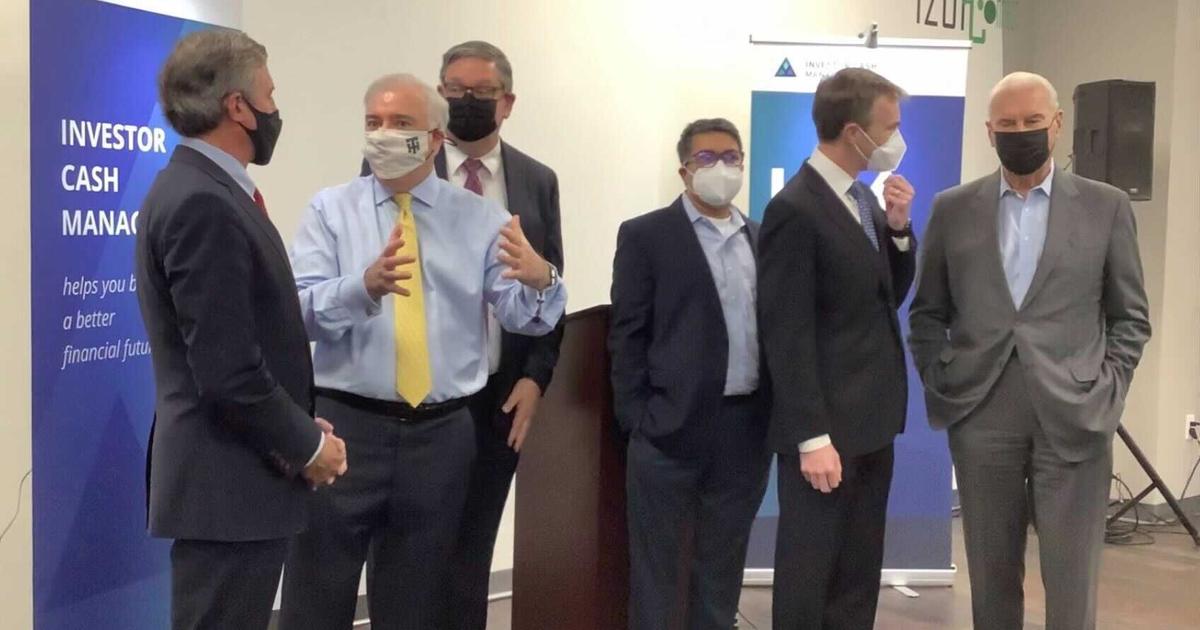
Investor Cash Management (ICM) will invest $15.37 million into their new Wilmington-based headquarters after receiving $4.25 million in taxpayer-funded considerations through the Delaware Strategic Fund, though ICM’s expansion plans include providing 395 jobs over the next three years–13 times the size of its current 30-persons staff, officials said.

“We’re just grateful and humbled to be here. After an extensive search–our roots are in Chicago. Chicago is a good home to us–we looked at Florida, we looked at Texas, we looked at Connecticut. But we have no doubt whatsoever, intending no disrespect to others, that this is the right place for us,” said ICM founder and CEO Fred Phillips. 

The company, which just got its start in 2018, debuted during an unveiling of their plans at at press conference at 1201 North Market Street on December 14, 2021. Phillips described the company as transforming funds into both “fully liquid and fully invested” assets. He touted it is the youngest tech company to have ever received investment from Visa. 

In a press release from the state, officials described the company as a “platform as a service (PaaS) provider in the fintech space, ICM uses an application programming interface–or API-driven technology–to link cash management accounts directly to specified investments, transforming investment products such as mutual funds, exchange traded funds and/or shares into digital transaction currencies. The technology combines banking, investing and payments to drive client acquisition and increase assets.”

Mayor Mike Purzycki said he was happy to have the company finding its home here in the city. 

“I think it’s the jobs. It’s the addition to our city economically, but it’s also symbolic of the city’s appeal to people who could have gone anywhere in the entire country and they came here to Wilmington,” said Purzycki on Tuesday. “We think that’s pretty empowering. It makes you feel really confident that what you’re doing is the right thing.”

The move just makes sense, said Gov. John Carney, who believed it’s Wilmington’s pool of talent with seemingly endless depth. He said ICMs arrival is just the latest in a long list of companies that recognize the people that make the First State attractive. 

“We need to change and compete every day. And one of the areas where we believe we have great strength, and where we can be competitive, is in the financial services sector,” Carney said. “We have a great talent base here in Delaware, created initially by some of the larger banks and financial services institutions. We have a great tech sector…So that merger of those two into a FinTech sector has been really an important opportunity for us.”

As an additional bonus, the firm will be partnering with Delaware State University, which offers financial management tools, products, and services to its students, faculty, staff, and alumni, with the school’s stated goal being increasing financial literacy particularly for unbanked or underbanked minorities. 

“What we want to do, and what indeed we’ve done–among our partners are Delaware State [and university President] Tony Allen, who has just been wonderfully supportive–is to look at how it is that we can go ahead and solve the most fundamental of economic problem,” Phillips said. “Which is, ‘What is it that we should do with our money?'”

Investment in digital health requires prioritizing capital allocation

Investment in digital health requires prioritizing capital allocation

Photo: Bloom Productions/Getty Photos

If COVID-19 has taught us everything about how hospitals are investing for the long term, it is that digital health is listed here to keep, according to Mallory Caldwell, Ernst & Young U.S. wellness chief. 

“I imagine the huge factor is that we have accelerated and centered consideration on issues there in advance of COVID, (that) turned additional timely since of COVID,” Caldwell reported. “Electronic well being is the example of that.”

You can find telehealth, of training course, but what is upcoming?

Caldwell and EY work with health care leaders to support them prioritize where to allocate cash. C-Suite executives come to feel that they do not have fantastic details for determination-producing and that their conclusion-building is rushed, Caldwell reported.

These results arrived from EY’s 2021 Funds Allocation Method Study. The survey uncovered that significantly less than fifty percent, about 48{1b90e59fe8a6c14b55fbbae1d9373c165823754d058ebf80beecafc6dee5063a} of company CEOs, have a official procedure to funds allocation. Practically 3-quarters, 74{1b90e59fe8a6c14b55fbbae1d9373c165823754d058ebf80beecafc6dee5063a}, named electronic tech as a prime priority.

“Health care clientele are inquiring us regularly to assist them get a deal with on the landscape of opportunity sites to devote, to transfer them alongside that electronic journey,” Caldwell explained. “We do that operate frequently.”

WHY THIS Matters

Capital allocation priorities in electronic health may perhaps consist of telehealth platforms, interoperability electronic platforms, wearables info and electronic platforms to allow care in the home and healthcare facility at residence. 

Executives have to have to articulate what type of electronic knowledge they want to give to the affected person, the caregiver in the dwelling, physicians, and some others, Caldwell claimed. This will enable establish the technology necessary to sequence their investments.

They want to know how to run AI to get much better throughput for amenities and to have a extra holistic picture of the social determinants of wellbeing.

When priorities are founded, health care executives want to reallocate funds in a sector that has been just about anything but predictable.

“You can find not a ton of excess cash heading all-around,” Caldwell stated. “That is a single of the matters we’re aiding clients with. Do they have services that are underutilized? We are chatting about performance in their functioning money. Do we want as much in client capability? Must we curtail that in favor of some thing else?”

There is continue to a push to uncover efficiency by means of integration, possibly by merger or a partnership that will result in aligned approaches. 

This is seen in the “payvider” craze as payers make more substantial supplier platforms surrounded by digital enablement. Just one example is Humana investing in Kindred at Household and UnitedHealth Team setting up out OptumCare.

“They are coming with each other to say, let us kind an alliance,” Caldwell explained. “It is the factor that aligns the economic incentives. Everybody is attempting to do the ideal issue.”

THE Larger Development

As a end result of ongoing upheavals prompted by the pandemic, amplified market place pressures are powerful healthcare executives to reconfigure operations and investments. In simple fact, much more than a few-quarters of service provider and payer CFOs accept their cash allocation system requires to be improved, according the EY study.

CFOs experience trade-offs concerning a number of expenditure wants.

A September Kaufman Hall report reveals they you should not normally know the place to place their cash. Lots of businesses formulated new structures or web sites of care devoid of investigating consumers’ requires to start with. Hospitals and health units that introduced or accelerated digital overall health capabilities through the outset of the COVID-19 pandemic have failed to commit completely to digital and consumer-centered transformation, according to the 2021 Healthcare Consumerism Study.

The changeover is going on, according to Caldwell.

“All of that electricity of significant data, folks are generating transpire,” he explained. “Individuals are investing in the engineering infrastructure for a digital shopper interface.”

Twitter: @SusanJMorse
E-mail the author: susan.morse@himssmedia.com