

Here’s how travel insurance can help during the COVID-19 pandemic

Here’s how travel insurance can help during the COVID-19 pandemic

Here’s

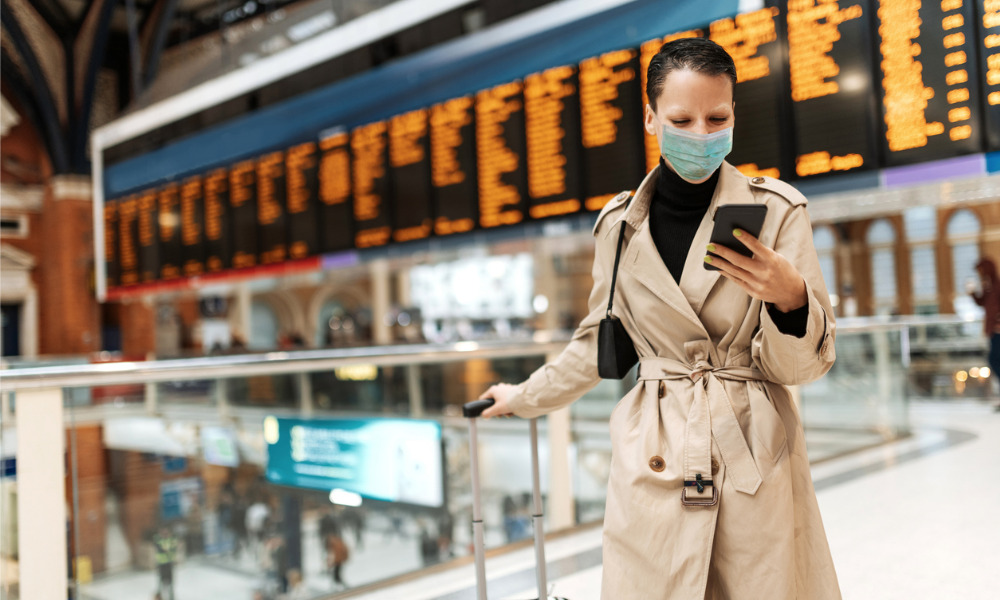
Travelers make their way through Charlotte Douglas International Airport on Tuesday, November 16, 2021 in Charlotte, NC.

mrodriguez@charlotteobserver.com

The travel industry was among the first to feel the damaging effects of the COVID-19 pandemic.

After travel bans were implemented during the early stages of the outbreak, international tourist arrivals declined in 2020 globally, with 1 billion fewer travelers compared to 2019, according to the World Tourism Organization.

Since then, travel industry experts have predicted that there would be an increase in passengers from 2020, signaling a recovery from the financial hit taken over the last two years as people desire to make up for lost time.

“People are booking their trips further out,” said Amanda Coppola, the branch manager at the Mann Travels Arboretum location in Charlotte. “With cruises, you can book them two years out, so I do have a lot of cruises for 2023 already on the books.”

In addition to wearing a mask in airports and on other transportation hubs to protect from COVID-19, travel insurance is recommended for travelers to cover unexpected delays or trip interruptions.

What is travel insurance?

Travel insurance is coverage designed to protect against risks and financial losses that could happen while traveling.

What does the insurance cover?

Depending on the coverage you select, travel insurance can cover a variety of damages and losses, including:

  • Injury or sickness: Travel insurance can help cover medical expenses that are not covered by your health insurance plan. Most health insurance plans don’t provide full coverage in foreign countries.

  • Lost luggage: Travel insurance can help cover expenses stemming from lost luggage. This can be useful when an airline loses your bags since it can be difficult to get reimbursed.

  • Last-minute cancellations: Most resorts or cruise lines won’t give you a full refund when you cancel. Some resorts charge cancellation fees if you cancel more than two weeks before your trip, and most will not give you any refund if you cancel within two weeks.

Many airlines also offer pre-departure waivers, Coppola said, which allows passengers to revise or cancel their bookings at any time and receive a full refund for the cost of their trip.

“It really protects their investment and gives them peace of mind that they can get their money back if they feel unsafe, or if something comes up like a positive COVID-19 test,” she explained.

How much does coverage cost?

Travel insurance typically costs five to 10{1b90e59fe8a6c14b55fbbae1d9373c165823754d058ebf80beecafc6dee5063a} of your total trip cost. The amount can be influenced by several factors, including your age, how much you’re spending on the trip, the amount of coverage you’re choosing and the number of people covered under your policy.

“Sometimes it can be as low as $100 per person, and that’s a very low price when you’re looking at a trip that’s $5,000, since you can get your money back,” Coppola said.

The most important factor in determining pricing in trip cancellation coverage is age, according to Berkshire Hathaway. The older you are, the more likely you may be forced to cancel your trip.

Trip cancellation makes up a large part of most companies’ claims. A trip where the upfront cost is extremely high means the company would have to reimburse you more if that trip were canceled.

Other factors that impact prices

  • The number of travelers: A single travel insurance policy can cover multiple family members on the same trip, however, some companies offer family-friendly packages.

  • Destination: When determining rates, the destination is a factor for some insurance companies. Companies may examine crime statistics and injury rate for tourists when setting their prices.

  • Trip length: There is a higher chance that something will happen to you on a longer trip. Longer trips also tend to be more expensive trips taken by more exotic destinations, often with many people covered under the same policy.

Airline cancellation policies

After the pandemic essentially halted air travel for months, major airlines in the U.S. implemented policies to give passengers more flexibility to change or cancel them.

  • Allegiant Air: As of May 21, 2021, Allegiant’s change/cancel fee has been reduced to $25 per person, per flight segment. A flight segment is one takeoff and one landing.

  • Alaska Air: The airline’s policy allows travelers to change or cancel their tickets if they were purchased on or before April 30, 2021. Tickets must be changed or canceled prior to the departure of your original flight. If you purchased tickets through a third party, contact them directly.

  • American Airlines: The airline has eliminated change fees for short-haul international and select long-haul international flights. Basic Economy fares bought on or after April 1, 2021 are non-refundable and non-changeable.

  • Delta Air Lines: Customers who purchased Basic Economy tickets on or before April 30, 2021 can make changes or cancel their tickets and receive an eCredit. Cancellation fees and change fees do not apply to these tickets. Tickets purchased in 2022 can be canceled, but are subject to a cancellation fee that will be deducted from the value of your ticket.

  • Frontier Airlines: Change and cancel fees have been waived for bookings made through March 31, 2021. Fees for flights booked from April 1-July 26 are waived if changes or cancellations are made more than 60 days prior to departure.

  • Hawaiian Airlines: Any Main Cabin or First Class ticket purchased or expiring in 2021 now won’t expire until Dec. 31, 2022. Main Cabin Basic tickets purchased between Aug. 17-Oct. 31, 2021 for travel on or after Aug. 17, 2021, May 1-Aug. 16, 2021 for travel on or before Oct. 31, 2021, between Jan. 1-April 30, 2021 and tickets purchased between March 1-Dec. 31 2020 can be changed without a fee.

  • JetBlue: Change and cancel fees for customers traveling through Jan. 31 will be waived. A few airports in the U.S. and abroad have specific change/cancellation fee policies.

  • Southwest Airlines: Southwest has a policy of not charging change or cancellation fees. Non refundable tickets not flown on the travel date, but canceled in accordance with Southwest’s No Show Policy, can be applied for future travel for up to one year from the original purchase date.

  • Spirit Airlines: Flight changes can be made 60 or more days in advance without fees. Changes made seven to 59 days prior to departures will incur a $49 fee, three to days prior incur a $79 fee and zero to two days from departure incur a $99 fee.

  • United Airlines: Change fees for most economy and premium cabin tickets for travel within the U.S., or between the U.S. and Mexico or the Caribbean have been removed. Redeposit fees for award flights are also being waived.

Is booking a cruise now still a safe option?

Although cruise lines have started operating again, the CDC recommends avoiding cruise travel, regardless of vaccination status, as the chance of contracting COVID-19 on a ship is “very high.”

While it may not be a good time to board a cruise ship, Coppola said those looking to travel on the water over the next couple of years should book now, since many cruise lines have implemented variable cancellation policies due to the spread of COVID-19.

“Now is a good time to book everything because the prices are so low,” said Coppola. “If they need to change from going to Europe to the Caribbean, it’s super easy. There’s a lot of flexibility with all of the cruise lines.”
What Australians should consider when buying travel insurance amid COVID-19 pandemic

What Australians should consider when buying travel insurance amid COVID-19 pandemic

On the other hand, the federal government also warned that the lifting of limits does not point out that worldwide travel has returned to pre-pandemic problems as border settings and quarantine prerequisites in other nations continue on to evolve, usually at quick discover.

Given the situation, Australians planning on travelling overseas have extra variables to think about, which includes airline requirements, COVID-19 rules in transit and place international locations, and arrangements for their harmless return.

And, according to field insiders, securing journey insurance plan has never been additional critical in the recent natural environment.

Among them is the Insurance plan Council of Australia (ICA), which has reminded Australians that journey insurance plan is as crucial as their passports if they intend to go abroad.

“You just can’t leave Australia with out a passport, and you should not leave Australia without having vacation insurance,” explained ICA main executive officer Andrew Corridor in a statement. “Travel insurance policy continues to be necessary for all the explanations it was pre-pandemic – to give security when the sudden occurs significantly from dwelling.”

Examine a lot more: ICA manager: “You should not leave Australia without travel insurance”

What sort of COVID-19 coverage do journey insurers provide?

Some vacation insurers are now giving COVID-19-associated coverage, whilst the assortment of protection could be restricted, in accordance to customer advocacy group Decision. Travel insurance policies procedures typically include clinical, cancellation, and quarantine costs incurred if the policyholder or their companion exams good for the coronavirus. Most procedures, having said that, are not likely to include cancellation expenses ensuing from lockdowns, equally domestically and in the planned place.

Various tour operators and airlines have also begun providing “complimentary COVID-19 insurance plan,” but the group encouraged individuals arranging on obtaining this variety of protection to cautiously go through the fine print as this might be issued by a foreign insurance plan supplier, which means the phrases are subject matter to the regulations and rules of that state. If this is the scenario, this complimentary coverage is nonetheless not a very good substitute for a extensive Australian travel insurance policies policy, the team included.

Examine far more: How the best 10 Australian vacation insurers are managing COVID-19

What should really Australians glimpse for when obtaining journey insurance policy in the course of the pandemic?

Preference, via the Department of Foreign Affairs and Trade’s (DFAT) Smartraveller web site, also presented a listing of thoughts Australian travellers need to request before buying vacation coverage. In this article are some of them:

1. Is the vacation spot protected?

Smartraveller assigns in general assistance concentrations to additional than 170 countries, which can impact travel coverage protection, so it is finest for travellers to check out the web page ahead of obtaining coverage. These suggestions concentrations are:

Level 1 – Workout normal safety precautions

Amount 2 – Workout a higher diploma of warning

Amount 3 – Reconsider your have to have to journey

Stage 4 – Do not vacation

Most travel insurance plan guidelines give coverage for countries underneath advice concentrations 1 and 2, when people less than tips stage 4 are typically not protected. For places under assistance amount 3, it can be a bit challenging as coverage differs for different companies. Additionally, these guidance degrees can change fairly promptly which is why Smartraveller reminded holiday getaway goers to generally check out the particulars of their policies to make certain they know what is included and what is not.

2. Does the desired destination have to have evidence of coverage for COVID-19-similar health-related bills?

Some nations around the world demand travellers to carry insurance in the event they contract the coronavirus though within their borders. Singapore, for instance, need travellers to have a minimal coverage of SG$30,000 (about $30,280).

3. Is the total length of the trip lined?

Alternative also advises travellers to examine if the plan will carry on to deliver protection if the journey is prolonged over and above the insurance include dates if unexpected functions these kinds of as flight cancellations and border closures manifest, or if the policyholder or their companion exams favourable for COVID-19 and are demanded to isolate or get professional medical awareness.

4. Are stopovers on the way to the location protected?

Some visits call for stopovers, so it is also recommended to check if there are limits on the amount of time a policyholder can expend in a location. It is also ideal to look at with the coverage provider about what will come about if an insured receives stuck in a stopover area for an extended time period.

5. Are cancellation charges protected?

Most travel procedures cover cancellation costs if the excursion is slash quick since the policyholder or their companion will get infected with the coronavirus. But Choice also implies examining if protection contains cancelled outings ensuing from a COVID-19 infection for an individual back again dwelling – a family member or small business lover, for case in point – and the insured needs to return previously than planned. 

6. What extra expenses are lined?

Travellers ought to also look at if unpredicted further charges are lined, which includes people ensuing from COVID-19-relevant shutdowns of their accommodation or tour operator, forcing them to discover an different location to keep or e book yet another tour.

7. Are cruises included?

Some journey insurers do not supply COVID-19 coverage for multi-night cruises. For travellers organizing on likely on these kinds of cruises, it is finest to verify initial what coverage is offered.

Read extra: Specialist provides vacation insurance plan guidelines amid COVID-19 pandemic

How can travellers make their trips secure throughout the pandemic?

According to Decision, most vacation insurance coverage procedures do not present defense in opposition to border closures, lockdowns, or quarantine specifications in a destination region. That is why the team indicates paying for procedures only with insurers that make it possible for some flexibility in the party COVID-19 regulations improve in their destinations. 

The group also shared these guidelines for a safe and sound trip for the duration of the pandemic:

    &#13

  • Examine travelling demands and laws in the place.
  • &#13

  • Take into account limiting travel to one particular or a few destinations in 1 region at a time rather than travelling to various nations in a single go.
  • &#13

  • Browse the phrases and situations just before reserving travels. Make sure refunds are permitted.
  • &#13

  • Guide versatile tickets for flights. Some airways at this time allow rebooking of cancelled flights, but be knowledgeable of the expiry dates.
  • &#13

  • Make confident the resort scheduling can be cancelled, or at the very least modified.
  • &#13

  • If scheduling by a journey agent or reserving web page, make sure they do not cost an further charge for cancellations.
  • &#13

  • Pay by credit history card as this enables you to pursue a credit rating card chargeback if anything goes mistaken.
  • &#13

  • Retain abreast of the most current journey suggestions and specifications.
  • &#13

  • Get out journey insurance plan but make confident it can be cancelled, with at minimum a partial refund.
  • &#13

Nevertheless, Choice adds that acquiring journey insurance policies is not only essential for the reason that there is an ongoing pandemic – the team suggests with or without having COVID-19, there are some factors that may go mistaken when travelling, such as vacation cancellations or delays, misplaced luggage, ailment, or even organic and man-created disasters. Travel insurance plan can assist include these as properly.

Secret Service: Nearly $100B Stolen in Pandemic Relief Funds | Business News

Secret Service: Nearly 0B Stolen in Pandemic Relief Funds | Business News

By JENNIFER McDERMOTT, Involved Press

Virtually $100 billion at least has been stolen from COVID-19 aid courses set up to support businesses and folks who shed their jobs due to the pandemic, the U.S. Key Assistance explained Tuesday.

The estimate is dependent on Secret Provider cases and info from the Labor Office and the Smaller Company Administration, explained Roy Dotson, the agency’s national pandemic fraud recovery coordinator, in an job interview. The Key Assistance didn’t involve COVID-19 fraud cases prosecuted by the Justice Department.

Although about 3{1b90e59fe8a6c14b55fbbae1d9373c165823754d058ebf80beecafc6dee5063a} of the $3.4 trillion dispersed, the quantity stolen from pandemic benefits plans demonstrates “the sheer size of the pot is attractive to the criminals,” Dotson said.

Most of that figure arrives from unemployment fraud. The Labor Section described about $87 billion in unemployment advantages could have been compensated improperly, with a sizeable portion attributable to fraud.

Political Cartoons

The Mystery Assistance claimed it has seized more than $1.2 billion even though investigating unemployment insurance and personal loan fraud and has returned much more than $2.3 billion of fraudulently attained funds by doing the job with monetary partners and states to reverse transactions. The Top secret Services claims it has a lot more than 900 active prison investigations into pandemic fraud, with circumstances in every single condition, and 100 people have been arrested so significantly.

The Justice Division stated very last week that its fraud part had prosecuted over 150 defendants in a lot more than 95 prison situations and experienced seized in excess of $75 million in funds proceeds derived from fraudulently attained Paycheck Security Software resources, as properly as several real estate houses and luxury products acquired with the proceeds.

A person of the very best-recognized packages developed by way of the March 2020 CARES Act, PPP offered small-fascination, forgivable financial loans to modest organizations battling to meet up with payroll and other expenses for the duration of pandemic-relevant shutdowns.

Legislation enforcement early in the pandemic targeted on fraud linked to personalized protective machines, the Secret Company stated. Authorities have now prioritized the exploitation of pandemic-linked aid since the federal funding through the CARES Act attracted the notice of individuals and organized criminal networks throughout the world.

“Can we quit fraud? Will we? No, but I feel we can definitely prosecute all those that need to have to be prosecuted and we can do our best to recover as much fraudulent pandemic funds that we can,” said Dotson, who is the Magic formula Service’s assistant specific agent in charge of the agency’s area office in Jacksonville, Florida.

Copyright 2021 The Related Push. All rights reserved. This content may possibly not be published, broadcast, rewritten or redistributed.

Travel insurance claims cause frustrations from pandemic cancellations

Travel insurance claims cause frustrations from pandemic cancellations
Covid cancelled Carrol Colbert’s trip to Africa. She’s been struggling to figure out why her trip insurance won’t cover a refund.
Travel insurance issues
Carrol Colbert reads through her travel insurance policy from a trip she booked before the pandemic.

MACON, Georgia (41NBC/WMGT)— Carrol Colbert loves to travel. She’s been to New York, Las Vegas, and even Egypt.

In December of 2019, she booked a trip with her sister for the following June to Morocco and Senegal through Great Value Vacations and CheapOair. Since the trip cost more than $5,000, she purchased travel insurance through Trip Mate.

As the trip approached, the pandemic ruined her plans.

“The company cancelled the trip. I said I’ll just take a refund because I have trip insurance. Well they advised me because of this pandemic we cannot give you a refund,” she said.

Colbert was surprised she wouldn’t get a refund. After contacting Trip Mate, they told her the pandemic wasn’t anticipated and it wouldn’t be a covered reason through her policy. Colbert made sure she documented everything. After reading back through her policy, she believes it should have been covered.

“There was one area that talked about being quarantined and I said we are quarantined to the United States of America. We cannot even get out of this country to go into Africa,” she said.

Kelvin Collins, President and CEO of the Better Business Bureau of Central Georgia, says Colbert took the right steps.

He recommends shopping around for travel insurance, and making sure you read through the fine print. He says it’s important to do your research.

“Make sure you look at customer reviews, check them out with Better Business Bureau. Google their name and make sure this is a company or website that takes care of their customers later,” he said.

Even though Great Value Vacations gave Colbert a trip credit, and CheapOair gave her a partial refund, she still hopes to get the refund she feels the companies owe her.

Colbert says this experience hasn’t hurt her love of traveling though. She hopes to travel to Hawaii next year to celebrate her 40th wedding anniversary.

“I will use other companies and I will continue to travel. I think traveling is great and I look forward to resuming a near normal,” she said.

The Better Business Bureau says if you’re having issues resolving a travel insurance claim from the pandemic, you can file a complaint through them. You can also file a complaint through the Attorney General’s Office.

Stranded by the Pandemic, He Had Only Travel Insurance. It Left Him With a $38,000 Bill.

Stranded by the Pandemic, He Had Only Travel Insurance. It Left Him With a ,000 Bill.

Duy Hoa Tran, a retired Vietnamese schoolteacher, arrived in Los Angeles in February 2020 to visit his daughter and 2-month-old grandson. Two weeks later, the door closed behind him. To prevent the spread of covid-19, Vietnam shut its borders. No commercial flights would be allowed into the country for the next 18 months.

Tran’s daughter, An Tran, who has a doctorate in business administration and teaches marketing at the University of La Verne in California, did what she thought was necessary to ensure medical coverage for her then-65-year-old father during the pandemic. But the only option for a visitor on a tourist visa was travel insurance. In early March 2020, An Tran found and purchased a policy, for about $350 a month, from a company called Seven Corners.

She might as well not have bothered.

The elder Tran had been staying at An’s home in Diamond Bar, California, about a year when he told his daughter he was having trouble seeing out of his right eye. A visit to an ophthalmologist produced a solemn verdict: Tran had severe glaucoma and would quickly go blind unless he got surgery.

Seven Corners gave written preapproval for the procedures recommended by Dr. Brian Chen. To be safe, An Tran called the insurer “many times” to confirm it would cover the expense, but no one she spoke with would give her a definitive answer, she said. Chen, however, assured An that insurance companies typically covered the treatment, which was pretty routine.

On April 19, Tran underwent the first of three eye surgeries to resolve the glaucoma. The surgeries — the last was on July 19 — were successful. And then on Aug. 5, Seven Corners sent An Tran a denial of service letter.

The company’s policy excluded coverage for any “preexisting condition,” by which it meant any condition “whether or not previously manifested, symptomatic, known, diagnosed, treated or disclosed,” the letter said.

An Tran and her father were on the hook for nearly $38,000 in medical bills, although Seven Corners had preauthorized the surgery and she had paid around $6,000 for the insurance over the previous year and a half.

Soon after her father’s eye surgeries, An Tran, of Diamond Bar, California, found out that travel insurance typically offers little protection for any health problem linked to a preexisting condition.(Heidi de Marco / KHN)

As for the bill, “my dad obviously can’t pay it,” Tran said. His $260 monthly pension from the Vietnamese government isn’t enough even for him to live on in Vietnam, she said.

The surgical procedures Duy Hoa Tran received are quite routine in the United States, said Dr. Davinder Grover, an ophthalmologist in the Dallas area and clinical spokesperson for the American Academy of Ophthalmology.

Medicare would generally pay about a quarter of the $37,896.83 Tran was billed for the surgeries, Grover said. If Tran’s daughter had known beforehand that insurance wouldn’t cover the procedures, the physician’s practice might have been willing to charge something like $12,000, he said.

The policy An Tran purchased had no deductible and offered coverage of up to $100,000 in medical bills, including covid care. But travel insurance generally covers only emergency or urgent medical expenses, according to the California state insurance commission, which regulates policies in the state.

Megan Moncrief, chief marketing officer for Squaremouth, which aggregates various companies’ travel insurance plans — including some from Seven Corners — and offers them through its website, said the policy language was not unusual for travel insurance. She noted the policy’s stipulation that it covered some acute conditions only if the patient sought treatment within 24 hours of the initial symptoms.

Moncrief said the fact that Tran did not seek treatment immediately may be the reason his surgeries weren’t covered. (Seven Corners refused all comment on the case.) She acknowledged it was hardly surprising he hadn’t dashed to the doctor at the first sign of discomfort: “I don’t know that I would have done that either, if I just had blurry vision.”

As for Seven Corners’ refusal to pay despite precertification, this is not uncommon, she said. By precertifying, the insurer verifies that a procedure is a covered benefit but doesn’t guarantee the insurer will cover it for that particular patient.

Travel insurance typically offers little protection for any health problem linked to a preexisting condition, regardless of whether that condition has ever been diagnosed, says Susan Yates, general manager in the U.S. for Falck Global Assistance, an international insurer.

“For visitors to the U.S., especially those who are not permanent residents or citizens, it can be difficult to obtain health insurance,” she said. The Affordable Care Act doesn’t cover tourists, though some resident noncitizens can buy coverage.

“It’s usually better for a visitor to buy travel insurance from their country of origin, but in some countries (Vietnam being one), the insurance market is not developed,” Yates wrote in an email.

Tran had tried unsuccessfully for months to fly home to his town near Ho Chi Minh City, where his wife lives with another grandchild. On 14 occasions, An bought him tickets on regular commercial flights that were subsequently canceled. He was also unable to get a seat on charter flights arranged by the Vietnamese government; those tickets generally were available only through third parties charging up to $10,000.

The eye surgeon, Chen, offered to discuss the case with KHN, but his medical group’s counsel said it had a policy against discussing insurance issues with reporters, even with the patient’s consent.

After KHN approached him to discuss the issue, Chen told An Tran that he was waiving his $8,144 fee for the surgeries. The Acuity Eye Group, where he practices, would not immediately confirm Chen’s offer, but told An Tran they were seeking approvals to waive his fee and all other charges as well.

On Sept. 15, Duy Hoa Tran finally managed to get on a charter flight back to Vietnam. He’s happy to be home, An Tran said.

Under California’s filial responsibility laws, she could be liable for his remaining bills.

This story was produced by KHN, which publishes California Healthline, an editorially independent service of the California Health Care Foundation.

Related Topics

Contact Us

Submit a Story Tip

Altium Insurance Services introduces Hospitality Pandemic Insurance

Altium Insurance Services introduces Hospitality Pandemic Insurance

Altium Insurance Companies (AIS) has introduced a pandemic insurance policies solution for the hospitality field, underwritten by just one of the world’s biggest insurance plan carriers. Obtainable exclusively to hotel franchisors, franchisees, management companies, REITS and operators of multi-home enterprises, this Hospitality Pandemic Insurance (HPI) shields from the loss of revenue expert when a pandemic strikes.

Together with Belmonte Consulting LLC, AIS collaborated with the worldwide underwriter for extra than a year to layout this products distinct to resorts. Currently, HPI is being bought solely by AlS founder Invoice Coluccio, and marketed to hoteliers by Steven Belmonte, CEO, Belmonte Consulting LLC, and executive director, Hospitality Division, Amdel Associates, a New York-centered financial investment banking company specializing in mergers and acquisitions.

“The devastation of COVID-19 on our sector underscored the significance of managing threats in funds structure organizing this pandemic coverage poses a feasible solution to this difficulty,” reported Belmonte. “HPI is progressive. Thinking about how hard our marketplace was impacted by COVID-19, it is so significant to shield ourselves from this taking place again—and, sadly, the scientists say it may well materialize. This insurance policy protects the profits stream for a lodge company or franchisee. It is the largest no-brainer you possible will see this yr.”

He extra, “Bill Coluccio is a long-time industry mate. His experience in customized insurance and threat-mitigation goods spans the specialist liability, lifestyle, house, casualty and transaction insurance marketplaces and makes him the appropriate man to pioneer this product. Based mostly on responses from a very soft launch amongst industry colleagues, we imagine we have a real winner. Today, HPI is readily available to any franchise proprietor/operator or multi-assets resort enterprise wanting for foreseeable future pandemic security.”

Highlights of the Hospitality Pandemic Insurance plan:

  • The indemnity period of HPI is 180 calendar days.
  • HPI pays statements immediately, with no adjuster delays.
  • For publicly traded companies, HPI gives a stage of protection to shareholders.
  • Carrying HPI may possibly give aid for decrease borrowing and funds expenses.
  • HPI gives liquidity and perhaps can improve credit rankings.
  • HPI minimizes reputational problems.

“When entrepreneurs commenced noticing the impression of the pandemic, they closed their doorways and submitted small business interruption claims with their insurance policies carriers,” Coluccio stated. “Unfortunately, pandemic exclusions in standard company interruption insurance policies policies make them contractually immune to a reduction linked to a COVID-19 event, so not a one resort received a payout. We built HPI in collaboration with Belmonte Consulting LLC precisely for the requires of those operating a resort franchise or multi-assets organization when the up coming pandemic happens.”

Here’s how HPI functions: Should a civil or govt authority lockdown manifest, and the World Wellbeing Organization challenges a general public wellbeing crisis of global concern—which effectively shuts down travel—or a condition or area govt concerns limitations on obtain to a area or company, or a very similar denial of buyer obtain problem occurs, or a restriction of airline action takes place, HPI will pay back hoteliers straight away to protect up to 80{1b90e59fe8a6c14b55fbbae1d9373c165823754d058ebf80beecafc6dee5063a} of revenue that they would receive from any afflicted assets, for up to 6 months. In addition, if a declare is filed by a franchisee/operator, the franchisor would also have its franchise costs, promoting charges, management service fees, and so forth. paid from the declare.

“This is straightforward insurance plan coverage for what counts,” Coluccio claimed. “The solution is entirely customizable and capabilities liberal triggers and basic statements procedures. Franchisors can leverage HPI for their personal security and supply it to their franchisees, who can either decide in or decide out, whichever is preferable. The high quality would be compensated by the franchisee and the franchise business can be named as an supplemental insured, or we can incorporate language to the plan that when any claim payments are built, they are to cover any existing franchise costs that would be owed relating to a claim payment. If there is just about anything we have uncovered in excess of the final 20 months, it is that there is no life raft waiting out there. HPI could maybe be the closest factor.”