
Five financial tips for stay-at-home parents

Five financial tips for stay-at-home parents

The decision to leave a job and stay home with children is often a difficult one. During the COVID-19 pandemic, there was a rise in stay-at-home parents — often fueled more by necessity than by choice. As some parents now re-enter the workforce, others are considering their options. With a new era of hybrid and remote work ushered in by the pandemic, there are more options than ever for parents that want or need to spend more time with their children at home — whether that’s working remotely, moving from a full-time to a part-time schedule, or stepping away completely.

Whatever the reason, the decision often comes with significant lifestyle and financial changes. It’s important to review family spending patterns and set goals when transitioning from two household incomes to one. Here are five tips for parents undergoing this change:

No. 1 — Estimate your timeframe. Look into the future to decide if this change might be permanent and adjust your financial plans accordingly. If you plan to go back to work, establish the amount of time you expect to be at home and ensure that you’re still able to maintain your financial goals during this period. If there is a gap, you may want to explore other employment options like working part-time or contracting work. It’s also a good idea to stay in contact with your professional network in case you do decide — or need — to go back to work.

No. 2 — Make sure you’re insured. Examine your spouse’s insurance benefits and make sure that you and your children are still adequately covered in the absence of your benefits. If possible, plan to have life and long-term care coverage for yourself and disability insurance for your spouse in the event that something would happen to either of you and you’re no longer able to work or care for your children.

No. 3 — Understand your value. A single-income family doesn’t mean that only one spouse is contributing financially. As a stay-at-home parent, you save your family many costs associated with working-parent households like daycare, cleaning services and other expensive convenience products and services. You may even find that in your new role you have more time to devote to money-saving activities like comparison shopping and cooking rather than dining out.

No. 4 — Keep your goals on track. Your household budget may need to be adjusted with your decision to become a single-income family, but don’t neglect your long-term goals. Consider working with a financial advisor who can help plan a family budget, prepare for the retirement of both spouses and to set realistic financial goals based on one household income.

No. 5 — Communicate with your spouse. It’s important to communicate your plans, desires and financial concerns with your spouse. Together, acknowledge the benefits and challenges that will accompany the decision to become a stay-at-home parent. Make sure you are aware of any possible career or salary changes that may arise in the near future for your spouse before you commit to staying at home. Ultimately, these factors and many more may go into your decision to stay at home. But whatever you decide, go into it with a full understanding of how it may impact your finances.

Bronwyn Martin is a financial advisor and chartered financial consultant  with Martin’s Financial Consulting Group, a financial wealth advisory practice of Ameriprise Financial Services, LLC. in Kennett Square, and Havre de Grace, Md. She specializes in two fee-based financial planning and asset management strategies and has been in practice for more than 21 years. To contact her visit www.ameripriseadvisors.com/bronwyn.x.martin

Tips On Travel Insurance, Airlines And More

Tips On Travel Insurance, Airlines And More

Experts have been saying that this Thanksgiving is going to kick off one of the busiest holiday travel periods in recent history—and the crowds are already proving it. The Transportation Security Administration reported that more than 2.2 million travelers passed through airports in the United States on Friday—a record. It was the most people the TSA has screened in a single day since the start of the pandemic. Travel sites are also seeing the same kind of traffic: Tripit is experiencing nearly triple the volume of last year, with flight bookings up 298{1b90e59fe8a6c14b55fbbae1d9373c165823754d058ebf80beecafc6dee5063a}, hotels up 258{1b90e59fe8a6c14b55fbbae1d9373c165823754d058ebf80beecafc6dee5063a}, vacation rentals up 175{1b90e59fe8a6c14b55fbbae1d9373c165823754d058ebf80beecafc6dee5063a} and car rentals up 390{1b90e59fe8a6c14b55fbbae1d9373c165823754d058ebf80beecafc6dee5063a}.

From travel insurance to advice on the airlines to the best travel deals, here’s what you need to know, whether you’re traveling over the coming week or anytime during the holiday travel season:

Arrive at the airport early. A third of all Thanksgiving travelers will be taking to the skies on Tuesday and Wednesday, so expect lines at airports. “Arriving at the airport two hours early is usually the gold standard, but this year I would recommend two and a half hours if possible,” says Jen Moyse, senior director of Product at TripIt. According to Tripit, some of the busiest airports will be San Francisco International Airport (SFO), Los Angeles International Airport (LAX), Denver International Airport (DEN), Seattle-Tacoma International Airport (SEA) and Chicago O’Hare International Airport (ORD).

Related: Best Pandemic Travel Insurance Plans

Be aware of COVID-19 protocols. It is the law that people must wear a mask in airports and on planes or any other type of public transportation in the U.S.—but that’s not the only place you’ll need it. “Be sure to keep a mask on hand when visiting hotel common spaces like the front lobby or dining area, and bring your vaccine card or negative COVID test results with you when out and about (tucked away safely) in case somewhere you hope to visit requires one,” says Moyse.

Pack light. If possible, carry your bags on the plane, since checking luggage can add time (and expense). Another advantage: You won’t have to wait for luggage when you land, so your vacation can start right away.

Think about travel insurance. Is it too late to get travel insurance to cover delays or trip interruptions? “The simple answer is you can technically get travel insurance the day before (even the day of) your trip, however, your coverage options will be very limited,” says Meghan Kayata, a spokesperson for InsureMyTrip. “You can put in your trip info on InsureMyTrip.com and see what options there are available. Our customer care call center is also available for those who would like to be walked through the options.” A note: For future trips, it’s a good idea to get a travel insurance policy as soon as you put any kind of money down to get the most options, like Cancel for Any Reason insurance. 

Covid insurance: Speaking of travel insurance, if you’re traveling internationally, you’ll need to get a Covid test to return to the United States. It’s a good idea to get Covid insurance, even if the destination doesn’t require it. You’d hate to get stuck somewhere and have to pay a ton of money out of pocket for hotels and more.

Confirm your rental car. There’s been a massive rental car shortage that has already impacted many plans this year—and it’s only going to get worse. “With reservations up 390{1b90e59fe8a6c14b55fbbae1d9373c165823754d058ebf80beecafc6dee5063a} from 2020, it’s worth calling ahead and triple confirming your reservation,” says Moyse. Another tip: Check with your provider to learn the quickest and easiest way to get your car when you arrive. “And don’t forget to keep them in the loop if your flight plans change,” says Moyse.

Plan your drive wisely: Expect traffic delays. According to transportation analytics company INRIX, road travel will be about 40{1b90e59fe8a6c14b55fbbae1d9373c165823754d058ebf80beecafc6dee5063a} higher than normal over the holiday. Drivers should plan for traffic if they’re leaving on Wednesday—which will be the busiest day of the Thanksgiving travel season. Leave after 9 p.m., if you can. Or a better bet: drive on Thanksgiving Day before 11 a.m. If you’re returning on Saturday or Sunday, leave before noon.

Get Your Car Ready: According to the U.S. Department of Transportation, 24{1b90e59fe8a6c14b55fbbae1d9373c165823754d058ebf80beecafc6dee5063a} of all accidents are weather-related, so as you head into the holiday travel season, it’s a good idea to make sure your car is weather-proofed. Check your windshield wipers to ensure optimum visibility in the event of inclement conditions and consider getting a portable jump starter like the Michelin High-Capacity Jump Starter and Power Bank.

Book your next trip now. If you’re a procrastinator, there’s good news and bad news. The good news? “We’re currently seeing more last-minute deals on cheap flights than ever before,” says Willis Orlando of Scott’s Cheap Flights. “The bad news? This golden opportunity for last-minute deals probably won’t last much longer.” So where to go? “Demand to hot leisure destinations like Miami and Las Vegas is back with a vengeance, whereas business-heavy destinations like San Francisco have been slower to bounce back,” says Orlando. If you’re traveling abroad or to one of these business-heavy domestic destinations, Orlando predicts that you can expect to see a couple more months of last-minute deals, as demand creeps back to normal.

READ MORE:

• The Most Stressed Out State In America Will Surprise You

• The Top 19 Cheap Hotels: Five-Star Luxury Under $50 A Night

5 Personal Finance Tips To Survive Holiday Shopping

5 Personal Finance Tips To Survive Holiday Shopping

Despite developing COVID-19 strain stress, inflation woes and the hesitation that many Americans have to ring in yet another new year that doesn’t seem so new, people are planning to spend more this holiday season. A wealth of surveys suggest that consumers are feeling more comfortable shopping in stores and are leveraging their online purchasing power after the wash that was the 2020 holiday season.

In fact, the National Retail Federation is predicting that, as jingle bells swing and jingle bells ring, Americans will spend up to $859 billion this year—the highest holiday retail sales on record. The average American, according to the research, will spend a cool K on the holidays. Similarly, Mass Mutual projects that Americans expect to spend an average of $1,243 on holiday purchases. The survey finds that 42 percent expect to spend at least $500 more than they did last year throughout the holidays, and 25 percent expect to spend at least $1,000 more.

However, not everyone is so quick to jump on the spending sleigh. A Deloitte survey finds that 11.5 percent of people are planning to sit out the season without spending anything on gifts. Those who do plan on going out dancin’ and prancin’ around retail stores are likely bigger earners. High-income households (raking in at least six figures) will spend five-times that of lower-income households (making less than $50,000) this holiday season. They’ll spend an average of $2,624 each over the holidays, which accounts for a 15 percent increase from 2020 and compares to the $536 that each lower-income household will spend, marking a 22{1b90e59fe8a6c14b55fbbae1d9373c165823754d058ebf80beecafc6dee5063a} decline from last year.

After all, according to a NerdWallet report, one in three shoppers still have holiday debt incurred last year hanging over their heads. And a LendingTree survey purports that 41 percent of people anticipate going into debt this season, too.

Wherever you fall on the spending spectrum, debt doesn’t do you well. Follow these personal finance tips for holiday shopping to make jingle bell time a swell time without spilling all your eggnog. 

And don’t forget to check out Q.ai’s Limited Edition Holiday Shopping Kit, which helps you tap into the holiday shopping frenzy in a less conventional way. The Kit considers where everyone else is spending their money, and then allows you to invest in the major retailers that are crushing it this season—so you can get a piece of the pie, err, ginger bread.

1. Build a budget that’ll keep you and your wallet merry.

Holiday shopping without a budget is like going grocery shopping on an empty stomach—but with even more glittering garnish to attract your attention. It’s important to make a budget of how much you can feasibly spend this holiday season without breaking the bank—and to make that budget before you hit the stores. 

2. Make a list, and check it twice.

Make a list of the people for whom you’re shopping, and even include yourself if you know that you’re someone who tends to treat yourself along the way. Consider those to whom you really need to give gifts (perhaps people like your family and your favorite boss) and the people who you’d ideally love to celebrate should you have any budget leftover (like your neighbor down the road).

Once you prioritize these people, give some serious thought as to what exactly you plan to purchase for them. Having a list of what you need to snag from the stores will help hold you accountable and not spend extra dollars (that add up) on that shiny ornament or adorable stocking stuffer you didn’t need. It’ll also help you save money if, for example, you can buy some stuff in bulk—like two-for-the-price-of-one candles for your colleagues. 

3. Ask Santa for better prices.

Once you know what you want to buy, don’t be so quick to do it. Shop around for the best prices. Some shops offer holiday sales or coupons you could collect to shave dollars off the price tag.

While physically going into all the dizzying stores crawling with shoppers can be daunting, you could shop online or call stores ahead of time to see what they have in stock—and for what cost to you.

4. Take advantage of all the holiday miracles.

Look out for little ways to save money here and there, like through shopping cart abandonment. This is an e-commerce term that refers to placing items in your online cart, but not completing the checkout process. Some retails may email you coupons to commit to checking out if they see that you’re sitting on some stuff. 

Also keep an eye out for discount codes that are floating around your social media, which will certainly serve you ads tailored to your online shopping history.

5. Keep your receipts at the ready.

At the end of the day, be sure to hang onto your receipts and collect gift receipts when necessary. The last thing you want to do is waste money on gifts that don’t fit or function properly, which would be a bummer for both the recipient and your wallet.

Keeping your receipts can also help you track your expenses and stay on track of your holiday budget.

Liked what you read? Sign up for our free Forbes AI Investor Newsletter here to get AI driven investing ideas weekly. For a limited time, subscribers can join an exclusive slack group to get these ideas before markets open.

3 Tips to Recover From a Financial Setback

3 Tips to Recover From a Financial Setback

Financial setbacks can happen to the best of us. Maybe you racked up debt that’s now leaving you with expensive monthly payments on your credit cards. Or maybe you had to deplete your savings account when an unexpected bill arose that couldn’t be put off.

These situations are often unavoidable, and they can be difficult to recover from. Here’s how to move forward following a financial setback and put yourself on a more positive path.

1. Figure out why it happened

In some cases, it’s easy to see why a financial setback occurred. If you got hurt or sick and racked up $15,000 in medical bills, that may have forced you to empty your bank account. That’s certainly not something you can be blamed for.

But sometimes, financial setbacks can occur through a series of more subtle events. Say you recently moved to a city a bunch of your friends live in, only they earn more money than you do. It could be that over the past number of months, you overspent in an effort to be social and keep up with their lifestyle, even though your income doesn’t support it. Now you could be sitting on an uncomfortably large credit card balance. You’ll need to work on adjusting your financial behavior in order to move forward.

To be clear, peer pressure is a tough thing to overcome, and you shouldn’t necessarily beat yourself up if that’s the reason for your setback. Rather, the key is to understand how you got to this place.

2. Put yourself on a budget

Whether you need to replenish your savings, dig out of debt, or boost your credit score following a massive hit, sticking to a budget is a good way to move forward from your financial setback. Take a look at your bank and credit card statements from the past six months to see what your various bills cost. Then, list them on a spreadsheet (or use a budgeting app) and compare them to your earnings.

Ideally, you should not be spending your entire paycheck month after month, especially if you’re trying to dig out of a financial hole. If that’s the case, you may need to rethink some expenses in an effort to cut back.

Learn more: The Complete Guide to Budgeting Methods

3. Boost your income with a side job

Chances are, an influx of money will help solve whatever financial setback you encountered. If you had to deplete your savings, an extra wave of cash could make your account whole again. If you’ve racked up debt, you’ll need funds to pay it off. And if your credit score took a hit, chances are, it’s because you were late with bills or started using too much of your available credit. And again, having more money could help ensure that you can pay your bills on time and chip away at your existing debt.

As for where that magic pile of money will come from, a good option is to get yourself a side hustle on top of your main job. These days, there are plenty of side gigs to choose from, so think about your personality and schedule to help you narrow down your options.

The sooner you move on from a financial setback, the better. These tips should help you stage your personal recovery, and they may also help alleviate a fair amount of stress to boot.

6 Tips to Maximize Black Friday Savings

6 Tips to Maximize Black Friday Savings

Thanksgiving week is only times absent, which usually means Black Friday will be right here just before you know it. Many people consider advantage of Black Friday offers to preserve cash on getaway items, every day essentials, and domestic items. If you are organizing to go shopping this Black Friday, you may be questioning how you can improve your Black Friday cost savings.

We have some tips that may well aid you retain additional funds in your wallet. Black Friday procuring can result in significant personal savings if you know how to do it ideal. Verify out these six recommendations.

1. Glance at Black Friday flyers and evaluate charges

Ahead of Black Friday, you can want to glimpse at gross sales flyers. Most merchants place out digital and paper advertisements well prior to the searching day to enable people prepare. As you seem at the promotions, consider take note of the best charges. Quite a few individuals will have the same or quite equivalent prices on huge-ticket objects. But you could uncover a retailer is supplying the exact same product for somewhat less. Getting the time to assess profits flyers and merchandise costs will assist you appear up with a Black Friday shopping approach and preserve revenue.

2. Signal up for e-mail newsletters

If you have a distinct shop in thoughts for your shopping requirements, signal up for its email publication if you have not presently carried out so. You can generally unsubscribe soon after Black Friday if you locate you might be acquiring too a lot of promotional email messages. Some stores will offer you more coupon codes in these emails, or they will announce that they are extending some of their product sales further than Black Friday. You may perhaps be able to preserve additional cash with the data you come across in these email messages.

3. Check out every single store’s price-matching procedures

Some of the larger suppliers present price tag matching. That implies if a competitor is featuring a improved rate for the similar product or service, they will match that lower rate. Before Black Friday, familiarize you with selling price-matching regulations at your favored shops.

Bear in mind, this usually has to be the exact merchandise, which includes sizing and product, for the rate-match provide to use. Having gain of a price tag-match policy can allow you to shop with your favored retailer and nevertheless get the very best offer.

When purchasing on line, promo codes and coupon codes can support you devote significantly less money. These codes generally provide a set greenback sum or a percentage off your invoice for qualifying buys.

You can obtain these codes in email newsletters, social media posts, and on coupon code sites. Verify to see if any of your favorite suppliers have active coupon codes readily available, and be sure to test the codes just before examining out on Black Friday. Some products may not qualify for supplemental coupon codes to be employed owing to the store’s promotional phrases. But sometimes you can use these codes to help save even far more.

Utilizing outdated-fashioned paper discount codes in-shop can assist you save, as well. Some retailers mail these out, or you might come across these coupon codes in profits flyers. Preserve an eye out for them.

5. Use money back applications and browser extensions

Money again apps are an fantastic way to conserve funds. Above time, these cost savings can accumulate, and you can then deposit the hard cash back acquired again into your checking account. Choose a appear at the finest money again apps to find out extra about how to help save revenue on your up coming procuring vacation.

I will not know about you, but I want to do my searching on my desktop. That might officially qualify me as old, but it is accurate. If you like to do your on the internet searching on your laptop or desktop laptop, the great news is you can use browser extensions to help you save money. Rakuten is one case in point of a stable browser extension that can enable you help you save revenue on your procuring monthly bill.

6. Shell out with a rewards credit rating card to make benefits factors

Spending with benefits credit rating playing cards is a further sensible idea. These credit cards reward you for frequent paying. You can accumulate details and redeem them for journey, reward playing cards, or hard cash back. If you pay with credit history cards regularly but never nonetheless have a rewards credit history card, you might be lacking out on special credit rating card benefits and benefits. Get a glimpse at the greatest rewards credit history cards for inspiration.

These are some of the ways you can improve your Black Friday price savings. Make confident you have a approach for what you prepare to obtain and how substantially you program to spend. You really should never risk going into credit rating card debt to get a wonderful offer. In its place, invest in only what you can pay for to pay back off in entire. Test out our personalized finance sources for more revenue-saving assistance and monetary ideas.

Should I add travel insurance to my trip? | Air travel tips

Should I add travel insurance to my trip? | Air travel tips

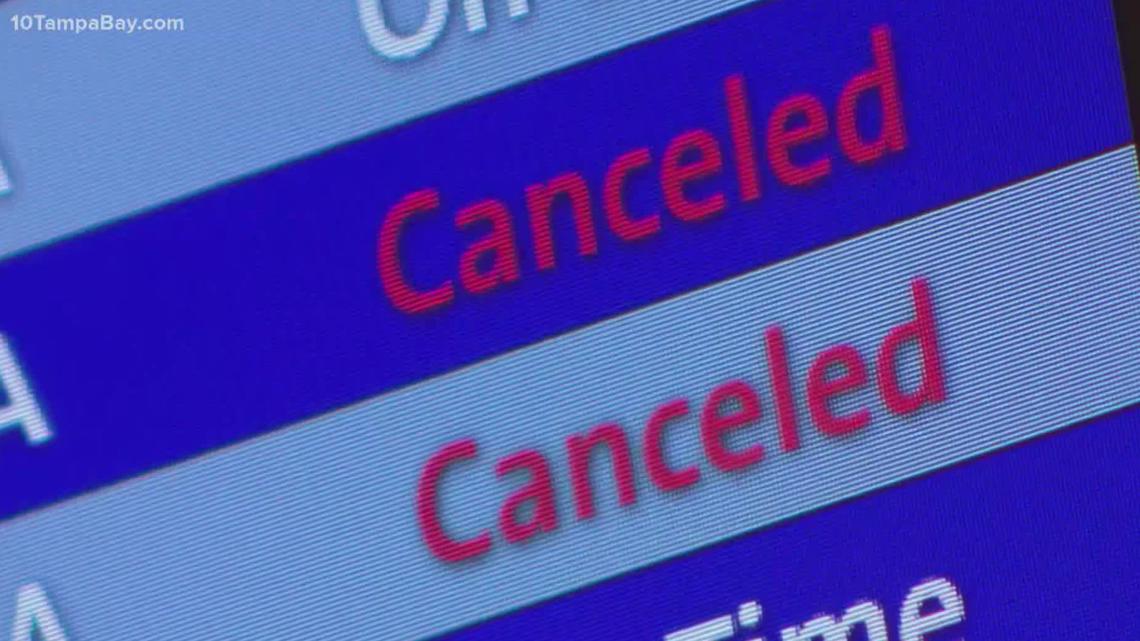
TAMPA, Fla. — News of unlimited delays and cancellations across airlines could have you a little bit nervous heading into the getaway period.

On Nov. 1, American Airways canceled almost 500 flights, when Southwest Airlines dealt with 1,025 delays. Previously this year Spirit was also hit challenging with nationwide cancellations that surpassed 1,700 flights.

The root of the difficulty? Airways are pointing the finger at every little thing from staffing troubles, to pc glitches and inclement temperature. Gurus say the concerns you should not search like they are going to be permitting up any time soon.

“There will be far more delays, linked with the climate specifically as points go in,” stated 10 Tampa Bay Aviation Expert Mark Weinkrantz.

Weinkrantz, a retired business airline pilot, suggests with hardly plenty of workers and computerized flight management there is just no space for error.

Any challenge makes a domino outcome.

“The crews are maxed out. The planes are maxed out,” stated Weinkrantz. “Maintenance now has to again the stuff up. Because they are flying the airplanes. The demand from customers was unexpected to spring again so quickly.”

It really is something that has extra passengers weighing the pros and cons of incorporating travel insurance policies when booking a journey to assistance protect themselves fiscally from worst-scenario-circumstance cases.

According to Squaremouth, a vacation insurance comparison web page, 70 per cent additional vacationers are insuring their outings this holiday break period than they have been in 2019.

“In the the greater part of instances, acquiring a travel insurance policies policy is most beneficial when your journey will involve unused, pay as you go, non-refundable bills, and the bigger the sum of those fees, the bigger the likelihood that you could desire to secure that expenditure with insurance coverage,” Scott Adamski with AIG Travel told Forbes.

Although most coverage varies and you can expect to want to do your research to shop all-around, in this article is what NerdWallet says most procedures will address:

  • Vacation cancellations**
  • Medical emergencies
  • Lost or broken baggage/Baggage delays
  • Travel delay**
  • Flight improve service fees
  • Rental auto injury security

** The insurance coverage usually takes treatment of prepaid, nonrefundable bills if canceled for a included cause like an unexpected damage, lawful obligations, unexpected normal disasters, and so forth.

On the other hand, vacation insurance coverage will never guard you from all situations or go over all expenditures. For case in point, you are out of luck if you terminate for any non-covered purpose or if your reservation is previously refundable.

Listed here are some additional suggestions to consider from TravelWorld Travel Company President Don Oneal:

  • Just simply because you get a delay notification, do not skip a vacation to the airport, he claimed. If your airplane ends up leaving with out you, you might not get reimbursed.
  • Deal with the airline on several platforms like in human being at purchaser assistance, by means of social media, and by cellphone.
  • And take into account vacation insurance plan that covers not only cancellations but delays. Even if you get reimbursed for your flight, the airways may not pay for foodstuff or an unanticipated added resort evening, mentioned Oneal. Protection usually runs from $25 to $45.

“It’s worthy of the dollars,” Oneal claimed. “You know if you shell out $1,500 for the family to go someplace, devote an additional hundred bucks and deal with your guess. Even if you only experienced to purchase a person meal you’d be ahead.”

https://www.youtube.com/check out?v=c_LfXDErgb0