
The big opportunity in insurance for small and midsized businesses

The big opportunity in insurance for small and midsized businesses

Major insurers and new, capital-rich insurtechs have already recognized the potential in serving small and medium-size enterprises (SMEs) and have begun to upgrade their offerings and invest in digital-sales capabilities. Likewise, commercial customers have learned from the private-customer segment that complex insurance can be made simple and are raising their expectations of speed and service accordingly.

The draws of insuring SMEs are clear: new dynamic forces in commercial insurance induced by the COVID-19 pandemic are giving providers a unique chance to expand their portfolios further into this segment. Many SMEs are underinsured, especially smaller and newer businesses. And commercial customers who have been loyal to one provider are more willing to switch than ever. In fact, in a 2020 McKinsey survey of SMEs in Germany, only about one-third of respondents said they were completely satisfied with their current insurance coverage.

In a 2020 McKinsey survey of SMEs in Germany, only about one-third of respondents said they were completely satisfied with their current insurance coverage.


Fortunately, there is a great deal of flexibility when it comes to providing the simplified products and processes that SMEs are calling for.

Many existing products, for example, are far too complex to meet the needs of smaller firms. Automation, standardization, and simple segment-specific tailoring would not only boost customer satisfaction but also visibly improve efficiency. With the right strategy, the appropriate skills, and a suitable business model, insurers can offer SMEs an attractive portfolio that better meets their needs. In this article, we explore examples from Germany, including a 2020 survey of 1,400 German SMEs, that can prove instructive for global insurers looking to make SMEs a priority in their growth strategies.

The SME segment represents billions in untapped premiums

SMEs are the bedrock of most global economies, but the consequences of the COVID-19 crisis are creating waves in the sector and, in many cases, closing doors. In some countries, SMEs remain afloat thanks to generous financial assistance. It is unclear, however, how many of those companies will file for insolvency in the coming months and years, or how many business concepts will never come to fruition because of the strain of COVID-19 on potential entrepreneurs. Whatever the outcome, this changing SME landscape provides impetus and gives insurers new opportunities to expand their portfolios and tailor them to SMEs.

Take the German market, where SMEs (up to €250 million in revenue) have long been a core segment for composite insurers; in 2020, they accounted for 60 to 65 percent of all commercial and industrial premiums. The future holds even more potential: German commercial insurance has enjoyed an average annual growth rate of 2.9 percent. And while just 7 percent of medium-size enterprises reported gaps in their insurance coverage, one-third of the smallest firms identified outstanding insurance needs. According to McKinsey estimates, the untapped market potential (in terms of annual premiums) of underinsured small enterprises and microenterprises in Germany alone could be up to €2 billion. That’s the equivalent of one-tenth of that market’s total premiums today.

Insurers’ SME options are broad and varied

So how can insurers capture these billions in potential? There are several key options that are effective in Germany and could prove instructive for insurers serving similar global markets across Europe, North America, and Asia.

Differentiate for small but sophisticated customers

SMEs represent an extremely heterogeneous target group for insurers: they vary in size and standing, business area, and insurance needs and preferences. These factors make segmentation the key to conquering this sector.

Company size and standing. As in many developed nations, the SME market in Germany is broad and diverse: the segment includes one-person operations as well as major medium-size firms with revenues in the tens of millions. Catering to this range of needs is challenging but worth every effort because SMEs account for 45 percent of Germany’s private-sector revenue. Moreover, a company’s standing and maturity matter. Newer businesses are often underinsured, but they are also subject to fewer risks. As they grow in size and complexity, that initial lower need for insurance products changes.

Business area. Different types of businesses carry different types—and severities—of risk. Industry cycles also play a role, a fact that became even more evident during the COVID-19 pandemic. Economic-recovery simulations carried out by McKinsey have shown considerable divergence in how long individual sectors will need to return to pre-COVID-19 form. Fintechs, for example, will rally very quickly, while the travel and hospitality sector will take far longer to recover from the consequences of the crisis. Insurers can incorporate these different recovery processes into their strategic decision making.

Customer expectations and preferences. Depending on industry, size, and financial situation, SMEs have extremely different insurance requirements. Based on data from the 2020 survey of 1,400 German SMEs, McKinsey has identified five customer segments with distinct expectation profiles and preferences (Exhibit 1). Traditionalists who like getting advice make up the largest group at 25 percent, though their counterparts—those who prefer to do everything online on their own—come in a close second. Insurers can build profitable customer relationships with each of these archetypes through the appropriate products, services, and channels.


SME policyholders fall into five customer segments, each with particular expectations and preferences.


We strive to provide individuals with disabilities equal access to our website. If you would like information about this content we will be happy to work with you. Please email us at: McKinsey_Website_Accessibility@mckinsey.com


Develop long-term customer loyalty

The majority of SMEs are loyal customers—but not for much longer. The survey revealed that 41 percent of customers have already researched alternatives, and around half have switched to a different insurance carrier (Exhibit 2). Most of those switches, however, are related to auto insurance—a product that is traditionally beset by high turnover.


Only 35 precent of SMEs are satisfied with their insurance coverage  and provider.


We strive to provide individuals with disabilities equal access to our website. If you would like information about this content we will be happy to work with you. Please email us at: McKinsey_Website_Accessibility@mckinsey.com


It is not unusual for a company’s risk landscape and business situation to evolve over time—though sometimes this evolution happens abruptly and radically, such as during the COVID-19 crisis. These progressions warrant changes in insurance coverage. For insurers, it is vital to detect this need as early as possible. In-depth monitoring of potential triggers for switching not only helps prevent turnover but also delivers valuable information on how to address customers’ newly emerging needs.

The underlying reasons for switching throughout the segment largely fall into three categories, according to the survey: business situation, premium increases, and external factors (Exhibit 3). While switching because of increased premiums is to be expected, many SMEs are also switching because they are looking to expand into new business areas and hire more employees. These triggers are relevant because they change a company’s risk profile; as a result, insurers must update old ways of working and search for alternative providers and solutions to match these new risk landscapes.


New business circumstances and premium increases are the most common reasons for SMEs to switch insurers.


We strive to provide individuals with disabilities equal access to our website. If you would like information about this content we will be happy to work with you. Please email us at: McKinsey_Website_Accessibility@mckinsey.com


Having the latest data is essential to developing long-term loyalty among SME customers. Insurers and their sales teams should work to continuously improve the customer experience by communicating regularly with policyholders, promptly identifying changes in their business situations, and responding with fitting solutions. Satisfied customers both foster stable portfolios and are effective multipliers when it comes to generating new business through word-of-mouth referrals and online reviews.

Seize the opportunity through proven business tactics

To seize the opportunities presented by the SME segment, some pioneering insurers are relying on a raft of success factors covering all possible dimensions of this market—from specific strategies to designing outstanding customer experiences.

Align the target segment and objectives to company strategy. There are many available SME market opportunities—and the right choice will depend on an insurer’s strengths. The commercial insurance segments that align with an insurer’s core strategy will be the best fit. Insurers will also want to set concrete goals aligned to their strategy, whether those are to increase the number of policies in the portfolio, to propel growth in gross premiums written, to widen profit margins, or to improve customer retention.

Think like a customer. All SME insurers should aim to serve not only as one-time claims adjusters or sales contacts but also as trustworthy supporters throughout the entire insurance customer journey. Doing so can improve customer loyalty and thereby garner new business while enabling insurers to respond to changes in risk more quickly. For insurers, this means that investing in customer experience is an investment in their own growth.

Tailor product portfolios to target customers. As soon as target customers have been selected according to an insurer’s strategy, the product portfolio needs to be revised to offer optimum service to policyholders. Constant monitoring of changes in customer needs is vital and should be followed by implementing the relevant product modifications.

Build and expand technical excellence. Heavily heterogeneous SME risks call for modern price and risk models. In Germany, many insurers still base their pricing on the simplified SME claim-data model published by the German insurance trade association rather than investing specifically in their own capabilities and actuarial and analytical resources. Insurers should instead draw on market-based SME pricing models from public sources, enrich these with external data sources, and rapidly integrate with new digital sales channels (such as software for brokers and agents). The latter form the basis for real-time tariff updates and for capturing real market data in the form of price quote databases that insurers can—and should—use to further improve internal models.

Activate and digitalize sales channels. The increasingly digital nature of brokers, pools, and aggregators makes it necessary for insurers to sell some of their SME products through third-party providers of price comparison or underwriting software. For this to work, insurers must integrate with external APIs, use market standards (such as standardized APIs), and build or maintain IT architectures that digitally support external third-party providers. At the same time, insurers must invest in digital solutions for their own channels (such as brokers, contact centers, and direct sales). If brokers and aggregators can provide quotes in real time, this should also be an option for the agent and direct sales channels. Given the broad spectrum of SME customers, insurers can also benefit from continuous investment in the development and product training of their own sales teams.

Offer seamless customer journeys. Some SMEs already expect a fully digital service, while others are not quite there yet. Now is the time to deliver a customer journey that supports online and offline contact points, depending on the customer’s preference. This requires thoughtful design of the entire customer experience, including all sales and service channels—whether web-based, app-based, or based on phone calls—and a review of product and pricing strategy to ensure parity among channels.

Drive innovation. Competition is bound to intensify. Aggregators and new sales tools will offer greater transparency for a traditionally opaque market. Insurers will have to counter the resulting pressure on average premiums and the claims ratio through a radical redesign of their processes and a well-supported culture of continuous improvement.


Strategic clarity, customer orientation, and operational excellence are essential to successfully tackle the heterogeneity and resulting complexity in the SME segment. New digital processes and differentiated data about customers and risks will help map complexity in the segment to form an innovative business model. In view of the long-standing neglect of this segment and the likelihood of an increasingly dynamic postpandemic market, the opportunities for determined early movers are better than ever.

Edmonton business groups call on city to mend downtown disorder

Edmonton business groups call on city to mend downtown disorder

Company homeowners and local community leaders say social ailment and criminal offense go on to plague downtown Edmonton, even as extra people return to the office environment to get the job done in person. 

Council’s community and general public providers committee started off reviewing the city’s new proposed basic safety and perfectly-currently being technique on Monday and far more than 20 speakers signed up to share their fears. 

Stacy Zaidi, a co-operator of 10 Remedy Cafe areas in Edmonton, stated she anxieties about her employees and customers, who’ve dealt with abusive incidents about the earlier calendar year.

“My employees have been spit on. They have been punched in the facial area. You will find been sexual and ethnic discrimination,” Zaidi informed councillors. 

Zaidi said employees sometimes have to navigate rubbish, human waste and needles to get into the creating. 

“I definitely feel that many of the businesses — we’re on our possess,” she mentioned. “We are shedding our empathy, we’re shedding our patience, and we want enable — now.

Pamela Brown, who has labored in basic safety and stability at Edmonton Town Centre mall for decades, said she supports the group security and very well-becoming method as a instrument to deal with ongoing social condition, which is extra obvious than at any time. 

“Ahead of COVID, the troubles have been considerably masked by the doing work populace,” Brown explained. “With the problems of crime and condition so incredibly evident, that working populace is concerned to return.”

Brown advised residents, corporations and personnel need to have to experience safer, and purchasers who use the mall as a hub want a lot more areas to go, these types of as daytime shelter spaces. 

“In my 40 years, in no way have I observed downtown Edmonton in this kind of dire straits,” Brown mentioned. “Be sure to act now.” 

Ten business enterprise instances

The city’s method outlines ten initiatives that require funding correct absent, including $1.5 million in microgrants for businesses and community groups.

Andre Corbould, city supervisor, reported a pool of $8.4 million out there from the Edmonton police finances can be utilised toward the initiatives, which include $1.5 million towards an built-in call dispatch centre and $1 million for an Indigenous-led shelter. 

Puneeta McBryan, govt director of the Edmonton Downtown Company Association, reported the microgrants are needed but they only go so significantly.

The DBA is establishing a new protection ambassadors system, she explained, which she said would involve $150,000 to $200,000 in the 1st yr. 

Many firms are instantly impacted by critical protection worries, she told councillors.

“They are worthy of to feel protected and totally free to exist peacefully and to make a residing in our downtown and in our main neighbourhoods.” 

Additional police

There also requires to be much more noticeable police patrols, she emphasized. 

“It is unquestionably critical to have legislation enforcement be part of the answer,” McBryan claimed. “We won’t be able to maintain our outreach employees risk-free if we’re sending them out there on their individual.” 

In 2020, council agreed to produce an impartial task power to arrive up with recommendations on enhancing protection. 

Their report, “Safer for All,” was produced in March 2021 and is involved in the selection of reports that make up the full strategy. 

Rob Houle, a member on the job pressure, spoke at the conference Monday and explained to councillors he sees little progress. 

“In this article we are a yr out, and we have pretty small productiveness or completion of the tips that me and my fellow colleagues designed.”

Those people integrated making a additional diverse, inclusive, anti-racist businesses through schooling and recruitment investing in general public security amenities like general public washrooms and shelters and making a new regulatory university for law enforcement and peace officers.

Councillors will carry on talking about the strategy and funding prerequisites at a meeting Tuesday. 

Elon Musk says Twitter deal ‘cannot move forward’ without bot clarity

Elon Musk says Twitter deal ‘cannot move forward’ without bot clarity

Elon Musk reported his agreed $44bn order of Twitter “cannot move forward” right up until the social media platform offers evidence more than the selection of fake accounts, just hrs immediately after he warned the takeover may possibly drop through.

On Tuesday morning, Musk hit out all over again at Twitter main executive Parag Agrawal for refusing to supply proof about the number of bogus accounts. He tweeted that the “deal cannot transfer forward until finally he does”.

His tweet came just several hours just after the Tesla chief acknowledged at the All-In Summit in Miami that a decreased value was “not out of the question”, including to Wall Avenue fears that he is reconsidering his provide for the business.

On Friday, Musk declared on Twitter that he was putting the deal “on hold” above concerns there ended up much more bogus accounts on the platform than the “less than 5 for every cent” that the social media organization claims.

Musk has fuelled speculation on Wall Avenue that the Tesla and SpaceX chief government is searching for to renegotiate the offer or walk absent entirely, even though he has explained he is however dedicated to the transaction.

Requested on Monday if his Twitter invest in would go through, Musk said: “It truly is dependent on a good deal of elements listed here. I’m nevertheless ready for some type of logical rationalization for the quantity of kind of pretend or spam accounts on Twitter. And Twitter is refusing to tell us. This appears to be like a weird thing.”

He mentioned he believed at the very least 20 for each cent of the accounts on the network were fake, and that the proportion could be as large as 90 for every cent.

Musk faces a $1bn crack-up price if he walks away, though Twitter can also sue him to pressure him to go by with the deal except if he can point to any sizeable data that was not disclosed at the time of the arrangement.

Musk mentioned it may perhaps be “a material adverse misstatement” if the variety of bots is very well over the 5 for every cent that Twitter has disclosed. “Like if you reported, Ok, I’m going to agree to acquire your home. You say the home has fewer than 5 per cent termites. That is an acceptable variety. But if it turns out the ideal per cent is 90 per cent termites, which is not Okay.”

Musk latched on to the challenge of faux accounts following a regulatory filing this month in which Twitter recurring a regular warning that its estimate “may not accurately characterize the actual number” of phony accounts, and the accurate complete “could be higher”.

The timing of his intervention more than a longstanding make a difference raised worries on Wall Street that he would use the concern as an excuse to reopen negotiations.

Twitter’s shares fell almost 8 per cent on Monday, leaving them 30 for every cent beneath the $54.20 a share that Musk experienced agreed to pay out for the organization. Most of the decrease came ahead of the experiences of the billionaire’s remarks about likely paying a decrease price tag.

Earlier on Monday, Musk challenged Agrawal on the system following the Twitter main executive printed a prolonged thread outlining the methodology behind its estimate that spam can make up much less than 5 for each cent of its person foundation, declaring that the figure could not be properly ascertained by 3rd events devoid of entry to information these kinds of as IP addresses, geolocation and telephone quantities.

Agrawal wrote: “We never imagine that this unique estimation can be performed externally, given the important want to use each community and non-public info (which we just cannot share).”

He added that the “error margins on our estimates give us self-confidence in our general public statements each individual quarter”.

“We shared an overview of the estimation process with Elon a 7 days in the past and look forward to continuing the discussion with him, and all of you,” Agrawal wrote on Twitter.

Musk replied with an emoji of a pile of poo. In a second tweet, he wrote: “So how do advertisers know what they are receiving for their income? This is essential to the money overall health of Twitter.”

Musk also stated at the Miami celebration that he was open up to the idea of Twitter transforming into a thing in the west akin to WeChat, the all-encompassing “superapp” in China that will allow customers to store, text and publish to social media all in 1 application.

“Such an app would be genuinely beneficial [in the west],” Musk mentioned, incorporating that he was not positive whether Twitter really should become this superapp, or whether it really should be constructed from scratch. But he was specific about 1 point: “This detail wants to exist.”

Online video: Elon Musk talks to the FT about Twitter, Tesla and Trump

3 Personal Finance Habits of Gen Z That We Can All Learn From

3 Personal Finance Habits of Gen Z That We Can All Learn From
  • Gen Z receives most of their money literacy information and facts on social media.
  • They investigation the strategies they discover on the internet for several hours in advance of producing a choice.
  • Unlike older generations, Gen Z will only use a monetary professional as a very last resort.

When it will come to cash, Gen Z will make their own rules.

According to a survey conducted by Insider with 104 folks born in 1997 or afterwards, most Gen Zers received their to start with cell phone right before their 12th birthday. Mainly because of this, individuals 25 and under are extra probable to locate economic literacy instruments on line.

Getting witnessed the Black Lives Matter uprising, Gen Z is also more possible to commit cash in alignment with their social activist views, and 54{1b90e59fe8a6c14b55fbbae1d9373c165823754d058ebf80beecafc6dee5063a} of Gen Zers are also conserving far more because of the pandemic, according to the Point out of Gen Z report.

Insider spoke to financial literacy influencer and investing specialist with TurboTax Humphrey Yang, who has 3.3 million followers on TikTok. Yang warns his generally Gen Z viewers, “I do feel there is a small bit of threat in trusting any individual on the world wide web for the reason that you can get a million followers on TikTok advertising and marketing the erroneous thing.” 

Even with that warning, Yang claims that Gen Z techniques own finance in different ways than older generations in three unique approaches.

1. They master about money on social media

More mature generations may well believe scrolling on social media is a squander of time when they can go specifically to an pro. Yang says, “My parents’ generation looks to actually go by the book. They go by what financial advisors will say.” 

In contrast, Gen Z is additional inventive with finding options. Claims Yang, “The more youthful you go, the extra that they search towards on line assets. So YouTube, TikTok, Instagram Reels, talking to other men and women on chat rooms like


Discord

.” 

2. Gen Z does several hours of research to see if the data checks out

Even while Gen Z finds their money literacy articles on-line, they even now do the legwork of generating absolutely sure the facts they discovered checks out. 

Yang says, “They might see a idea from TikTok, it’s possible from me, perhaps from another person else, and then they go and analysis it themselves and check out to make a selection.”

3. They hold out more time to hire a professional

Yang says that Gen Z will do as significantly study on the personal finance suggestions they obtain on the world-wide-web as possible prior to eventually selecting a specialist.

A person contributing factor to this is that folks under 25 may well not have as significantly income to perform with as a 35-year-previous with better earnings.

“The young era is more self-reliant,” Yang claims. “They’re Googling a whole lot additional. They are studying a great deal additional on the net. And then they go and talk to these older authorities in finance.”

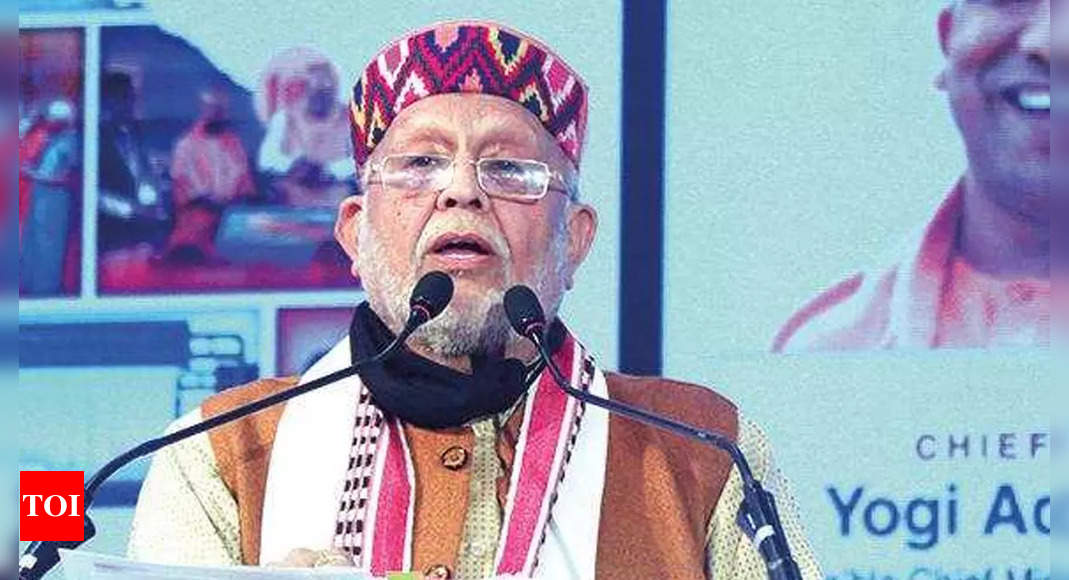
Focus of budget to be on infra, jobs & youth: Uttar Pradesh finance minister | Lucknow News

Focus of budget to be on infra, jobs & youth: Uttar Pradesh finance minister | Lucknow News
Times prior to presenting his sixth budget as finance minister, Suresh Khanna speaks with Rajiv Srivastava about his designs and priorities. The minister suggests that even right after these a massive pandemic, the point out with 80{1b90e59fe8a6c14b55fbbae1d9373c165823754d058ebf80beecafc6dee5063a} selection was equipped to preserve its monetary discipline, which is by itself an achievement. excerpts:
This would be your sixth spending plan as finance minister. What must people be expecting from you?
People today assume a spending budget to make them affluent. Our strategies from the beginning are these kinds of that there is extra public welfare, employment technology and infrastructure creatio n. You need to have observed that money self-discipline in UP due to the fact 2017 is maintained and we have taken decisions that have introduced huge changes in the state’s economic climate.
Chief minister Yogi Adityanath has been chatting about earning UP a a single-trillion economic climate. Until the very last fiscal, the funds size was about Rs 5. 66 lakh crore by when 1 ought to hope UP acquiring this aim?
This target must not be witnessed in a timeframe. But the fashion in which the state’s economy is expanding and in spite of the corona pandemic, our collection has been about 80{1b90e59fe8a6c14b55fbbae1d9373c165823754d058ebf80beecafc6dee5063a}. This even although the l ast fiscal observed a lot more expenditure as as opposed to 2020-21. Even right after these a huge pandemic, the state was in a position to manage its economic self-discipline is itself an accomplishment.
What willpower are you conversing about when the collection past fiscal was much much less than the believed funds?
I would like to inform you that the state was capable to achieve around 80{1b90e59fe8a6c14b55fbbae1d9373c165823754d058ebf80beecafc6dee5063a} collection when it was 74{1b90e59fe8a6c14b55fbbae1d9373c165823754d058ebf80beecafc6dee5063a} in 2020-2021. We, even with the pandemic, have carried out considerably better. This displays the people’s trust in the government’s procedures.
But the Opposition is saying that they have not been equipped to shell out the very last spending plan candidates are crying foul as they have not bought careers, how would you decrease this rely on deficit?
It is an founded reality that close to 4. 5 lakh youths obtained employment in the governing administration sector. Apart from, all over 6. 5 lakh youths acquired employment through employment fare. Appropriate now, the CM’s most popular plan of pill and cell distribution is pretty preferred. We are not only furnishing jobs but also creating youths truly worth work by distributing tablets and smartphones.
Why is the finances size unrealistic when profits selection is only 80{1b90e59fe8a6c14b55fbbae1d9373c165823754d058ebf80beecafc6dee5063a}. This time the spending plan dimensions is envisioned to be close to Rs 6 lakh crore?
This has been like this usually. Realisation has been all-around 80{1b90e59fe8a6c14b55fbbae1d9373c165823754d058ebf80beecafc6dee5063a} only.
FRBM achieved 4. 17{1b90e59fe8a6c14b55fbbae1d9373c165823754d058ebf80beecafc6dee5063a}?
FRBM restrict was peaceful this time for the reason that of the Corona pandemic.
What really should people hope this time from the spending plan?
The principal aim of the budget this time would be on work, youth and ladies. We are focusing on infrastructure. Infrastructure creation aids in the generation of work. Acquire for example Purvanchal Expressway. The infrastructure creation has aided in development of new jobs.
You are conversing about Purvanchal Expressway, the Opposition claims it was their challenge?
This is not genuine. They did very little. We obtained the land and came up with the venture.
The Opposition suggests that you organised an investors’ summit. Then you organised a groundbreaking ceremony and you are once again going to organise a single function in June. But where there are new units, only expansion of aged units has taken location.
There were being MoUs truly worth Rs 4. 66 lakh crore. Of this, Rs 3 lakh crore truly worth investments have been realised.
Can you elaborate on Rs 3 lakh crore investment decision getting viewed on ground?
I really do not have the checklist of these units proper now.
Is the Opposition not in a position to see those assignments?
Their statements have often been deceptive. It is a reality that the groundbreaking ceremony slated on June 3 will see various jobs using shape on the ground. Screen models from China have come to Uttar Pradesh.
Shall people hope relief from soaring expense of fuel and critical commodities?
A single really should review gas selling prices from other states. UP has bare minimum VAT as in contrast to other states like Rajasthan, Tamil Nadu, Delhi and so forth. We have VAT of Rs 16. 49 on petrol per litre and Rs 13 on diesel which is much less than any other state. We also decreased fuel price by Rs 12 when fuel price ranges ended up skyrocketing worldwide.
Why examine charges when 25 crore folks of UP are struggling simply because of high inflation and selling price rise?
It is not about becoming proper or mistaken. The developments at international stage had been not foreseen by everyone. War concerning Russia and Ukraine is just one primary rationale.
Shall people count on aid from value increase following the spending plan?
There are quite a few factors for the value increase. The condition on your own can’t do considerably.
Which sector will be in emphasis in this budget?
Infrastructure will be in concentrate.
There is a lack of wheat, how will you cope with the scenario?
This time wheat buy experienced been less. But wheat export has been banned. Methods are remaining taken and the condition will meet up with the wheat need.
What is your goal as for every 100-day program?
The department’s approach is to provide close to Rs 21,000 crore for different department’s community welfare strategies. That we will obtain in 100 times. Likewise, we have begun an e-pension scheme which will secure pensioners from harassment. Similarly, rules are becoming framed for the Act that would protect people investing in different non-banking finance strategies. The rule would have prosecution power for people financial models who fleece folks of their principal quantity as very well as curiosity.

Cyber Insurance And Reassessing The Cyber Business

Cyber Insurance And Reassessing The Cyber Business

Brian Greenberg, CIO/CTO & Associate at Fortium Associates. Adjunct Professor at DePaul College, Board Member, Trustworthy Advisor, and Speaker.

As incredible as it may well seem, people today have been finding insurance policies for 1000’s of many years. The Code of Hammurabi, written in 1755 B.C., is the to start with identified lawful textual content to explain the notion of insurance plan. Currently, persons and organizations alike obtain insurance coverage to shield them selves from money decline. It’s a way to deal with the danger that we knowledge in day-to-day existence, these as vehicle coverage for auto incidents or wellness coverage for when we get ill. Businesses invest in insurance to control the threat of working a business, like security in the occasion of a fire with industrial residence coverage or a workplace accident with workers’ compensation insurance policies. We use coverage to hedge in opposition to the threat of substantial reduction. These days, corporations have been buying and performing exercises their cyber insurance guidelines for extra than everyone would like or would have imagined.

What Is Cyber Insurance policy?

Cyber insurance policies is a special variety of insurance coverage that safeguards companies from the prices of technology-dependent dangers these types of as ransomware, hackers, info breaches, etc. These varieties of threats are normally not bundled with traditional insurance plan guidelines.

A cyber coverage coverage should really involve coverage for hacking, theft, the destruction of info and denial-of-services attacks, as perfectly as safety from losses triggered to some others, which include community relations expenses, safety audits and investigative costs. Cybersecurity insurance policies is in addition to all the other ways that a organization must consider to defend an organization’s electronic property. To qualify for cybersecurity insurance coverage and manage the insurance policies expenses, companies usually have to full a checklist of their cyber defenses, not unlike having smoke detectors, sprinklers and fireplace alarms when making use of for insurance policy in circumstance of hearth.

What Does It Include?

Normally, insurance plan companies publish procedures dependent on very well-defined scenarios, these as a flood or hearth function or how a particular person really should run a motor auto. These acquainted circumstances allow for insurers to deal with specific dangers dependent on their chance, permitting them to generate policies that have a comparatively predictable publicity for payouts. Cybersecurity, on the other hand, has not been defined in any static, significant manner as the technology landscape and the threats are continually evolving.

With exposures these as zero-working day vulnerabilities, businesses simply cannot eradicate the chance of information loss or company disruption. Each individual corporation ought to decide for cybersecurity insurance coverage as a sound enterprise follow similar to hearth insurance policy. The challenge is comprehension the policy’s language to fully grasp their protection for the forms of cybercrimes they may possibly experience. There are 4 broad categories of prospective losses owing to cybersecurity breaches: business enterprise and operational disruption charges because of to recovery functions, ransom demands, authorized liabilities and lawsuits.

It is important to have specific language to tackle the restoration expenditures and the decline of profits for ransomware situations. An insurance plan could only address the cost of the ransom, which could be nominal when compared to business enterprise losses because of to the operational disruptions and the effort and hard work to recuperate the units.

Insurance plan Businesses Refusing To Insure?

Very well-crafted cyber insurance policy will plainly outline just about every group that will outline the protection and spell out the risk assessment and necessary controls and systems for plan compliance and any prospective exemptions. Numerous feasible situations may well cause an insurance enterprise to refuse protection in situation of a cybersecurity party:

• Failure To Retain: A person most likely perplexing component of cyber insurance is defining what is essential for the plan to be legitimate. For example, traditional guidelines for fire have particularly outlined products and techniques for screening and certification of hearth avoidance equipment and processes. Nonetheless, cybersecurity is an ever-evolving area. Owing to new, however to be deployed assault vectors by hackers, it is difficult to outline the minimal specifications vital for avoidance. Hence, an insurance provider can declare any blanket “failure to maintain” exclusion to deny coverage. There is a further challenge to corporations where there has not been an true breach of any devices induced by “failure to keep.” There have currently been a few lawsuits submitted from some corporations when their clients identified previously revealed protection vulnerabilities that they had not remedied. Unless of course this style of party is explicitly protected, a common cyber insurance plan policy will not include any fees relevant to the lawsuits.

• Act Of War: Political conflicts may impact a organization in numerous unexpected ways. An “act of war” can be interpreted in different approaches, producing area for a further doable exemption clause resulting in a denial of coverage. This clause, and its lack of apparent definition for cybersecurity, can declare a breach was an act of war if the hackers are associated to condition-sponsored pursuits. This reasoning can also be used if the group demanding the ransom can have suspected inbound links to terrorism, building it illegal for insurance plan providers to make the real payments. That would set them in violation of unique laws towards funding terrorist corporations.

Cybersecurity insurance should really be one more item on each and every organization’s checklist next to secure backups, particularly as cybercriminals hire extra sophisticated procedures to accessibility organizations’ digital property. This way, they will be in a position to be certain that if and when their business enterprise-important methods and facts are compromised, they have the right safeguards to decrease the fiscal effect of any security breach.


Forbes Technological innovation Council is an invitation-only local community for entire world-course CIOs, CTOs and technologies executives. Do I qualify?