

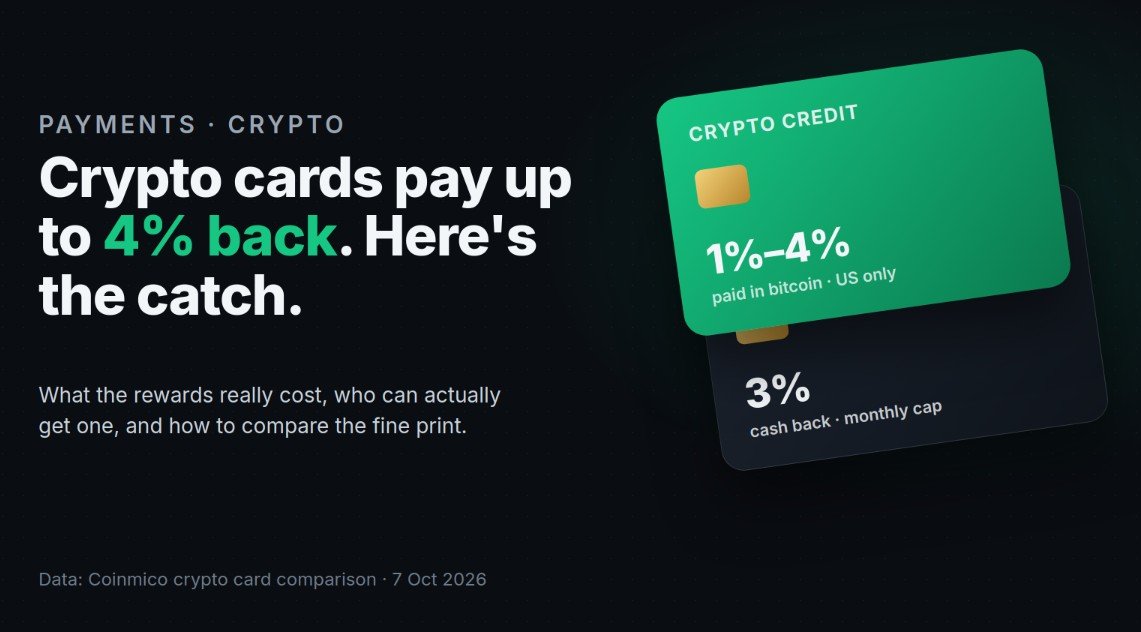
The adverts are hard to miss: a sleek metal card,”up to 4% back in bitcoin”, and a promise that your morning coffee is quietly building a crypto portfolio. As someone who pays for most things by card and is naturally suspicious of anything with “up to” in it, I spent an afternoon comparing a dozen of these cards. The rewards are real. So are the conditions.
How a crypto card actually works
Despite the name, a crypto card does not usually spend crypto at the till. Most are ordinary Visa or Mastercard debit cards linked to a balance at a crypto exchange or wallet; when you pay, the issuer converts your crypto or stablecoins to the local currency behind the scenes, and the shop receives money as normal. A few are genuine credit cards with a monthly bill. The “crypto” part is mainly the reward: instead of air miles or cash back, you get a slice of bitcoin or another token.
The headline rates
Looking across the market, the strongest rewards cluster between 1 and 4 per cent. Gemini’s credit card pays 1 to 4 per cent by spending category, in bitcoin or a choice of 50-plus assets, with no annual fee. Coinbase’s card pays 2 to 4 per cent in bitcoin. ether.fi’s debit card pays a flat 3 per cent cash back, capped monthly. MetaMask’s card pays 1 per cent on the free virtual version and 3 per cent on a metal card. For comparison, a good conventional cashback card pays 1 to 2 per cent, so on paper the crypto cards win comfortably.
The catches
This is where the afternoon went.First, geography: the two highest-paying cards are available in the United States only, several others are restricted to the European Economic Area or the UK, and MetaMask has closed sign-ups in the US and UK entirely. Second, the hidden price of entry: Coinbase’s card requires a paid membership from $49.99 a year, and Nexo’s cashback programme only applies once you hold more than $5,000 of its token. Third, the metal: MetaMask’s 3 per cent tier costs $199 a year, which you need to spend around $10,000 annually just to earn back. Fourth, and most overlooked, the reward is paid in a volatile asset. Four per cent in a token that falls 30 per cent is less than 3 per cent; four per cent in bitcoin during a good year is a great deal more. You are being paid in a lottery ticket, which is either the point or the problem depending on your temperament.
How I ended up comparing them
The thing that saved me from a dozen browser tabs was a comparison table on Coinmico, an independent crypto market data site, which scores each card on reward, cost, regional availability and whether you hold the money yourself or the issuer does. Usefully, it reads the numbers from each issuer’s own terms page and prices the reward tokens on the site’s own market index, so the “4%” is shown as what it is actually worth today. Its current top three are Gemini (8.3 out of 10), Coinbase One (8.1) and ether.fi (7.7).
The verdict for a business or a busy person
If you live in the right country, already hold crypto, and would rather be paid in bitcoin than in pennies, a crypto card is a genuinely better deal than a standard cashback card. If you do not, the fine print eats most of the difference. Either way,the comparison takes ten minutes on the best crypto cards page,and it is ten minutes better spent than on the adverts.