Balancing the books: Growing number of finance related jobs across Europe

Balancing the books: Growing number of finance related jobs across Europe

Equity markets have been knocked by Federal Reserve boss Jerome Powell’s warning that interest rates would continue to rise as policymakers try to tame inflation – Copyright AFP MOHD RASFAN

The world of work continues to change. Trends include a growth of automation adoption, an increasing geographic concentration of employment, the shrinkage of labour supply, and the shifting mix of sectors and occupations. These changes are impacting the finance sector, which has been disrupted by new technology and a growth in new positions.

Finance continues to be one of the most desirable career paths for recent graduates, partly due to the generous salaries that many finance roles provide. Whilst there are plenty of finance graduate job listings all around Europe, which country has the most?

A new report provides an assessment of finance roles and average salaries. This is based on information from CMC Markets and provided to Digital Journal for review in relation to the European Union.

For the analysis, the firm used data from EuroJobs to discover which European country has the most finance graduate job listings.

Country Number of Entry-Level Finance Graduate Listings (EuroJobs) Average Finance Grad Job Salary (EUR)
France 114,947 €39,171
United Kingdom 113,952 €36,675
Germany 66,338 €40,000
Netherlands 32,352 €43,910
Italy 12,539 €28,000
Poland 10,100 €30,561
Belgium 9,426 €37,557
Switzerland 9,390 €70,942
Ireland 9,334 €30,000
Spain 5,099 €30,818
Portugal 3,263 €22,818
Austria 2,814 €33,345
Denmark 2,565 €60,029
Sweden 2,084 €44,136
Greece 1,305 €24,816
Romania 902 €12,871
Norway 772 €45,649
Hungary 690 €16,559
Finland 421 €36,000
Turkey 300 €12,547

France takes first place as the European country with the most graduate jobs in finance, with 114,947 job listings in the last 30 days. The average salary for a graduate finance job in France is €39,171.

The U.K. is next, with 113,952 finance-related graduate job listings on EuroJobs in the last 30 days. The average salary is around €36,675 or £31,613.

Germany has 66,338 job listings for finance graduate jobs, whilst the Netherlands has 32,352. Italy has 12,539, and Poland has 10,100.  Switzerland is the country which pays the highest salaries for graduate finance roles. According to Glassdoor, the average salary is €70,942 or £61,147.

Michael Hewson, Chief Market Analyst at CMC Markets, explains: “There are thousands of finance graduate job listings all over Europe, as our research shows. Working in finance allows graduating students to be exposed to a stimulating, challenging environment early in their careers.”

The analyst adds: “Entry-level finance jobs allow the opportunity to learn quickly in a fast-paced environment whilst developing existing skills and growing in confidence. A career in finance will also improve your analytical thinking, decision-making and reporting skills. Through a nationwide survey, Glassdoor recently voted finance manager the second best job in the UK.”

A Yale Economist Read 50 Personal Finance Books. He’s Got Some Notes.

A Yale Economist Read 50 Personal Finance Books. He’s Got Some Notes.

3 many years back, Yale SOM’s James Choi was placing alongside one another the syllabus for a new course on particular finance. It seemed only natural to check out out a several common books on the subject matter to see if they could possibly comprise any beneficial product.

But when he delved into the bestselling titles, “I was taken aback by how at odds some of the tips was with what we as economists thought was the right thing to do from financial idea,” he claims. The working experience “planted a seed in my thoughts: wouldn’t it be exciting to do a systematic study of what this market of guides is telling viewers to do?”

For the next various several years, and with the aid of a small military of undergraduate research assistants, Choi did just that. He selected the 50 most well-liked private finance textbooks on Goodreads and, in a new paper, catalogued their suggestions on issues together with mortgages, price savings approach, personal debt management, and financial commitment allocation.

In some instances, the suggestions was just plain incorrect. But considerably of it departed from economic theory in techniques that Choi observed harder to diagnose as straightforwardly good or bad. In distinction to most economic models, individual finance gurus were intensely centered on how psychological things these kinds of as willpower and determination perform into economical choices.

For instance, many of the textbooks advocated for preserving 10 to 15{1b90e59fe8a6c14b55fbbae1d9373c165823754d058ebf80beecafc6dee5063a} of your cash flow, regardless of what your money is. Economists, by distinction, would argue for intake smoothing—that is, holding paying out continual above time and saving a lot more as you make more.

“Economic principle claims your savings fee must be lower in your 20s and tremendous large in your 40s to make up for the simple fact that you weren’t preserving really considerably in your 20s,” Choi clarifies. From this standpoint, not saving a great deal in your submit-faculty a long time is “perfectly wonderful, and in truth it’s best.”

Nevertheless, he sees why personalized finance books never suggest the technique. “I imagine it will come from a diverse conception of human nature,” Choi says. These authors see saving as a willpower, so the previously you create the behavior, the much better. Developing the willpower to preserve is “not a trouble for the fictional financial agent in our types.”

(Below, Choi notes, economists may possibly be responsible of a “do as I say, not as I do” strategy. “A small interest of mine has been to inquire many economics and finance professors, ‘What did you do about financial savings whilst you have been in your PhD plan?’” Most discovered a way to save, despite their modest incomes. “I unquestionably did,” Choi admits.)

For well-liked authors, psychological aspects loom similarly substantial in approaching personal debt. If you have received numerous loans competing for your compensation dollars, economists would argue for paying out down the highest fascination personal debt 1st. Remarkably, 10 of the textbooks Choi study recommended in opposition to that seemingly inarguable tactic. They suggested paying down the most affordable harmony financial loans first—the so-identified as snowball strategy—not mainly because it is mathematically audio, but mainly because it presents debt-burdened debtors a a great deal-wanted victory. Choi doesn’t fully agree, but sees the logic: if you’re feeling overcome, zeroing out an account “might be tremendous motivating.”

In normal, a lot of well-liked finance guides took a stance on personal debt that stands in distinction to economists’ more neutral standpoint. “The publications practically universally say it is a horrible idea for you to ever be in credit card personal debt,” Choi states. “Only a person of the guides, by Suze Orman, stated it could be alright for you to have some credit rating card personal debt if you’re just starting off out in daily life and you hope your profits to be substantially larger in the around upcoming.”

Choi also observed a sharp divergence involving economists and well-known authors on the matter of home loans 11 guides characterized adjustable-fee home finance loan as riskier than preset-level home loans. That is not normally accurate, Choi points out. Set-charge mortgages are extremely sensitive to inflation in techniques adjustable-charge home loans aren’t. “Economic models say that most men and women need to want a floating-rate home finance loan, unless of course they are really stretching their finances to buy the dwelling or if interest costs are super minimal appropriate now,” he suggests. “And which is the reverse of the message that you’re having from the well-liked authors.”

In the close, whether or not the assistance preferred finance guides provide is great or poor, Choi sees it as critical to realize. “They reach a ton of persons. Hundreds of thousands and thousands and thousands of individuals pay good dollars to browse these matters,” he claims. “And, frankly, these authors are almost certainly additional influential than economists are.”

“Maybe we as economists ought to think about what’s missing from our tips. Perhaps there are some issues that men and women actually treatment about that we just are not looking at in our versions.”

The really simple fact of these authors’ level of popularity suggests “people uncover their message to be to some degree powerful,” Choi says. “And so probably we as economists should really consider about that and say, hey, what’s lacking from our information? Perhaps there are some serious constraints that persons operate under, or some factors that people actually care about, that we just are not contemplating in our versions.”

It is clear to Choi that there is a have to have for available, effortless-to-adhere to, and accurate tips from trustworthy resources. Many people today arrive at their early 20s with minimal knowledge of how to handle their finance, so turning to well-known guides for guidance is an comprehensible preference. He thinks universities could enable fill the gap—most really do not give own finance programs, but when they do, “there’s too much to handle need.”

And if you’ve followed the wisdom of popular personalized finance gurus—particularly the pro-discounts, anti-personal debt contingent—instead of economists, Choi sees no explanation to stress. Their steering could not constantly be theoretically best, but it is frequently not ruinous either. Right after all, “it’s prudent to stay within just your indicates and not borrow on your credit rating card,” he claims. “That’s not at all mad tips.”

4 Books You Should Be Reading to Build Wealth and Financial Security

4 Books You Should Be Reading to Build Wealth and Financial Security
  • Rebell, who has formerly labored in many reporter roles, specializes in own finance topics.
  • One of her prime picks is “Good Women Finish Wealthy,” which was prepared by her extended-time colleague David Bach.
  • Rebell suggests titles that are aimed at commencing traders up to seasoned savers. 

Portrait of Bobbi Rebell

Bobbi Rebell


Bobbi Rebell


In advance of Bobbi Rebell was a particular finance qualified and host of Money Tips for Money Grownups podcast, she obtained her get started as an intern for Maria Bartiromo, the initial tv journalist to supply dwell reports from the ground of the New York Stock Exchange. 

“I was usually fascinated with revenue — but from a own finance perspective — so I took the leap to get into money journalism,” Rebell tells Insider. 

At one issue Bobbi even worked as an unpaid overnight producer. She eventually went on to work for CNN and CNBC, but it was even though she was a business enterprise information television anchor for Reuters that she was capable to go after her desire in private finance. 

“I found that all of the economical information protection focused on the economic climate and the stock marketplace, but I realized there was a put for own finance,” Rebell says. “I was presented the option to publish a personalized finance column and it truly resonated with audience.”

It was the perception that she obtained via creating this column that led her to publish her to start with e-book in 2016, “How to Be a Fiscal Grownup: Demonstrated Advice from Higher Achievers on How to Are living Your Desires and Have Fiscal Freedom.” It was the achievements of her book that prompted her to depart Reuters and to broaden her private finance information into other avenues of money instruction information.

“I realized that most people today seriously essential a primer on how to get started off dealing with dollars and earning genuinely massive revenue choices like actual estate, investing, and debt administration,” suggests Rebell. 

“To be sincere, most people should not be buying and selling stocks, but honing in on their personalized economic ambitions and the greatest way to get there,” Rebell states. “People today are regularly listening to about investing and only as it pertains to stocks, sit down, browse about different expenditure approaches and decide what operates for you centered on your monetary circumstance.”

Right here are her 4 most loved own finance textbooks that will help you turn into a smarter trader. 

“Sensible Females End Loaded” by David Bach

In “Intelligent Women of all ages Complete Loaded,” David Bach writes about revenue administration and investing with the purpose of building ladies greater buyers and bettering their funds. He emphasizes how significant it is for ladies to take management of their economic futures and outlines 7 techniques that gals should be making use of to begin investing and achieve fiscal stability.  

“It really breaks down challenging fiscal ideas and can make them straightforward to have an understanding of,” Rebell stated about the ebook. “It gives you audio monetary assistance that you can put to use quickly to established by yourself up for fiscal accomplishment.”

“How to Money: Your Greatest Visible Guideline to the Fundamental principles of Finance” by Jean Chatzky and Kathryn Tuggle

In laying out the strategy of “How to Revenue,” Chatzky and Tuggle get the reader as a result of what is referred to as the “cycle of revenue” — earning it, taking care of it, making use of it and looking to the long term. 

The reserve provides functional suggestions, exercise routines and definitions to improve the reader’s awareness around revenue so that the reader gets a lot more comfortable with running their finances. Aimed at younger individuals starting up out, it also covers budgeting, banking, credit rating playing cards and student financial loans. 

“I seriously like this e book mainly because everyone can decide on it up and get began working with their cash superior,” says Rebell. “People today imagine that taking care of their income is difficult — which it isn’t really — but this ebook essentially requires the reader by the techniques to make it less difficult.”

“Get Excellent with Revenue: Ten Simple Steps to Becoming Monetarily Whole”  by Tiffany Aliche

In “Get Excellent with Funds,” Tiffany Aliche (aka The Budgetnista) lays out a 10-action strategy for getting a “peaceful” way to manage your cash and explains the principle of building prosperity as a result of money wholeness: an choice to get rich quick or challenging income administration techniques. 

She points out how quick-phrase steps can guide to extensive-phrase fiscal results. The e-book provides specific action measures for conserving and investing, calculating costs, bettering credit history reviews and fiscal stability into retirement.

“This is just a wonderful guide. It assists you realize the basics of dealing with income,” Rebell says. “There are certain financial fundamental principles that we all have to be excellent with right before we can even commence contemplating about investing and this reserve seriously aids with that.”

“Cashing Out: Gain the Wealth Game by Going for walks Absent” by Julian and Kiersten Saunders

“Cashing Out” describes that the corporate roadmap may well not set you up for monetary flexibility. Julian and Kiersten Saunders examine breaking cost-free from corporate The united states and how to set up your funds so that you dwell your daily life and invest your time on your phrases. 

The husband and wife team condition that they wrote this reserve mainly because several personal finance guides do not take into account how Black Us residents live, get the job done, and deal with income. They deal with spending, preserving and investing, but from the perspective of the Black American working experience. 

“As soon as yet again, this is a ebook that gives you actionable strategies for finding your fiscal home in order,” Rebell suggests. “The actuality that the concentrate is to set you up to retire in 15 decades and to have a stable fiscal basis no matter if you work in company The us or not is a good factor.”

All the Personal-Finance Books Are Wrong

All the Personal-Finance Books Are Wrong

James Choi, a professor at Yale College, was intrigued in educating a distinct type of personal-finance system. He required his curriculum to combine the conclusions of specialized economics papers with the takeaways from glitzy very best-providing guides.

Numerous many years back, he started off poring around dozens of common personalized-finance titles, which experienced offered tens of thousands and thousands of copies, in buy to get a sense of the counsel they ended up dispensing. “I obtained definitely fascinated in this universe of assistance and how was it distinctive from the guidance that we teachers ended up offering about personal savings and investment,” he informed me. He realized that the most well known books tended to offer you finance suggestions that were both noticeably distinctive from tutorial research or, in his words, “just lifeless wrong.”

Choi distilled 50 ideal sellers’ classes in preserving, expending, and investing and lined them up in opposition to the takeaways of mainstream economics investigation. This thirty day period, he printed the results in a new paper: “Popular Personal Fiscal Assistance Vs . the Professors.” His summary: Economists have a tendency to offer you extra rational suggestions, due to the fact they are working with quantities very best sellers are inclined to provide more realistic tips, simply because they are grappling with human behavior—with all of its mess and irrationality.

Possibly the starkest illustration of the variation involving economists and popular authors was the information for shelling out down financial debt. In financial idea, Choi stated, households must always concentrate on prioritizing the payment of their best-curiosity personal debt. Each and every other system is extra costly, considering that you’re just permitting larger-desire prices linger on your every month bill.

But common authors this sort of as Dave Ramsey have proposed a just about reverse strategy. According to Ramsey’s “debt-snowball” approach, you should pay back off debt from smallest to premier, gaining inspiration and momentum as you zero out your accounts. This is far from the most inexpensive system for doing away with debt—Ramsey admits as significantly. But his debt-snowball technique isn’t about complex effectiveness. It is about creating willpower. When people overwhelmed by their financial debt see a lesser account hit zero, it’s so gratifying that they’re motivated to keep on spending down their greater balances.

Choi emphasized that he does not always think Ramsey’s strategy is strategically completely wrong, even however it is technically fallacious: “I imagine of it like diet and physical exercise. You can inform persons to try to eat broccoli and steamed hen for their whole existence. Or you can notify people about cheat foods to get their purchase-in so that they’re enthusiastic to stay on the food plan.”

The very best sellers’ emphasis on setting up momentum and inspiration occasionally strategies into less sensible solutions. For case in point, preferred publications often insist that people today must save at least 10 percent of their earnings no make any difference what. You can believe of this technique as “smoothing” your financial savings fee: Rain or glow, you’re recommended to inventory away a dependable share of profits to establish a discounts pattern in excess of time.

But everyday living is not clean. It’s spiky. A lot of individuals who hardly receive ample to afford to pay for rent at 25 grow to be wealthy ample to effortlessly afford to pay for a suburban home at 40. Some mother and father deluged with working day-treatment bills obtain a massive chunk of money freed up when their little ones transfer on to general public college. For this cause, Choi explained, academics are additional likely to protect low or even adverse price savings fees for youthful folks in anticipation of better discounts prices in midlife. This is the opposite of smoothing your price savings amount it is usage smoothing.

These solutions are far more than competing private-finance tactics they’re pretty much like competing life philosophies. Smoothing your personal savings pays homage to a psychological actuality: Behavior demand discipline and practice. If most people today are bad at out of the blue changing their discounts actions in center age, then advising them to sacrifice even though they are young is acceptable.

But consumption smoothing pays homage to an existential fact: Everyday living by itself is the greatest scarce asset. The foreseeable future is unknowable, and religiously keeping a double-digit personal savings charge as a result of the worst squalls of everyday living is not of the utmost importance. Possessing that specific evening meal with close friends at 23 is, for occasion, a lot more beneficial than getting a few hundred more bucks in your retirement fund at 73. By this logic, constructing a budget that will make you comfortable and delighted in the small phrase, even if that usually means varying your price savings level from ten years to 10 years (or 12 months to calendar year), is the greater approach.

This may be the deepest takeaway of Choi’s paper. Individual-finance ideal sellers be successful by mixing theory and psychology in a way that requires human nature critically and thus justifies the regard of economics professors. But those people who invest a life span delaying gratification could just one working day obtain them selves wealthy in personal savings but lousy in recollections, possessing sacrificed way too significantly joy at the altar of compounding interest.

Possibly several of the most common individual-finance publications could take a webpage from economic theory: There is far more to lifestyle than optimized personal savings patterns.

The best books to read to get smarter about your money

The best books to read to get smarter about your money

There are hundreds of methods on the internet to learn about personal finance, a staggering quantity of financial facts, from free of charge programs provided by faculties and instruction platforms to TikTok influencers and qualified newsletters. This can make it hard to determine the finest resources on budgeting, preserving and investing, but the previously in existence an person starts their financial training, the improved the likelihood of prosperity and achievement.

Through the CNBC Make investments in You digital event, Obtaining Your Fiscal Achievements, again in April 2021, a Rutgers College university student asked a panel of personal finance authorities for their picks on the greatest publications to increase one’s funds abilities. Below is their recommended reading list.

Textbooks on interactions and revenue

Anthony Chan, managing director and chief economist at JPMorgan Chase, cited two guides, the two centered on individual relationships and finance.

“Broke Millennial” by Erin Lowry is a move-by-phase guide that illustrates how to consider your possess comprehending and romantic relationship with dollars. Lowry can take viewers by way of how to get “fiscally naked” with their associates.

Chan also encouraged “The Massive Payoff” by CNBC’s Sharon Epperson.

“I’m going to embarrass Sharon, but ‘The Huge Payoff’ is a person of my favourite types,” he claimed.

In her ebook, Epperson lays out how couples of all ages and all phases can comprehend their financial dreams with each other. 

Extra from Spend in You:
Experts recommend teenagers to acquire a mindful fingers-on method when discovering about crypto investing
How to make guaranteed you’re taking gain of all employer benefits to raise your prosperity
This is how to decide on a health and fitness insurance plan prepare that suits your spending budget and life

Publications on the funds state of mind

A member of CNBC’s Advisor Council, Lauryn Williams knows the right attitude is essential to accomplishing nicely. Williams was the initial American woman to make a medal in both of those the Summer and Winter Olympics.

“You know, as a sports fanatic, we have to get our thoughts ideal to make our human body do what we want. In order to manage our finances accordingly, we 1st have to get our attitude appropriate. So ‘The Psychology of Money’ by Morgan Housel is a good guide to browse,” she stated.

In “The Psychology of Cash,” Housel shares 19 temporary stories discovering the exceptional strategies persons imagine about their income and how they behave with it.

Publications on Benjamin Graham, Warren Buffett and benefit investing

Shark Tank investor and most effective-promoting writer Daymond John endorses Benjamin Graham’s “The Smart Trader.” Graham, who was a mentor to billionaire Warren Buffett, teaches readers techniques on how to use value investing in the marketplaces correctly.

Value investing is a system for choosing shares that traders feel are investing below their intrinsic benefit and therefore deemed low-cost. Finally, these stocks will improve in worth, and the trader will revenue. 

Disciples of Benjamin Graham and two of the most thriving investors ever, Charlie Munger and Warren Buffett’s annual letter to Berkshire Hathaway shareholders has become required reading through for a lot of investors.

Because 1977, Berkshire has introduced a letter to shareholders in which Buffett candidly discusses investments, mistakes he has created, and broader sights on the very good and the bad about the stock marketplace and Wall Street. These letters can all be read on line.

If you want to master a lot more about value investing, creator and investor Phil City recommends Mohnish Pabrai’s “The Dhandho Trader,” a e-book that lays out his framework of price investing.

Pabrai’s reserve tells the story of how the Patel loved ones from India came to very own around 40{1b90e59fe8a6c14b55fbbae1d9373c165823754d058ebf80beecafc6dee5063a} of motels in the U.S., growing on concepts of price investing. 

In 2007, Pabrai and Person Spier bid $650,000 on the likelihood to dine with Buffett. This turned out to be a bargain: last year’s winner compensated over $4 million for the honor of dining with Buffett.

Immediately after lunch with Buffett, Spier wrote his very own e-book, “The Schooling of a Price Investor.” Spier’s memoir is candid and usually takes audience from the darkest corners of Wall Road to a functional information on what it requires to become a successful investor.

Both Pabrai and Spier continue to write-up musings on particular weblogs. 

CNBC’s Warren Buffett Archive is another terrific useful resource for almost everything Buffett. With 130 several hours of searchable video and 2,800 web pages of transcripts, audience and viewers can get a entire Buffett training. 

Indicator UP: Income 101 is an 8-week studying course to financial flexibility, shipped weekly to your inbox. For the Spanish version Dinero 101, click on in this article.

Check OUT: 78{1b90e59fe8a6c14b55fbbae1d9373c165823754d058ebf80beecafc6dee5063a} of personnel disregard ‘the finest money-producing asset’ for retirement, says CPA. Here’s what it could be costing them with Acorns+CNBC

Disclosure: NBCUniversal and Comcast Ventures are investors in Acorns.

7 Personal Finance Books to Gift Friends Who Want to Get Ahead

7 Personal Finance Books to Gift Friends Who Want to Get Ahead

Looking for the perfect gift for your loved one? Clothes and gadgets may go out of fashion, but knowledge is forever — especially when it’s knowledge that will benefit a bank account. These books will allow you to gift your friends and family personal finance expertise — and although there are an infinite number of websites, influencers and apps to help you manage money, few are equal to the experience of diving into a well-researched book. 

We’ve compiled some of the best personal finance books for all audiences. That includes books for new investors, young adults, sole-income earners and everyone in between. Some are personal favorites and others are from Amazon’s bestseller list, a few are brand-new and others have withstood the test of time. You’ll even find a couple that aren’t entirely about money, but all are good reads filled with worthwhile financial lessons.

Amazon

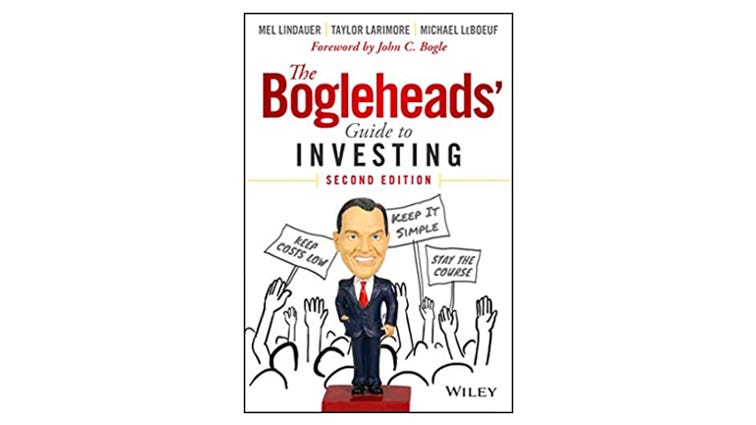
A favorite New Year’s resolution is to start investing, but what does that actually entail? Look no further than The Bogleheads’ Guide to Investing, the perfect manual for investors of any age or experience level. Espousing the investing wisdom of Vanguard founder John C. Bogle, this irreverent guide will teach you how to avoid Wall Street pitfalls and beat the market.

Amazon

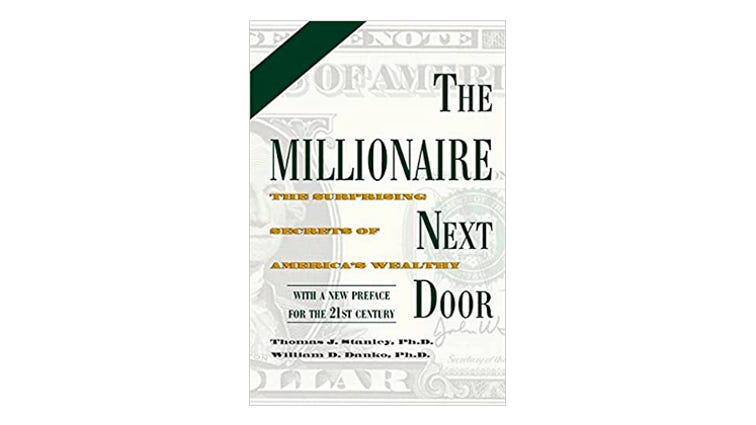
Originally published in 1996, this compilation of research on America’s millionaires is ever enduring. It debunks the myth that “wealthy” equals “high-income” and emphasizes the importance of living below your means. Almost two-thirds of America’s wealthy are first-generation rich, and this book can teach financial tips on how to budget and invest your money.

Amazon

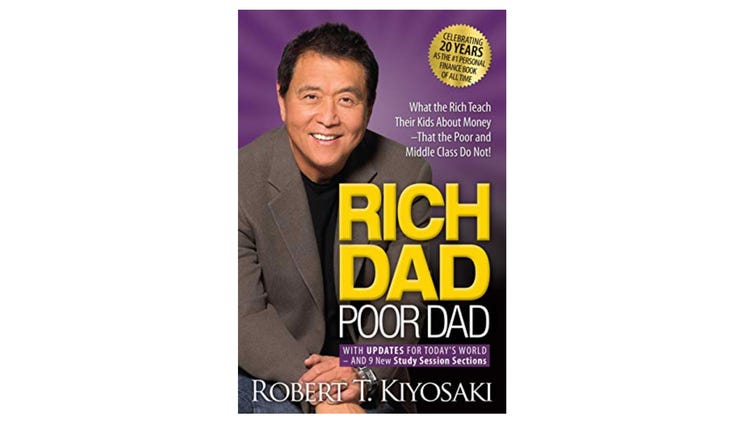
If you’re on personal finance TikTok, you may have seen this entry on your For You page, so you know it’ll make both a timely and relevant gift. Kiyosaki’s premise is that you can become rich regardless of your salary — it’s all about making smart decisions about your money. Geared toward parents, this book will help you better understand your money so you can teach your kids to start managing their finances. Given that most schools don’t teach personal finance, this is a helpful tool designed to walk you through educating your children about money and fiscal responsibility.

Amazon

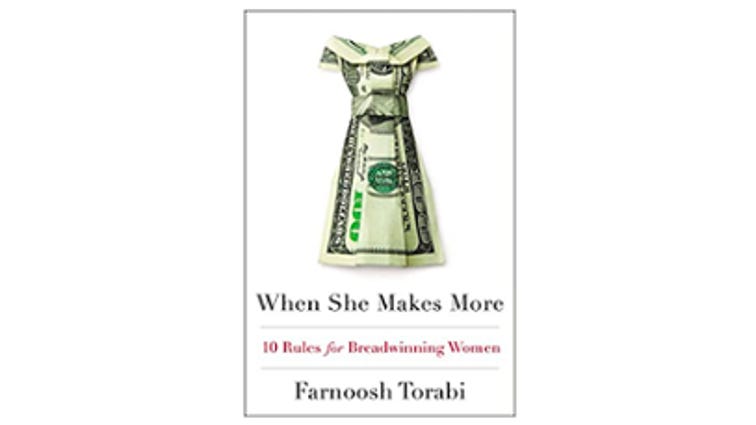
It may be 2021, but women earning more money than their spouses can still feel taboo. This book is the perfect gift for any woman who brings in the lion’s share of a household’s income. It covers professional and personal topics to create the ultimate guide for any modern woman seeking to successfully navigate money, career, family and relationships. CNET Editor at Large Farnoosh Torabi incorporates personal stories and startling statistics while offering relevant advice for not only sole-income and high-earning women, but every couple merging or maintaining their lives together. 

Amazon

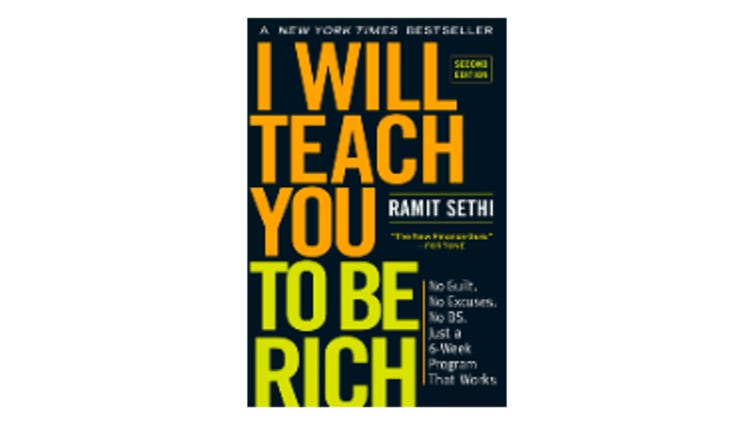
This New York Times bestseller details a simple, effective six-week program to achieve financial competence, dealing with topics from credit cards to automatic bank accounts. I Will Teach You to Be Rich is geared toward readers in their 20s and 30s who are overwhelmed by the world of personal finance and have no idea where to start. Its straightforward approach and useful tips will cut through any confusion and help you get your finances in order with minimal hassle.

Back Bay Books

Outliers has been a perennial favorite since its publication in 2008. Gladwell asks the frequently overlooked questions: What makes successful people stand out? What are the circumstances and opportunities behind the glitz of success?

From the 10,000-hour rule to the importance of “practical intelligence,” Gladwell encourages you to defocus from how success looks and instead think about how success is achieved. An intellectual journey for readers of all ages, Outliers is an analytical insight into the tools, secrets and habits used by successful people. We’d label it a must-read — after all, success in personal finance can be connected to achievements in other areas of life. 

Amazon

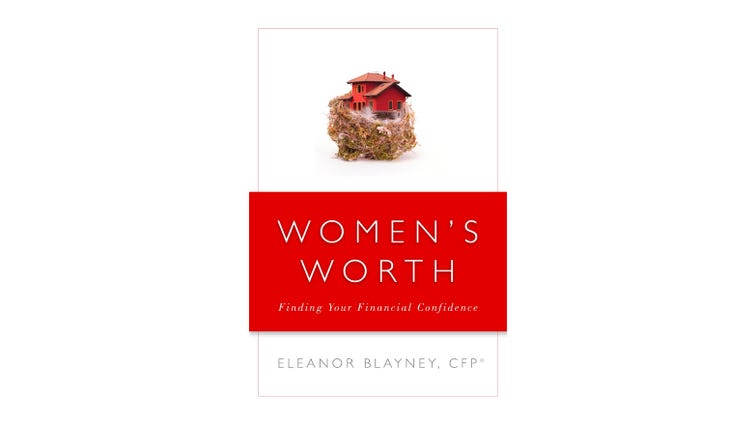
Women live in a world with unique financial needs: They tend to have less saved for retirement, be more conservative investors and see money in terms of impact on family and community. It’s time for their financial advice to reflect that disparity. Certified financial planner Eleanor Blayney offers practical, easy-to-follow advice that centers around two goals: women achieving a high level of financial competence and the creation of forums for women to discuss best financial practices and spread the wealth. This is the perfect gift for any woman in your life who wants to build up their financial literacy. 

Read more

The editorial content on this page is based solely on objective, independent assessments by our writers and is not influenced by advertising or partnerships. It has not been provided or commissioned by any third party. However, we may receive compensation when you click on links to products or services offered by our partners.