What Grandview Heights school-supplies and craft store was closed last summer after 90 years in business?
What power company intentionally shut off electricity to many Columbus neighborhoods in June to keep power outages from spreading after a severe storm and then a heat wave?
What well-known Columbus family has received state approval to turn part of Darby Dan Farm into a solar farm?
Which local bagel shop is being sued by Block’s Bagels for allegedly violating several terms of a licensing and supply agreement?
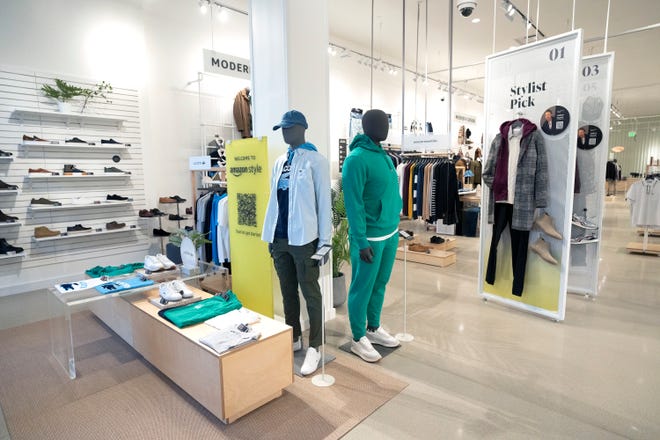
What international e-commerce giant opened a clothing retail store in Easton Town Center, in a space once occupied by Forever 21?
How many Max & Erma’s locations are left in central Ohio?
Which luxury fashion house returned to Columbus for the first time in over 30 years?
Gasoline prices in central Ohio hit an all-time high in 2022. How high did they get?
What location is being studied for a possible Amtrak stop in Columbus?
What renewable fuel that is included in unleaded 88 is growing in popularity in central Ohio?
Which month hit the highest mark for 90-degree days in central Ohio in more than two decades?
Intel and Honda have both pledged to achieve carbon neutrality with their new factories in central Ohio. What is one method they will use to help them do that?
Developers of a 31-story building next to the North Market have picked a name for the site. What is it?
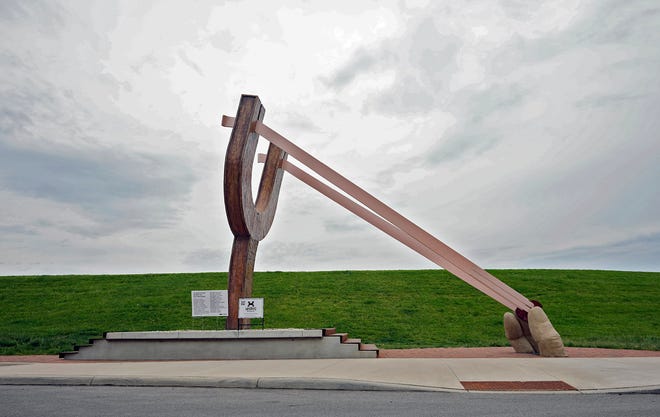
What developer built a 20-foot-long slingshot at the corner of Sullivant Avenue and Lucas Street in Franklinton, next to the River & Rich development?
Customers of Columbus-based Bread Financial faced what problem over the summer?
Answers
Intel is building two factories, called fabs, that will employ 3,000 workers when it begins producing semiconductors in 2025.
The Honda battery plant will help the automaker transition to electric vehicles.
Star Beacon Products, the go-to place for school supplies and arts-and-crafts materials, fell victim to the pandemic.
American Electric Power says it had only a few minutes to decide which Columbus neighborhoods would lose power after being ordered to reduce demand to keep outages from spreading.
The 2,400-acre Pleasant Prairie Solar Energy project planned for Pleasant and Prairie townships includes 900 acres from Darby Dan Farm belonging to the Galbreath family.
Block’s Bagels, founded in 1967, alleged that Fox’s owner Jeremy Fox violated a 10-year supply agreement originating in 2016.
Amazon opened its second Amazon Style location in Easton Town Center in October.
One, in Lancaster, after the Reynoldsburg location closed.
Italian luxury fashion house Gucci opened at Easton Town Center in July, its first location in Columbus after closing at Columbus City Center mall in the early 1990s.
$5.07 per gallon on June 8, according to AAA. Prices have fallen since, back to around $3 per gallon.
The Greater Columbus Convention Center. It is part of a plan that would connect Ohio’s four largest metropolitan areas: Dayton, Cincinnati, Columbus and Cleveland.
Unleaded 88 is 15{1b90e59fe8a6c14b55fbbae1d9373c165823754d058ebf80beecafc6dee5063a} ethanol. The surge in growth in central Ohio is due to the arrival of Sheetz more than a year ago.
Temperatures hit 90 degrees on 10 days in June, the most since 1999.
Through the use of carbon credits that fund renewable energy projects to offset the use of electricity by the companies.
The $300 million project is called the Merchant Building.
Casto. Franklinton artist Andrew Lundberg, who runs Lundberg Industrial Arts, designed the Franklinton Slingshot as “a visual reminder of our momentum as a community while maintaining the mischievous nature of the artists that make us who we are.”
The walkway, running from South Third Street over South Fourth Street and into the Young Street parking garage, is modeled after New York City’s High Line elevated path.
The Hilton Columbus Downtown’s new 28-story tower was finished in the fall.
Workers at the Starbucks on the corner of Broad and Third streets Downtown, in Westerville and on the Ohio State University campus are among workers nationwide who have voted to unionize.
Behind walk-in freezers or down secret stairwells, speakeasies have continued to grow in popularity locally.
OhioHealth announced that 637 workers, the most in its information technology workforce, was the company’s largest single layoff.
Hyperion plans to build hydrogen fuel cells in the factory, in the former Dispatch printing plant, at 5300 Crosswinds Drive.
From the diminished presence of Ohio’s richest man in the local business scene to the bankruptcy of the owner of Polaris Fashion Place and several other local malls, 2021 was packed with business stories that changed Columbus. Here’s a sampling.
The Columbus Dispatch investigated claims of racial discrimination made by current and former employees of Equitas Health, a Columbus-based health-care provider for the LGBTQ community. Following the report, former CEO Bill Hardy and other senior leaders resigned from the organization. The board hired an interim chief people and culture officer and employed a law firm to conduct an independent investigation of the alleged racist culture in the workplace.
In September, Mayor Ginther signed an executive order on Friday that would require everyone, regardless of vaccination status, to wear masks inside publicly accessible buildings. While business owners said supported the decision amid surging cases of COVID-19, they expressed concern about enforcement. They told stories of customers starting fights, damaging property—and even spraying mace.
Washington Prime Group, the Columbus-based, publicly traded owner of Polaris Fashion Place and 100 other shopping centers, filed for bankruptcy protection in June, after struggling for more than a year with pandemic-reduced traffic and sales. Washington Prime operated as usual as it worked out an arrangement with creditors, and Polaris even added two major tenants: FieldhouseUSA and Public Lands. In November, the company emerged from bankruptcy as a private company under the direction of its largest creditor, the investment firm SVPGlobal. In addition to Polaris, Washington Prime Washington Prime also owns Indian Mound Mall in Heath; the Mall at Fairfield Commons in Beavercreek; Dayton Mall; New Towne Mall in New Philadelphia; Lima Mall and Lima Center; Great Lakes Mall in Mentor; and Southern Park Mall in Youngstown.
Shortages, delays and rising prices became common throughout much of the economy, whether it’s cars, new homes or grocery stores running short on basics, such as toilet paper, because of surging demand and not enough workers.
Work began in earnest on The Peninsula, the 26-acre development next to COSI in Franklinton. Significant construction progress was made on the first six buildings in the development: two apartment buildings, a hotel, an office building and two parking garages. Developers were pleased enough with early tenant interest that in November they announced the next phase: a 30-story apartment building and a seven-story office building, both built atop a four-story parking garage. When completed, the development is expected to include up to 2 million square feet of offices, 1,800 residences, 200,000 square feet of retail space and 400 hotel rooms.
The Columbus-area housing market spent the year smashing records, as a mountain of buyers competed for a hill of homes by offering incentives such as appraisal gaps, no-remedy inspections and escalation clauses. In the first 11 months of the year, the median sales price of a home in Greater Columbus was $260,000, up from $231,750 in the previous year. Columbus-area homes sold for an average of 102{1b90e59fe8a6c14b55fbbae1d9373c165823754d058ebf80beecafc6dee5063a} of their asking price and in an average of 16 days in 2021. The market was so super-charged that in the spring, homes were selling faster in the Columbus area than anywhere else. Buyers received discouraging news at the end of the year, when the listing service Realtor.com projected the Columbus area to be one of the nation’s hottest housing markets in 2022.
Schoedinger Funeral & Cremation Service, Columbus’ oldest family-owned business, announced in December that it had reached an agreement to be acquired by the Houston company Service Corporation International, the nation’s largest operator of funeral homes. Founded in 1855, Schoedinger is now run by its sixth generation. Schoedinger said the sale will be largely invisible to customers. All 12 Schoedinger funeral homes will remain, along with the company’s 180 employees, including five family members. Service Corp. International, which also goes by the trade name Dignity, operates more than 1,900 funeral homes and cemeteries in 45 states and eight Canadian provinces.
As white-collar employees continued to work from home, office vacancies in Greater Columbus continued to climb. By fall, more than 20{1b90e59fe8a6c14b55fbbae1d9373c165823754d058ebf80beecafc6dee5063a} of offices in the area were vacant, not including those that sat empty but were still paying rent. Meanwhile, developers continued to build new offices in the hopes that companies would still be drawn to new space with new amenities. While vacancies could be found throughout the Columbus area, they were especially acute in some Capital Square towers; during the third quarter, four high-rises around the Statehouse were at least 60{1b90e59fe8a6c14b55fbbae1d9373c165823754d058ebf80beecafc6dee5063a} vacant. By the end of the year, corporate employers showed little appetite for returning to offices as some retreated from scheduled back-to-work plans.
Renewable energy company Savion is moving ahead with plans to build one of the biggest solar farms in the U.S. on farmland in Madison County that includes land owned by Microsoft co-founder Bill Gates. The 10,000-acre Oak Run solar farm would be built north of London near Plumwood and would cost at least $1 billion to build. The project includes 6,300 acres owned by Gates. If approved by state regulators, construction could begin in 2024 or ’25.
Google announced it will invest an additional $1 billion in New Albany for its data-center operations while buying additional land in Columbus and Lancaster for more data centers. Rising demand is behind Google’s $1 billion expansion in New Albany that will triple the size of those operations. The Columbus site is the home of the old Hartman Farm off of South High Street. Google said its purchase of 618 acres in Columbus and Lancaster will be for future potential development for data centers, and will give the tech giant more than 1,000 acres of land in the Columbus region.
There were so many fraudulent claims for unemployment benefits filed in Ohio that claims were even filed in the names of Gov. Mike DeWine and Lt. Gov. Jon Husted. At one point last January, 796,000 claims out of 1.4 million filed under a federal pandemic unemployment program were flagged for potential fraud. Meanwhile, the state struggled under the weight of legitimate claims for benefits with unemployed workers complaining of lengthy wait times to collect benefits.
COVID-19 has created a plethora of problems from global supply chain bottlenecks to labor shortages so severe that Greater Columbus businesses have struggled to meet surging demand. Beyond delays and shortages, soaring transportation prices are pushing up costs, further frustrating customers, say business executives. The problem dates to the early days of the pandemic in March 2020 when the global economy was largely shut down. Then the unexpected happened: One of the steepest, quickest downturns in U.S. history was followed by a snapback nearly as sharp, even as COVID-19 cases raged out of control.
Sheetz officially entered the Greater Columbus market in April when it opened its first store in Delaware. The Altoona, Pennsylvania-based restaurant, convenience store and gas station company had nine stores opened in the Columbus area by the end of the year and is on its way to 50 stores by 2025. The store is known for its avid fans called Sheetz freakz.
In January the Columbus city council approved a 15{1b90e59fe8a6c14b55fbbae1d9373c165823754d058ebf80beecafc6dee5063a} on third party delivery service fees, but the law only applied to contracts negotiated after the rule’s passage. As a result, most Columbus restaurants did not benefit from the rule because they were unwilling to renegotiate their agreements for fear of losing them altogether. While restaurateurs felt the third party services were exploiting a loophole in the law, the companies said they were following the rule as it was written.
Ohioans filed to start their own business in record numbers during the pandemic, but economists are divided on what exactly the surge means. Many of the startups have no web presence and their owners did not return messages seeking comment, but others said they started their own business because they wanted greater flexibility or the ability to work from home during a global pandemic.
Restaurants across Ohio had to close in 2021 because they couldn’t find enough workers, a problem that some business owners attributed to enhanced unemployment benefits. When those benefits, expired, however, the hiring woes continued. Workers who left the industry cited a raft of reasons for their decision, including a lack of childcare, rude customers and low pay.
The coronavirus pandemic exacerbated some of the stresses farmers face as commodity prices skyrocketed lockdowns cut off their support networks. Now Ohio State University’s extension service is training its workers to better spot some of the signs of mental illness and offer help to farmers who need it. Farmers are already more likely to die by suicide than the general population, and experts fear COVID will make the problem worse.
Record levels of adoptions in Ohio inspired feel-good headlines about shelter animals finding good homes. But as the owners of those pets returned to the offices and social activities they abandoned for much of 2020, the so-called “COVID puppies” needed more medical care, inundating animal hospitals and veterinarians offices across the state and resulting in weekslong wait times.
Gale King, former Nationwide Insurance executive vice president and chief administrative officer, announced her retirement after 37 years at the company. She was celebrated for leading diversity, equity and inclusion efforts, creating an engaging work culture and mentoring leaders in the company and beyond. Her impact was praised by current mayor, former mayor a former Ohio Supreme Court justice and many others.
The construction of the Columbus Crew’s new $313.9 million, 20,000-seat stadium and $34.2 million training facility were completed with the help of 54 minority-owned enterprises and 27 women-owned enterprises in central Ohio, throughout the state and beyond. A total of 117 contracts were awarded to minority- and women-owned contractors (79 minority-owned contracts, 38 women-owned contracts) amounting to over $74 million in spending. Beyond the financial benefit, underrepresented companies said these efforts have given them access to key players in the industry.
The Ohio RISE Survey, created by the Alliance of Black Businesswomen & Entrepreneurs (ABBE) Ohio, tracked the impact of the pandemic on Black women-owned businesses and assessed their needs for survival moving forward. The research found that nearly 70{1b90e59fe8a6c14b55fbbae1d9373c165823754d058ebf80beecafc6dee5063a} of responding businesses reported a loss of revenue, and 30{1b90e59fe8a6c14b55fbbae1d9373c165823754d058ebf80beecafc6dee5063a} were forced to close temporarily. And their most pressing needs were access to capital, greater business operational support (including technical assistance) and an equitable opportunity to get private and public contracts.
Dispatch business reporters Jim Weiker, Erica Thompson, Patrick Cooley and Mark Williams contributed to this report.