

Industry Focus: Business Insurance – Nevada Business Magazine

Industry Focus: Business Insurance – Nevada Business Magazine

Left to Right: Shawn Cropper, JPG Insurance • Connie Brennan, Nevada Business Magazine • Matt Harris, Coreprime • Tom Burns, Cragin & Pike, Inc. • Tim Rogers, City National Bank • Mary Thompson, Capstone Brokerage • Russell Swain, GLB Insurance Group of Nevada • Dante Thompson, Insurance Group of Nevada • Susan Bauman, Nevada Independent Insurance Agents
Online Participant: Barbara Richardson, Nevada Division of Insurance

It’s no risk to say business insurance is a complicated industry. And those in the industry are going through some of the same issues as their counterparts in other fields, including staffing shortages and lingering COVID-related problems. Regardless, executives, who recently met in a hybrid online and in-person roundtable to discuss these issues, are optimistic about what’s to come for business insurance. The roundtable was sponsored by City National Bank and held in Las Vegas.

Connie Brennan, publisher and CEO of Nevada Business Magazine, served as moderator for the event. These monthly roundtables bring together different industries to discuss issues and solutions.

How has COVID Changed your Office Environment?

Tom Burns: It’s driven the conversation of remote working. We were approaching putting together a policy that addressed [remote work] before COVID hit because it tended to be an interview question [from interviewees]. While that was an oncoming thing, it wasn’t as prevalent as it is today. COVID hit and we had to stop working [on the policy] and [start] doing it.

Dante Thompson: Technology plays a huge part in it. As with Zoom and Microsoft Teams, we’re able to collaborate with one another in real-time. The technology has helped get [us] to work, keep everything on pace, make sure everything was going according to plan and the procedures were going in a good direction.

Barbara Richardson: COVID opened people’s minds to an alternative that probably most of us hadn’t thought about. How [does] remote work, hybrid work, affect our employees? How can we get the best of both worlds? There’s still a shake-out happening as people try to figure out what works best for them and for the corporate culture. This was eventually going to happen, but COVID made it happen [faster].

Mary Thompson: The other issue is what people want in a job as far as hybrid or virtual and coming into the office. In the insurance industry, people need to be around people and the newer generation just doesn’t want to participate. It’s a huge challenge.

Russell Swain: The hybrid model is really starting to take hold in our organization. We’ve got about 130 employees statewide now. And we’re talking about collaboration and how we can share people. If there’s a shortage up north, we can help there. Culture is important, and we haven’t had that for the last two years. It’s nice to be able to see people face to face.

Burns: Our charge, as leaders, is to reiterate the soft-touch things we used to do in passing in the office. [We] have to be more intentional now in different ways. Encouragement of employees has to come more intentionally and in different ways.

Shawn Cropper: We had a unique experience at our office. When COVID hit, we went completely virtual. We didn’t have any issues with that. I like the workspace, the culture. I want people in [the office], and to be able to see and communicate [with them]. When we had a discussion a few months ago [to bring people back in], our people pushed back hard. We found their productivity was as good or better working remotely. They probably do laundry and some personal things throughout the day, but the number of hours and time spent [working] was increased. Some people, you don’t have to monitor, they’re great. Some you [need] to have technology to know when they’re logged-in and working. It’s a case-by-case. It’s [not] necessarily fair to punish the higher percentage of people who are efficient, and get work done because of those that need a little bit more oversight.

Are Insurance Rates going to Continue to Climb?

Mary Thompson: : It depends on the line. On the health side, you’re looking at 15 to 30 percent rate increases year-over-year. In the auto market, I just delivered a 120 percent increase. The excess market is at least double in auto. (Excess is a form of insurance that covers businesses with high risk and otherwise have trouble finding coverage in the traditional insurance marketplace.) Pretty much, whatever you paid last year, you’re paying double it this year. A lot has to do with the industries and the exclusions being permitted. It’s become very challenging.

Burns: The property-casualty market is subject to lots of cycles and is fairly undisciplined. It goes up and down. We’ll see relief at some point on the property-casualty side. The challenge on the health insurance side is, we haven’t seen medical insurance inflation decline at all over the last 25 to 30 years. Health insurance pricing is just going to follow that. As states mandate coverage, that causes the cost of healthcare to go up and health insurance is going to trail the cost of healthcare.

Matt Harris: We always harp on this whenever we’re talking to clients [about healthcare]. It doesn’t matter if you have insurance or if you’re just going in and paying cash. The cost of the visit is going to go up and up every single year. We have virtual medicine components of our plans. The shift to virtual care is a trend in the medical space that could help keep those rates [from] increasing. It’s still going to go up but being able to divert 80 percent of the utilization into virtual visits, the carriers love that. The employees sitting at home love that. That trend is going to put downward pressure on that increase.

How can Small Businesses Combat Rising Costs?

Susan Bauman: Some employers choose to take less coverage, have higher deductibles or more falling back onto their employees. The impact is not just hitting the employer, it’s hitting everyone. It’s hitting their staff and how their families can afford or utilize insurance.

Mary Thompson: [Businesses are] mandated to provide [health insurance] if they’re over 50 [employees]. We haven’t seen too much in the small market where they’re not [covering employees] because we’ve got some great platform programs out there.

Richardson: There’s also a federal law people don’t really talk about that has some cost controls for small businesses. It allows them to pay their employees a portion of their health costs, say $500 a month. Employees can take advantage of risk and cost adjustments and potentially get their insurance at a very low cost. And employers are still offering to provide them some benefits. Hardly anybody in the state takes advantage of it.

What should Small Businesses Look for when Choosing an Agent?

Cropper: Most times small businesses just contact whoever they get referred to by someone they have a relationship with. They very rarely reach out to a handful of different agencies to get competing quotes or information. Oftentimes it leaves them with coverage that may be fine, but they don’t necessarily get the service, expertise or packages that could be available to them if they were dealing with a better professional.

Burns: You want to find a partner that is going to look after your insurance needs. Insurance is probably the most expensive, complicated thing you don’t understand that you have to pay for. [It’s important] to have somebody that understands the ins and outs of it, and you trust. It’s a critical part of having that partnership.

Cropper: The interesting thing is, the smaller and less insurance a business needs, the more they need as far as, expertise, training [and] education. It becomes difficult because a lot of agencies have a revenue threshold. They don’t want to take on clients under a certain threshold, and those clients seem to be the [neediest]. So, you spend the most amount of time with people that provide the least amount of revenue to your agency, and that can be a challenge as well.

Harris: So much is just choosing an agent or a broker that [can] add value to the process. So much now on the insurance side is commoditized so it doesn’t matter who you go to. A one-on-one broker can quote and show you all the different options. The question is, how easy are you making that process from start to finish? That’s where the agents and brokers that are going to continue growing are going to focus their energy and investment. If you’re a client, that’s what you need to be looking at. Just showing different options [for insurance] is just passing the bar. What else are you going to do to make this process easy?

Tim Rogers: From the banking standpoint, when we lend somebody money, we say, here’s your minimum required insurance. You’d be surprised when you give that to a client, a business owner, they’ve just gotten a price on the bare minimum. They don’t realize until they have a loss that they should have had more.

Mary Thompson: The average business consumer doesn’t have a clue what they need or what could happen. So, when you’re selecting an agent or broker, [ask yourself] what they bring to the table. What else are they doing besides providing a quote?

Bauman: They should look for trusted, choice agents. They should be looking for an independent agent because the agent is then representing their best interests and able to go out to any carrier or look specifically at what their needs are and go to carriers that will provide that for them.

Swain: As a past president of the Nevada Independent Agents [I’ve] served in that role to help educate, promote and provide a diversity of tools to our clients. We’ve had nine past presidents in our firm in the 82 years of history that we’ve been in Las Vegas. We’re proud of that and we like to be able to offer those diverse products to our clients.

What Types of Laws and Protections are in Place for this Industry?

Richardson: We are seeing, from legislators, a lot of focus on price control in the health insurance market. We’re also seeing the mental health parity issues becoming a focus of the legislators, trying to figure out how to make that work. Telehealth, which is something we’ve already discussed, has been in the law for years. It didn’t support the Medicaid and Medicare populations, and because of that, the cost seemed to be preventive. When the federal law changed and they were included, companies made significant inroads in telehealth.

Bauman: We have a legislative arm [in our association], and we have some workings and conversations on this very subject. We’re regulated by the [Nevada Division of Insurance who is] enforcing the laws the legislature has put in place. When we see that there are laws that need to be changed, we try to find a legislator that will support our cause. Then we work up the wording and legislation so that we could put it together as a bill and get it passed.

Richardson: There are consumers who take advantage of insurance companies. We saw an uptick in people providing fake death certificates because of COVID and trying to make claims on people who hadn’t passed away. Those are things we work with the attorney general on to go after bad actors. We tend not to advertise we’re doing it. We don’t want to encourage people to take advantage of the market. We work with other states, when there’s bad actors across state lines and with the FBI when they cross national and international [borders]. Those things are usually done quietly. The national insurance crime bureau and the Coalition Against Insurance Fraud predicts [deceitful claims] are anywhere between 11 to 15 percent.

Mary Thompson: There’s another part of insurance fraud or misuse. That’s when [someone has] an accident, a little fender bender, and they get an attorney and go to physical therapy for six months. They really had nothing wrong with them. We’re seeing a lot of that, especially [on] the commercial side. If you get hit by a [commercial] truck, there’s always an attorney [involved].

Swain: We had a client that hit a newer vehicle, and there was no damage to the bumper. [But] the three occupants inside ended up with $75,000, $60,000 and $55,000 in medical bills. That loss ended up costing the client over half a million dollars. It made a significant impact [on their insurance].

Bauman: It’s not just the client who is affected. Everyone pays for the high cost of claims one way or another. Carriers have to be able to refill the funnel. and it just keeps costing everyone more, all of our consumers.

What is on the Horizon for Business Insurance?

Harris: The future is bright. Technology is really going to move into our space significantly. The opportunity for technology is, primarily, coming from the broker side of things. You’re going to have some direct-to-consumer plays coming from the carrier, but it’s going to be mainly in small commercial individuals. The opportunity for brokers to harness technology to grow is significant.

Bauman: There’s a lot of noise in the market right now with technology. There are so many different, tech-savvy companies coming in and trying to give platforms for agents and carriers to work from. There’s going to be some that fall out and some will be successful. There are management systems right now that agencies [use] for quoting and processing data for their clients. They all partner with people who are offering different services, whether it be for quoting, processing and [other] technology.

I’m hearing a lot from our agents right now that they don’t know which [platforms] to utilize. And some things are being promised that aren’t necessarily coming through for them. The other side of it is, the carriers are going through their transitions and partnering with tech companies and sometimes it creates more work for the agent. And, going back to COVID and the whole situation with working virtually, I’m hearing a lot from our agents that there is a lag time in follow up from underwriters and there’s been a lot more. [The agents] are not quite sure if it’s because they’re using virtual assistants or if people are distracted because they are working from home.

Swain: We really see a lot of that in the claim service aspect. You can’t get ahold of a claims INDUSTRY FOCUS adjuster, and they’re overwhelmed with work, yet they have the same staff. We’ve really been seeing a great fallout in terms of service level and being able to get claims handled. Hopefully, we can move toward improving that. I think getting back into a hybrid situation where people are more accountable [would help].

Bauman: There’s a difference between the benefits side and the PNC (Property and Casualty Insurance) side because the benefits carriers have been more tech-savvy for a number of years. On the PNC side the technology has lagged. Now there’s this huge push for people to be digitized, focus on SEO, use internet leads, process their business and run quotes and claims through technology. There is going to be a little more pain before it gets better.


Focus of budget to be on infra, jobs & youth: Uttar Pradesh finance minister | Lucknow News

Focus of budget to be on infra, jobs & youth: Uttar Pradesh finance minister | Lucknow News
Times prior to presenting his sixth budget as finance minister, Suresh Khanna speaks with Rajiv Srivastava about his designs and priorities. The minister suggests that even right after these a massive pandemic, the point out with 80{1b90e59fe8a6c14b55fbbae1d9373c165823754d058ebf80beecafc6dee5063a} selection was equipped to preserve its monetary discipline, which is by itself an achievement. excerpts:
This would be your sixth spending plan as finance minister. What must people be expecting from you?
People today assume a spending budget to make them affluent. Our strategies from the beginning are these kinds of that there is extra public welfare, employment technology and infrastructure creatio n. You need to have observed that money self-discipline in UP due to the fact 2017 is maintained and we have taken decisions that have introduced huge changes in the state’s economic climate.
Chief minister Yogi Adityanath has been chatting about earning UP a a single-trillion economic climate. Until the very last fiscal, the funds size was about Rs 5. 66 lakh crore by when 1 ought to hope UP acquiring this aim?
This target must not be witnessed in a timeframe. But the fashion in which the state’s economy is expanding and in spite of the corona pandemic, our collection has been about 80{1b90e59fe8a6c14b55fbbae1d9373c165823754d058ebf80beecafc6dee5063a}. This even although the l ast fiscal observed a lot more expenditure as as opposed to 2020-21. Even right after these a huge pandemic, the state was in a position to manage its economic self-discipline is itself an accomplishment.
What willpower are you conversing about when the collection past fiscal was much much less than the believed funds?
I would like to inform you that the state was capable to achieve around 80{1b90e59fe8a6c14b55fbbae1d9373c165823754d058ebf80beecafc6dee5063a} collection when it was 74{1b90e59fe8a6c14b55fbbae1d9373c165823754d058ebf80beecafc6dee5063a} in 2020-2021. We, even with the pandemic, have carried out considerably better. This displays the people’s trust in the government’s procedures.
But the Opposition is saying that they have not been equipped to shell out the very last spending plan candidates are crying foul as they have not bought careers, how would you decrease this rely on deficit?
It is an founded reality that close to 4. 5 lakh youths obtained employment in the governing administration sector. Apart from, all over 6. 5 lakh youths acquired employment through employment fare. Appropriate now, the CM’s most popular plan of pill and cell distribution is pretty preferred. We are not only furnishing jobs but also creating youths truly worth work by distributing tablets and smartphones.
Why is the finances size unrealistic when profits selection is only 80{1b90e59fe8a6c14b55fbbae1d9373c165823754d058ebf80beecafc6dee5063a}. This time the spending plan dimensions is envisioned to be close to Rs 6 lakh crore?
This has been like this usually. Realisation has been all-around 80{1b90e59fe8a6c14b55fbbae1d9373c165823754d058ebf80beecafc6dee5063a} only.
FRBM achieved 4. 17{1b90e59fe8a6c14b55fbbae1d9373c165823754d058ebf80beecafc6dee5063a}?
FRBM restrict was peaceful this time for the reason that of the Corona pandemic.
What really should people hope this time from the spending plan?
The principal aim of the budget this time would be on work, youth and ladies. We are focusing on infrastructure. Infrastructure creation aids in the generation of work. Acquire for example Purvanchal Expressway. The infrastructure creation has aided in development of new jobs.
You are conversing about Purvanchal Expressway, the Opposition claims it was their challenge?
This is not genuine. They did very little. We obtained the land and came up with the venture.
The Opposition suggests that you organised an investors’ summit. Then you organised a groundbreaking ceremony and you are once again going to organise a single function in June. But where there are new units, only expansion of aged units has taken location.
There were being MoUs truly worth Rs 4. 66 lakh crore. Of this, Rs 3 lakh crore truly worth investments have been realised.
Can you elaborate on Rs 3 lakh crore investment decision getting viewed on ground?
I really do not have the checklist of these units proper now.
Is the Opposition not in a position to see those assignments?
Their statements have often been deceptive. It is a reality that the groundbreaking ceremony slated on June 3 will see various jobs using shape on the ground. Screen models from China have come to Uttar Pradesh.
Shall people hope relief from soaring expense of fuel and critical commodities?
A single really should review gas selling prices from other states. UP has bare minimum VAT as in contrast to other states like Rajasthan, Tamil Nadu, Delhi and so forth. We have VAT of Rs 16. 49 on petrol per litre and Rs 13 on diesel which is much less than any other state. We also decreased fuel price by Rs 12 when fuel price ranges ended up skyrocketing worldwide.
Why examine charges when 25 crore folks of UP are struggling simply because of high inflation and selling price rise?
It is not about becoming proper or mistaken. The developments at international stage had been not foreseen by everyone. War concerning Russia and Ukraine is just one primary rationale.
Shall people count on aid from value increase following the spending plan?
There are quite a few factors for the value increase. The condition on your own can’t do considerably.
Which sector will be in emphasis in this budget?
Infrastructure will be in concentrate.
There is a lack of wheat, how will you cope with the scenario?
This time wheat buy experienced been less. But wheat export has been banned. Methods are remaining taken and the condition will meet up with the wheat need.
What is your goal as for every 100-day program?
The department’s approach is to provide close to Rs 21,000 crore for different department’s community welfare strategies. That we will obtain in 100 times. Likewise, we have begun an e-pension scheme which will secure pensioners from harassment. Similarly, rules are becoming framed for the Act that would protect people investing in different non-banking finance strategies. The rule would have prosecution power for people financial models who fleece folks of their principal quantity as very well as curiosity.

Stocks reverse earlier gains to close lower with inflation data in focus

Stocks reverse earlier gains to close lower with inflation data in focus

U.S. stocks pared gains and fell in the final hour of trading Tuesday to close a second straight session in the red as investors assessed fresh inflation data out of Washington that showed prices in March further accelerated to a new 40-year high.

The S&P 500 retreated to fall 0.3{1b90e59fe8a6c14b55fbbae1d9373c165823754d058ebf80beecafc6dee5063a}, and the Dow Jones Industrial Average gave up an intraday climb to cap trading roughly 90 points lower. The Nasdaq Composite faltered after an earlier advance, declining 0.3{1b90e59fe8a6c14b55fbbae1d9373c165823754d058ebf80beecafc6dee5063a}. Meanwhile, Treasury yields slightly retreated, but the benchmark 10-year yield remained above 2.7{1b90e59fe8a6c14b55fbbae1d9373c165823754d058ebf80beecafc6dee5063a}, the highest level since January 2019.

The moves follow an earlier bounce in stocks after some key elements in the Tuesday’s read on the Consumer Price Index (CPI) came in less severe than anticipated, with the core figure coming in close to consensus numbers.

“While today’s inflation print hit a four-decade high, there was a sigh of relief as some components of core inflation weakened,” Allianz Investment Management senior investment strategist Charlie Ripley said in a note.

Investors were focused on the latest gauge on inflation in the U.S. in Tuesday’s session. The Bureau of Labor Statistics’ (BLS) CPI index rose 8.5{1b90e59fe8a6c14b55fbbae1d9373c165823754d058ebf80beecafc6dee5063a} in March compared to the same month last year, according to the latest report released Tuesday. The figure marks the fastest rise since December 1981 and follows a 7.9{1b90e59fe8a6c14b55fbbae1d9373c165823754d058ebf80beecafc6dee5063a} annual increase in February. Heading into the report, consensus economists were looking for an 8.4{1b90e59fe8a6c14b55fbbae1d9373c165823754d058ebf80beecafc6dee5063a} jump for March, according to Bloomberg data.

“Regarding peak inflation, we have been at this juncture before where subtle shifts within the data make it appear that the level of inflation has reached its peak for the cycle only to keep marching higher,” Ripley said. “Going forward, the greater concern is really around how entrenched inflation has become as Americans continue to worry about rising prices.”

The red-hot print comes as investors grapple with the likelihood Fed officials will act more aggressively to combat inflation after a hawkish readout of minutes last week from the central bank’s March meeting suggested “many” policymakers “would have preferred a 50 basis point increase” in benchmark interest rates last month.

“Investors are laser focused on what the Federal Reserve is going to do in its upcoming meetings and it’s looking like 50 basis point hikes are more and more likely,” Commonwealth Financial Network head of investment management Bill Price said in a reaction to the CPI print. “The market seems to be discounting 50 basis point hikes and several members of the Fed have been pretty vocal about their desire to curb inflation.”

Although investors are largely prepared for the likelihood Fed policymakers will be more combative in their inflation-fighting efforts, worries have emerged that a ramp up in monetary tightening may cause an economic contraction.

Strategists have begun to discuss the possibility of a recession more widely in recent weeks, notably with economists at Deutsche Bank recently warning central bank measures could materially slow growth in the second half of 2023.

Some have said it’s too early to make such a call but that the possibility is on the table.

“I would say that it’s probably closer to a coin toss that the economy will be moving into recession by the end of the year,” said Dreyfus and Mellon Chief economist and macro strategist Vince Reinhart on Yahoo Finance Live.

4:00 p.m. ET: Stocks close lower following U-turn from earlier advances

Here’s how the main indexes fared at the end of Tuesday’s trading session:

  • S&P 500 (^GSPC): -15.18 (-0.34{1b90e59fe8a6c14b55fbbae1d9373c165823754d058ebf80beecafc6dee5063a}) to 4,397.35

  • Dow (^DJI): -88.19 (-0.26{1b90e59fe8a6c14b55fbbae1d9373c165823754d058ebf80beecafc6dee5063a}) to 34,219.89

  • Nasdaq (^IXIC): -40.38 (-0.30{1b90e59fe8a6c14b55fbbae1d9373c165823754d058ebf80beecafc6dee5063a}) to 13,371.57

  • Crude (CL=F): +$6.23 (+6.61{1b90e59fe8a6c14b55fbbae1d9373c165823754d058ebf80beecafc6dee5063a}) to $100.52 a barrel

  • Gold (GC=F): +$23.90 (+1.23{1b90e59fe8a6c14b55fbbae1d9373c165823754d058ebf80beecafc6dee5063a}) to $1,972.10 per ounce

  • 10-year Treasury (^TNX): -5.5 bps to yield 2.7250{1b90e59fe8a6c14b55fbbae1d9373c165823754d058ebf80beecafc6dee5063a}

12:39 p.m. ET: JPMorgan shares are down nearly 16{1b90e59fe8a6c14b55fbbae1d9373c165823754d058ebf80beecafc6dee5063a} year-to-date

JPMorgan is the first mega-bank to unveil first quarter results Wednesday as it kicks off the earnings season. Analysts estimate the company will report earnings per share (EPS) of $2.72, according to Bloomberg consensus estimates.

Financials have lagged the broader market meaningfully year-to-date amid concerns over U.S. bank ties to Russia and worries of an economic slowdown. In his recent annual letter to shareholders, JPMorgan CEO Jamie Dimon warned the bank is positioned to lose as much as $1 billion over time as a result of the war.

Although the major bank said it is not worried about its direct exposure to Russia, the institution is concerned about the “secondary and collateral effects” the crisis and sanctions pose on so many companies and countries.

Shares of JPMorgan were down slightly in intraday trading by 0.3{1b90e59fe8a6c14b55fbbae1d9373c165823754d058ebf80beecafc6dee5063a} to $132.64 a piece as of 12:37 p.m. ET. The stock is down 15.8{1b90e59fe8a6c14b55fbbae1d9373c165823754d058ebf80beecafc6dee5063a} year-to-date.

12:18 p.m. ET: Lululemon climbs after expansion of trade-in and resell program

Shares of athletic apparel retailer Lululemon (LULU) rose as much as 6{1b90e59fe8a6c14b55fbbae1d9373c165823754d058ebf80beecafc6dee5063a} to the highest intraday level since Jan. 3 following an announcement the company will broaden its trade-in and resell program “Lululemon Like New” nationwide.

Lululemon Like New will be available to customers across the U.S. starting on Earth Day, April 22 after a successful two-state pilot in 2021. The retailer will reinvest 100{1b90e59fe8a6c14b55fbbae1d9373c165823754d058ebf80beecafc6dee5063a} of profits to support its Impact Agenda, including making 100{1b90e59fe8a6c14b55fbbae1d9373c165823754d058ebf80beecafc6dee5063a} of products with sustainable materials and end-of-use solutions by 2030.

LULU was up 4.4{1b90e59fe8a6c14b55fbbae1d9373c165823754d058ebf80beecafc6dee5063a} to $384.80 per share as of 12:14 p.m. ET, likely boosted by an up date in the broader markets after CPI data came in less severe than anticipated, with the core figure coming in just below the consensus numbers.

The S&P 1500 Consumer Discretionary Index rose as much as 2.4{1b90e59fe8a6c14b55fbbae1d9373c165823754d058ebf80beecafc6dee5063a}.

9:30 a.m. ET: Stocks push forward despite report showing red-hot inflation in March

Here were the main moves in markets during Tuesday’s opening bell:

  • S&P 500 (^GSPC): +28.07 (+0.64{1b90e59fe8a6c14b55fbbae1d9373c165823754d058ebf80beecafc6dee5063a}) to 4,440.60

  • Dow (^DJI): +100.67 (+0.29{1b90e59fe8a6c14b55fbbae1d9373c165823754d058ebf80beecafc6dee5063a}) to 34,408.75

  • Nasdaq (^IXIC): +162.91 (+1.21{1b90e59fe8a6c14b55fbbae1d9373c165823754d058ebf80beecafc6dee5063a}) to 13,574.87

  • Crude (CL=F): +$4.36 (+4.62{1b90e59fe8a6c14b55fbbae1d9373c165823754d058ebf80beecafc6dee5063a}) to $98.65 a barrel

  • Gold (GC=F): +$25.20 (+1.29{1b90e59fe8a6c14b55fbbae1d9373c165823754d058ebf80beecafc6dee5063a}) to $1,973.40 per ounce

  • 10-year Treasury (^TNX): -6.1 bps to yield 2.7190{1b90e59fe8a6c14b55fbbae1d9373c165823754d058ebf80beecafc6dee5063a}

8:35 a.m. ET: March CPI climbed more-than-expected 8.5{1b90e59fe8a6c14b55fbbae1d9373c165823754d058ebf80beecafc6dee5063a} over last year

U.S. consumers paid more for a variety of goods and services in March compared to the prior month as price levels across the economy continued to accelerate amid persisting supply and demand disruptions.

The Bureau of Labor Statistics’ (BLS) Consumer Price Index (CPI) rose 8.5{1b90e59fe8a6c14b55fbbae1d9373c165823754d058ebf80beecafc6dee5063a} in March compared to the same month last year, according to the latest report released Tuesday. That marked the fastest rise since December 1981. This followed a 7.9{1b90e59fe8a6c14b55fbbae1d9373c165823754d058ebf80beecafc6dee5063a} annual increase in February. Heading into the report, consensus economists were looking for an 8.4{1b90e59fe8a6c14b55fbbae1d9373c165823754d058ebf80beecafc6dee5063a} jump for March, according to Bloomberg data.

With definitive signs of a peak yet to be seen in inflation, members of the Federal Reserve have escalated their rhetoric on using monetary policy tools to bring down fast-rising prices. Last week, Fed Governor Lael Brainard said that bringing down inflation was “our most important task,” while San Francisco Fed President Mary Daly said that high inflation was “as harmful as not having a job.”

7:10 a.m. ET: Contracts on S&P 500, Dow, and Nasdaq flat as investors await CPI print

Here’s how the main indexes fared in futures trading ahead of Tuesday’s opening bell:

  • S&P 500 futures (ES=F): +1.25 points (+0.03{1b90e59fe8a6c14b55fbbae1d9373c165823754d058ebf80beecafc6dee5063a}) to 4,410.25

  • Dow futures (YM=F): -1.00 points (-0.00{1b90e59fe8a6c14b55fbbae1d9373c165823754d058ebf80beecafc6dee5063a}) to 34,218.00

  • Nasdaq futures (NQ=F): +14.25 points (+0.10{1b90e59fe8a6c14b55fbbae1d9373c165823754d058ebf80beecafc6dee5063a}) to 14,014.25

  • Crude (CL=F): +$3.81 (+4.04{1b90e59fe8a6c14b55fbbae1d9373c165823754d058ebf80beecafc6dee5063a}) to $98.10 a barrel

  • Gold (GC=F): +$10.30 (+0.53{1b90e59fe8a6c14b55fbbae1d9373c165823754d058ebf80beecafc6dee5063a}) to $1,958.50 per ounce

  • 10-year Treasury (^TNX): +0.00 bps to yield 2.7800{1b90e59fe8a6c14b55fbbae1d9373c165823754d058ebf80beecafc6dee5063a}

6:40 a.m. ET: US small business sentiment falls as inflation worries rise

Confidence levels among small business owners across the country further waned in March, and a higher number of mom-and pop-shop operators reported inflation as their single most important concern, a survey out Tuesday showed.

The National Federation of Independent Business said its Small Business Optimism Index dropped 2.4 points to 93.2 last month to mark the third straight month of readings below the 48-year average of 98. The index has declined every month this year so far.

Of respondents, 31{1b90e59fe8a6c14b55fbbae1d9373c165823754d058ebf80beecafc6dee5063a} identified inflation as their single most important problem, up 5 points from February’s survey. The figure is the largest share of participants citing inflation as their biggest concern since the first quarter of 1981, also replacing worries about “labor quality” as the number one problem confronting small businesses.

High inflation caused by shortages, massive fiscal stimulus and low interest rates have pressured the economy in recent months.

6:10 p.m. ET Monday: Stock futures little change ahead of Tuesday’s inflation data

Here’s where markets were trading ahead of the overnight session on Monday:

  • S&P 500 futures (ES=F): +2.75 points (+0.06{1b90e59fe8a6c14b55fbbae1d9373c165823754d058ebf80beecafc6dee5063a}) to 4,411.75

  • Dow futures (YM=F): +29.00 points (+0.08{1b90e59fe8a6c14b55fbbae1d9373c165823754d058ebf80beecafc6dee5063a}) to 34,248.00

  • Nasdaq futures (NQ=F): +9.75 points (+0.07{1b90e59fe8a6c14b55fbbae1d9373c165823754d058ebf80beecafc6dee5063a}) to 14,009.75

  • Crude (CL=F): +$0.97 (+1.03{1b90e59fe8a6c14b55fbbae1d9373c165823754d058ebf80beecafc6dee5063a}) to $95.26 a barrel

  • Gold (GC=F): +$9.30 (+0.48{1b90e59fe8a6c14b55fbbae1d9373c165823754d058ebf80beecafc6dee5063a}) to $1,957.50 per ounce

  • 10-year Treasury (^TNX): +6.7 bps to yield 2.7800{1b90e59fe8a6c14b55fbbae1d9373c165823754d058ebf80beecafc6dee5063a}

A trader works on the trading floor at the New York Stock Exchange (NYSE) in Manhattan, New York City, U.S., April 11, 2022. REUTERS/Andrew Kelly

A trader works on the trading floor at the New York Stock Exchange (NYSE) in Manhattan, New York City, U.S., April 11, 2022. REUTERS/Andrew Kelly

Alexandra Semenova is a reporter for Yahoo Finance. Follow her on Twitter @alexandraandnyc

Read the latest financial and business news from Yahoo Finance

Follow Yahoo Finance on Twitter, Instagram, YouTube, Facebook, Flipboard, and LinkedIn

National media focus on bakery for snowstorm donation

National media focus on bakery for snowstorm donation

BALTIMORE – Donating a number of hundred loaves of bread to stranded motorists on an icy interstate freeway on Jan. 4 introduced nationwide media awareness to H&S Bakery. Chuck Paterakis, a principal operator and senior vice president of transportation and logistics for the Baltimore-based enterprise, said he was interviewed above 30 moments, including media stores this sort of as NBC Nightly News, CNN and Fox & Buddies.

Heroes of the snowstorm tale ended up the bakery, a veteran truck driver and a younger married few in their early 20s.

Visitors backed up on Interstate 95 in Virginia the evening of Jan. 3 since of a snowstorm — The Baltimore Solar noted the line of automobiles stretched for 48 miles as 12 inches of snow finally covered the land. The scenario remained that way the morning of Jan. 4. Casey Holihan and her husband, John Noe, two of the stranded motorists, were driving to Newport, NC. They preferred to see Mr. Noe’s family members ahead of Mr. Noe, who is in the navy, left for Germany for a 4-yr stint.

 The few experienced not eaten in hours.

“On Tuesday morning (Jan. 4) they woke up with no hope,” Mr. Paterakis stated.

Then the few noticed a truck owned by Schmidt Baking Co., which is owned by H&S Bakery. Ms. Holihan said her partner joked about how wonderful it would be to consume a loaf of bread.

“On a whim I gave them a contact,” she said.

She known as client provider for Schmidt Baking Co. and questioned if the stranded motorists could have some bread from the truck. The purchaser support supervisor contacted Mr. Paterakis, who did not hesitate in approving the ask for. He stated it in shape with the company’s mission statement of creating a meaningful modify in the neighborhood.

Chuck Paterakis, a principal owner and senior vice president of transportation and logistics for H&S Bakery

“In the household business you don’t have to sit there and question 100 persons or compose a letter or go through a whole lot of purple tape,” he explained. “When my family members, my brothers and sisters see a thing that is desired, primarily for charity, we do the correct issue on the place. That manufactured a enormous big difference in me calling again Casey in 20 minutes rather of me contacting her back six several hours afterwards.”

He had Ms. Holihan, phone in hand, approach the truck and knock on the doorway.

Ron Hill, proprietor-operator of the truck, has carried Schmidt Baking Co. merchandise for 14 many years. He anticipated to drop off his load of 8,000 models of bread rolls in Norfolk, Va., on the afternoon of Jan. 3 and be dwelling to consume evening meal that evening. As an alternative, he finished up in barely going site visitors. Then his truck did not go an inch from 8:30 p.m. Jan. 3 right until 2 p.m. Jan. 4. Mr. Hill mentioned he was crying and praying when Ms. Holihan knocked on the truck’s doorway.

“I’m a prayer warrior, and that was a prayer when she came,” he reported.

Mr. Hill listened above the cellphone as Mr. Paterakis instructed him to open the back again door of the truck and hand out the bread.

“He told me to be cautious when I was handing the bread out,” Mr. Hill claimed of Mr. Paterakis. “He stated, ‘Be careful and don’t let them bum-hurry you.’”

The breaking of the bread went peacefully. The married pair and other volunteers walked together the highway handing out loaves of bread to the motorists in their cars. Ms. Holihan and Mr. Noe finished up staying stranded for about 21 several hours, but at the very least they experienced one thing to consume: a loaf of Old Tyme potato rolls and a loaf of Old Tyme wheat bread.

“Those potato rolls had been unbelievable,” Ms. Holihan mentioned.

Mr. Hill manufactured it property the morning of Jan. 5.

Mr. Paterakis reported H&S Bakery about the past two decades has donated 2.5 million loaves of bread considering the fact that COVID-19 begun.

“All through that time we didn’t get any visibility in contrast to what occurred the other working day,” he stated.

Ms. Holihan performed a role. Following she set pictures on Fb, the function went viral. Mr. Paterakis mentioned the publicity from the tale uplifted the spirits of his household, workers of H&S Bakery as nicely as prospects and suppliers of the baking organization.

“People from overseas are calling us and texting us and sending e-mail, telling us how terrific this story is,” Mr. Paterakis explained. “The bakery was element of the tale. It was much more Casey and John. They’re the heroes. They’re the kinds who imagined of this concept.”

A Quiet Economic Calendar Leaves Omicron News and Sentiment Towards the FED in Focus

A Quiet Economic Calendar Leaves Omicron News and Sentiment Towards the FED in Focus

Tuesday, 14th December

Eurozone Industrial Production (MoM) (Oct)

Wednesday, 15th December

French CPI (MoM) (Nov) Final

French HICP (MoM) (Nov) Final

Spanish CPI (YoY) (Nov) Final

Spanish HICP (YoY) (Nov) Final

Italian CPI (MoM) (Nov) Final

Thursday, 16th December

French Manufacturing PMI (Dec) Prelim

French Services PMI (Dec) Prelim

German Manufacturing PMI (Dec) Prelim

German Services PMI (Dec) Prelim

Eurozone Private Sector PMIs (Dec) Prelim

Eurozone Wages / Trade Data

ECB Policy Decision and Press Conference

Friday, 17th December

German PPI (MoM) (Nov)

German Ifo Business Climate Index (Dec)

Eurozone Inflation (Nov) Final

The Majors

It was a bearish end to the week for the European majors on Friday.

The DAX30 slipped by 0.10{1b90e59fe8a6c14b55fbbae1d9373c165823754d058ebf80beecafc6dee5063a}, with the CAC40 and EuroStoxx600 ending the day down by 0.24{1b90e59fe8a6c14b55fbbae1d9373c165823754d058ebf80beecafc6dee5063a} and by 0.30{1b90e59fe8a6c14b55fbbae1d9373c165823754d058ebf80beecafc6dee5063a} respectively.

Finalized inflation figures from Germany had a muted impact on the majors, with the markets focused on U.S inflation on the day.

Later in the European session, another pickup in inflationary pressure supported a more hawkish set of interest rate projections next week. What remains unclear, however, is how the FED sees inflation and the new Omicron strain impacting growth.

Away from the economic calendar, news updates from labs across the world remained a key area of interest. While early tests showed that vaccine efficacy was materially lower, there were also indications that the new strain was a milder form.

The Stats

It was a quiet day on the Eurozone economic calendar. Finalized German inflation figures were in focus going into the European open.

In November, German consumer prices fell by 0.2{1b90e59fe8a6c14b55fbbae1d9373c165823754d058ebf80beecafc6dee5063a}, which was in line with prelim figures. Consumer prices had risen by 0.5{1b90e59fe8a6c14b55fbbae1d9373c165823754d058ebf80beecafc6dee5063a} in October.

Germany’s annual rate of inflation accelerated from 4.5{1b90e59fe8a6c14b55fbbae1d9373c165823754d058ebf80beecafc6dee5063a} to 5.2{1b90e59fe8a6c14b55fbbae1d9373c165823754d058ebf80beecafc6dee5063a}, which was also in line with prelim figures.

According to Destatis,

  • The inflation rate increased for the 6th time in a row, reaching the highest level recorded in 2021.

  • A higher inflation rate was last recorded in Jun-1992, when the rate of inflation was 5.8{1b90e59fe8a6c14b55fbbae1d9373c165823754d058ebf80beecafc6dee5063a}.

  • Compared with Nov-2020, energy prices were up 22.1{1b90e59fe8a6c14b55fbbae1d9373c165823754d058ebf80beecafc6dee5063a}, with prices for food up 4.5{1b90e59fe8a6c14b55fbbae1d9373c165823754d058ebf80beecafc6dee5063a}.

  • Excluding energy, Germany’s annual rate of inflation stood at 3.4{1b90e59fe8a6c14b55fbbae1d9373c165823754d058ebf80beecafc6dee5063a}.

  • Prices for services increased by 2.9{1b90e59fe8a6c14b55fbbae1d9373c165823754d058ebf80beecafc6dee5063a} compared with the same month a year earlier.

From the U.S

Inflation and consumer sentiment figures were in focus late in the European session.

In November, the U.S core annual rate of inflation picked up from 4.6{1b90e59fe8a6c14b55fbbae1d9373c165823754d058ebf80beecafc6dee5063a} to 4.9{1b90e59fe8a6c14b55fbbae1d9373c165823754d058ebf80beecafc6dee5063a}, which was in line with forecasts. For the month of November, core consumer prices rose by 0.5{1b90e59fe8a6c14b55fbbae1d9373c165823754d058ebf80beecafc6dee5063a}, with consumer prices up 0.8{1b90e59fe8a6c14b55fbbae1d9373c165823754d058ebf80beecafc6dee5063a}.

In spite of the pickup in inflation, consumer sentiment unexpectedly improved in December.

According to prelim figures, the Michigan Consumer Sentiment Index climbed from 67.4 to 70.4 versus a forecasted fall to 67.1. Hopes of a pickup in wage growth amidst rising prices supported improved sentiment.

The Market Movers

For the DAX: It was a mixed day for the auto sector on Friday. Continental rose by 1.10{1b90e59fe8a6c14b55fbbae1d9373c165823754d058ebf80beecafc6dee5063a} to buck the trend.

Daimler tumbled by 13.82{1b90e59fe8a6c14b55fbbae1d9373c165823754d058ebf80beecafc6dee5063a}, however, with Volkswagen and BMW ending the day down by 1.00{1b90e59fe8a6c14b55fbbae1d9373c165823754d058ebf80beecafc6dee5063a} and by 0.73{1b90e59fe8a6c14b55fbbae1d9373c165823754d058ebf80beecafc6dee5063a} respectively.

It was also a mixed day for the banks. Deutsche Bank fell by 0.82{1b90e59fe8a6c14b55fbbae1d9373c165823754d058ebf80beecafc6dee5063a}, while Commerzbank rose by 0.17{1b90e59fe8a6c14b55fbbae1d9373c165823754d058ebf80beecafc6dee5063a}.

From the CAC, it was a bearish day for the banks. Soc Gen and Credit Agricole fell by 0.50{1b90e59fe8a6c14b55fbbae1d9373c165823754d058ebf80beecafc6dee5063a} and by 0.65{1b90e59fe8a6c14b55fbbae1d9373c165823754d058ebf80beecafc6dee5063a} respectively, with BNP Paribas declining by 1.24{1b90e59fe8a6c14b55fbbae1d9373c165823754d058ebf80beecafc6dee5063a}.

The French auto sector had a mixed session, however. Stellantis NV rose by 0.26{1b90e59fe8a6c14b55fbbae1d9373c165823754d058ebf80beecafc6dee5063a}, while Renault ended the day down by 0.45{1b90e59fe8a6c14b55fbbae1d9373c165823754d058ebf80beecafc6dee5063a}.

Air France-KLM and Airbus SE avoided the red, rising by 0.43{1b90e59fe8a6c14b55fbbae1d9373c165823754d058ebf80beecafc6dee5063a} and by 0.08{1b90e59fe8a6c14b55fbbae1d9373c165823754d058ebf80beecafc6dee5063a} respectively.

On the VIX Index

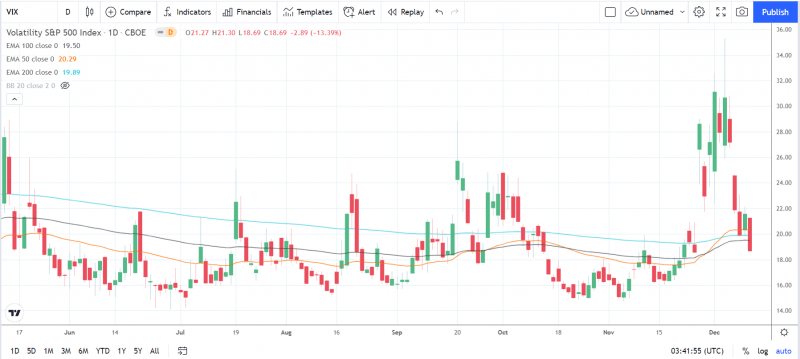
It was back into the red for the VIX on Friday, marking a 4th day in the red for the week.

Reversing an 8.44{1b90e59fe8a6c14b55fbbae1d9373c165823754d058ebf80beecafc6dee5063a} rise on Thursday, the VIX slid by 13.39{1b90e59fe8a6c14b55fbbae1d9373c165823754d058ebf80beecafc6dee5063a} to end the day at 18.69.

The Dow ended the day up by 0.60{1b90e59fe8a6c14b55fbbae1d9373c165823754d058ebf80beecafc6dee5063a}, with the NASDAQ and the S&P500 gaining 0.73{1b90e59fe8a6c14b55fbbae1d9373c165823754d058ebf80beecafc6dee5063a} and by 0.95{1b90e59fe8a6c14b55fbbae1d9373c165823754d058ebf80beecafc6dee5063a} respectively.

The Day Ahead

It’s a quiet day ahead on the Eurozone’s economic calendar. There are no material stats due out of the Eurozone to provide the majors with direction.

From the U.S, there are also no stats to consider, leaving the majors in the hands of OPEC’s monthly report and Omicron news updates.

With the FED in action on Wednesday and the ECB in focus on Thursday, it could be a testy start to the week.

The Futures

In the futures markets, at the time of writing, the Dow Mini was up by 31 points.

For a look at all of today’s economic events, check out our economic calendar.

This article was originally posted on FX Empire

More From FXEMPIRE:

Stocks pare earlier gains with Omicron, inflation in focus

Stocks pare earlier gains with Omicron, inflation in focus

Stocks turned lower Wednesday afternoon as more hawkish remarks from Federal Reserve Chair Jerome Powell compounded with concerns around the Omicron variant and its impacts on the economy. The S&P 500, Dow and Nasdaq each erased earlier gains to dip into the red.

The Centers for Disease Prevention and Control said Wednesday it identified the first confirmed case of the Omicron variant in the U.S.

The Centers for Disease Prevention and Control said Wednesday it identified the first confirmed case of the Omicron variant in the U.S. 

Stocks cut gains after CNN first reported the news around 1:45 p.m. ET, citing an unnamed person familiar with the matter. The U.S. joined more than two dozen other countries in reporting at least one case of the Omicron variant, which was first identified last week by scientists in South Africa. 

The latest development renewed concerns about the potential impact of the new variant for the domestic economy. A day earlier Moderna (MRNA) CEO Stephane Bancel told the Financial Times that the company’s current COVID-19 vaccine would likely see a “material drop” in effectiveness against Omicron, but that more data was still needed on the variant.

This commentary, as well as ongoing uncertainty over the transmissibility and severity of disease caused by the new variant, also contributed to the broader market slide seen on Tuesday. 

“The market doesn’t like an information vacuum, and now we have two,” Thomas Hayes, Great Hill Capital Chairman, told Yahoo Finance Live. “Not only did we have the CEO of Moderna expressing concern that his vaccines may not have full coverage for Omicron, but then you had Powell throw this … wrench into the mix at the hearing saying that maybe we’ll speed up taper by a few months. That’s no small potatoes for sure, because the market had anticipated over six or seven months that we would get another $660 billion of liquidity.”

Namely, Powell told the Senate Banking Committee that it would be appropriate for the central bank to consider completing its asset-purchase tapering process “a few months sooner” than previously telegraphed. Market participants had been anticipating that the Fed might strike a more supportive stance for longer especially given concerns over the latest coronavirus variant. But instead, Powell suggested his priority was on curbing persistently elevated levels of inflation, and the Fed chair added it was “probably a good time to retire” his description of inflation as “transitory.”

“Chairman Powell’s commentary course-corrected the view on inflation and the potential need for quicker policy adjustment,” Charlie Ripley, senior investment strategist for Allianz Investment Management, wrote in an email. “The reality is hotter inflation coupled with a strong economic backdrop could end the Fed’s bond buying program as early as the first quarter of next year.”

“Ultimately, the transitory view on inflation has officially come to an end as Powell’s comments reinforced the notion that elevated prices are likely to persist well into next year,” he added. “With potential changes in policy on the horizon, market participants should expect additional market volatility in this uncharted territory.” 

4:04 p.m. ET: Stocks end whipsaw session lower after first U.S. Omicron case confirmed: Nasdaq drops 1.8{1b90e59fe8a6c14b55fbbae1d9373c165823754d058ebf80beecafc6dee5063a}

Here were the main moves in markets as of 4:04 p.m. ET:

  • S&P 500 (^GSPC): -53.98 (-1.18{1b90e59fe8a6c14b55fbbae1d9373c165823754d058ebf80beecafc6dee5063a}) to 4,513.02

  • Dow (^DJI): -461.65 (-1.34{1b90e59fe8a6c14b55fbbae1d9373c165823754d058ebf80beecafc6dee5063a}) to 34,022.07

  • Nasdaq (^IXIC): -283.64 (-1.83{1b90e59fe8a6c14b55fbbae1d9373c165823754d058ebf80beecafc6dee5063a}) to 15,254.05

  • Crude (CL=F): -$0.79 (-1.19{1b90e59fe8a6c14b55fbbae1d9373c165823754d058ebf80beecafc6dee5063a}) to $65.39 a barrel

  • Gold (GC=F): +$3.30 (+0.19{1b90e59fe8a6c14b55fbbae1d9373c165823754d058ebf80beecafc6dee5063a}) to $1,779.80 per ounce

  • 10-year Treasury (^TNX): -0.9 bps to yield 1.4340{1b90e59fe8a6c14b55fbbae1d9373c165823754d058ebf80beecafc6dee5063a}

2:50 p.m. ET: ‘The market lacks conviction on the upside’: Strategist

Investors are in for more whipsaw stock market action in the very near-term as more information emerges on the new Omicron variant, according to at least one strategist. 

“The price action you’re seeing now really shows the market lacks conviction on the upside,” Niladri Mukherjee, Bank of America head of portfolio strategy, told Yahoo Finance Live on Wednesday.

“In the last couple of weeks, we’ve had two major uncertainties being injected into the market place. One obviously was the news of the new variant, which we know very little about right now. And the second is the possibility of a more hawkish Fed,” he added. “And you’ve seen on different days, on some positive days, you’ve seen a recovery in some of the value and cyclicals which do well when the economy does well. And other days, you’ve seen the secular growth-oriented sectors, like technology doing better than the S&P 500.”

“We think uncertainty will be with us at least in the near-term until we learn more about the virus — its severity, its transmissibility, how much it is evading the vaccines, etc.,” Mukherjee said. “But as we go into 2022, the bigger environment will be that which is really dictated by the Fed’s path to monetary policy normalization.”

12:55 p.m. ET: Bank stocks jump amid rise in Treasury yields

Bank stocks jumped Wednesday afternoon as Treasury yields climbed, with traders pricing in expectations for an interest rate hike by the Federal Reserve next year after its asset-purchase tapering process ends.

The two-year yield, which is sensitive to expectations for monetary policy changes, jumped by about 5.5 basis points Wednesday afternoon to hover around 0.58{1b90e59fe8a6c14b55fbbae1d9373c165823754d058ebf80beecafc6dee5063a}. The yield on the benchmark 10-year Treasury note rose by 1 basis point to 1.45{1b90e59fe8a6c14b55fbbae1d9373c165823754d058ebf80beecafc6dee5063a}. 

The jump in Treasury yields helped lift shares of major banks including JPMorgan Chase and Goldman Sachs, both of which are also Dow components. The KBW Regional Banking Index, an exchange-traded funding tracking bank stocks, rose by more than 3.4{1b90e59fe8a6c14b55fbbae1d9373c165823754d058ebf80beecafc6dee5063a} for its best climb in a month. 

10:05 a.m. ET: ISM Manufacturing index ticks up to 61.1 in November, coming in-line with estimates

Manufacturing sector activity picked up in November compared to October, though inflationary concerns and other price pressures continued to weigh on goods-producing industries.

The Institute for Supply Management’s (ISM) November manufacturing index came in at 61.1 for the month, up from 60.8 in October. Readings above the neutral level of 50.0 indicate expansion in a sector. 

Beneath the headline index, a subindex tracking prices paid eased to 82.4 from 85.7 in October, but still came in elevated compared to pre-pandemic levels amid lingering inflation. A subindex tracking employment improved to 53.3, rising from October’s 52.0. 

“The U.S. manufacturing sector remains in a demand-driven, supply chain-constrained environment, with some indications of slight labor and supplier delivery improvement,” Timothy Fiore, Chair of the Institute for Supply Management Manufacturing survey, said in a press statement. “All segments of the manufacturing economy are impacted by record-long raw materials and capital equipment lead times, continued shortages of critical lowest-tier materials, high commodity prices and difficulties in transporting products.”

“Pandemic-related global issues — worker absenteeism, short-term shutdowns due to parts shortages, difficulties in filling open positions and overseas supply chain problems — continue to limit manufacturing growth potential,” Fiore added. 

9:32 a.m. ET: Stocks rise, S&P 500 and Nasdaq gain more than 1{1b90e59fe8a6c14b55fbbae1d9373c165823754d058ebf80beecafc6dee5063a}

Here’s where markets were trading just after the opening bell:

  • S&P 500 (^GSPC): +48.17 (+1.05{1b90e59fe8a6c14b55fbbae1d9373c165823754d058ebf80beecafc6dee5063a}) to 4,615.17

  • Dow (^DJI): +254.43 (+0.74{1b90e59fe8a6c14b55fbbae1d9373c165823754d058ebf80beecafc6dee5063a}) to 34,738.15

  • Nasdaq (^IXIC): +177.88 (+1.13{1b90e59fe8a6c14b55fbbae1d9373c165823754d058ebf80beecafc6dee5063a}) to 15,712.72

  • Crude (CL=F): +$2.30 (+3.48{1b90e59fe8a6c14b55fbbae1d9373c165823754d058ebf80beecafc6dee5063a}) to $68.48 a barrel

  • Gold (GC=F): +$13.00 (+0.73{1b90e59fe8a6c14b55fbbae1d9373c165823754d058ebf80beecafc6dee5063a}) to $1,789.50 per ounce

  • 10-year Treasury (^TNX): +3.7 bps to yield 1.478{1b90e59fe8a6c14b55fbbae1d9373c165823754d058ebf80beecafc6dee5063a}

8:22 a.m. ET: Private payrolls rose more than expected last month: ADP

Private sector employment expanded more than anticipated in November, suggesting further improvement in the labor market’s recovery.

U.S. private payrolls grew by 534,000 in November compared to October, ADP said in its closely watched monthly report. Consensus economists were looking for private payrolls to rise by 525,000, according to Bloomberg data. Private payrolls had grown by 570,000 in October, according to ADP’s revised monthly figure.

More data on the state of the labor market will be due on Friday, when the Labor Department releases its “official” government jobs report. Consensus economists are looking to see non-farm payrolls rose by 548,000 in November, accelerating modestly from October’s better-than-expected 531,000 rise. ADP’s report has not typically served as a perfect indicator of what to expect from the government job report due to differences in survey methodology. 

7:24 a.m. ET Wednesday: Stock futures hold onto gains, Dow futures gain nearly 300 points

Here’s where markets were trading as of 7:24 a.m. ET: 

  • S&P 500 futures (ES=F): +55.75 points (+1.22{1b90e59fe8a6c14b55fbbae1d9373c165823754d058ebf80beecafc6dee5063a}), to 4,622.00

  • Dow futures (YM=F): +293.00 points (+0.85{1b90e59fe8a6c14b55fbbae1d9373c165823754d058ebf80beecafc6dee5063a}), to 34,750.00

  • Nasdaq futures (NQ=F): +236.00 points (+1.46{1b90e59fe8a6c14b55fbbae1d9373c165823754d058ebf80beecafc6dee5063a}) to 16,386.50

  • Crude (CL=F): +$2.96 (+4.47{1b90e59fe8a6c14b55fbbae1d9373c165823754d058ebf80beecafc6dee5063a}) to $69.14 a barrel

  • Gold (GC=F): +$11.50 (+0.65{1b90e59fe8a6c14b55fbbae1d9373c165823754d058ebf80beecafc6dee5063a}) to $1,788.00 per ounce

  • 10-year Treasury (^TNX): +4.4 bps to yield 1.485{1b90e59fe8a6c14b55fbbae1d9373c165823754d058ebf80beecafc6dee5063a}

6:15 p.m. ET Tuesday: Stock futures rebound 

Here were the main moves in markets as the overnight session kicked off: 

  • S&P 500 futures (ES=F): +22.25 points (+0.49{1b90e59fe8a6c14b55fbbae1d9373c165823754d058ebf80beecafc6dee5063a}), to 4,588.5

  • Dow futures (YM=F): +92 points (+0.27{1b90e59fe8a6c14b55fbbae1d9373c165823754d058ebf80beecafc6dee5063a}), to 34,549.00

  • Nasdaq futures (NQ=F): +93 points (+0.58{1b90e59fe8a6c14b55fbbae1d9373c165823754d058ebf80beecafc6dee5063a}) to 16,243.5

NEW YORK, NEW YORK - NOVEMBER 29: A trader works on the floor of the New York Stock Exchange (NYSE) at the start of trading on Monday following Friday’s steep decline in global stocks over fears of the new omicron Covid variant discovered in South Africa on November 29, 2021 in New York City. Stocks surged in morning trading as investors get more data on the new variant and reports that symptoms have so far been mild for those who have contracted it.  (Photo by Spencer Platt/Getty Images)

NEW YORK, NEW YORK – NOVEMBER 29: A trader works on the floor of the New York Stock Exchange (NYSE) at the start of trading on Monday following Friday’s steep decline in global stocks over fears of the new omicron Covid variant discovered in South Africa on November 29, 2021 in New York City. Stocks surged in morning trading as investors get more data on the new variant and reports that symptoms have so far been mild for those who have contracted it. (Photo by Spencer Platt/Getty Images)

Emily McCormick is a reporter for Yahoo Finance. Follow her on Twitter