

Personal finance taught at HBCUs by ex-athletes

Personal finance taught at HBCUs by ex-athletes

For former NFL player Adewale Ogunleye, seeing anyone, let alone athletes, struggle to manage money boils him to his core.

So, he is doing something about it.

Knowing that the average playing career in the NFL is less than four years, Ogunleye’s “light bulb” moment came in his second year in the league. That’s when he said a teammate who was a high selection in that year’s draft asked him for a loan.

“I’m looking at this guy thinking, ‘I’m undrafted.’ I only had a rookie minimum salary and you’re asking me for a loan? And I was actually in a position where I could give them a loan. And so that’s where I realized there’s a problem,” Ogunleye, who played 11 NFL seasons, told USA TODAY Sports.

‘Invest in inflation’: As costs soar, putting more money into stocks may be good for your 401(k)

Former NFL player Adewale Ogunleye is working to help college students to learn about financial literacy.

Walter Stith, a financial adviser at Morgan Stanley’s Global Sports and Entertainment division, says there is a simple reason to see how wealth grows, and it’s based on the average time an athlete has to produce income in a chosen sport. 

The average career length of athletes in each of the four North American major sports is less than four years. 

Five Personal Finance Thumb Rules To Follow

Five Personal Finance Thumb Rules To Follow

Following certain thumb rules can sort out your finances broadly. Thumb rules may not always give you an accurate picture but can steer you in the right direction as they are usually time-tested processes. They are something that are easily learnt, remembered, and applied.

“Thumb rules help in streamlining our finances. Basically, when we form a rule and follow a time-tested process, our probability to reach financial freedom increases,” says Anant Ladha, founder, Invest Aaj For Kal, a financial planning firm.

Here are five popular personal finance thumb rules that you can follow to sort out your money life. However, ensure they suit your personal circumstances instead of following them blindly.

 1. Maintain an emergency fund equivalent to 6 months of your salary: You know how important it is to create an emergency fund. It always comes to the rescue when you are in crisis. This should include regular expenses, EMIs, and your insurance premiums.

While six months is the general thumb rule, it differs from case to case. For instance, those with secure jobs can look at three months of emergency money, while the self-employed or those into freelance assignments, who face higher uncertainty, can keep aside expenses that can last up to a year.

2. Take a term insurance 10 times of your annual income: The purpose of a life insurance is to replace the income of the insured in case of his or her unfortunate demise. While there are ways to calculate your insurance requirements, the thumb rule is that you should buy life insurance that is equal to at least 10 times your annual income.

It is recommended that you buy a pure term plan as these plans offer a higher coverage at a lower premium.

 3. The rule of 100: This thumb rule suggests that the percentage of equity in your portfolio should be 100 minus your age. So, when you are 30, the equity portion of your portfolio should be 70 per cent. When you are 40, it should be 60 per cent and when you are 50, it should be 50 per cent, and so on. This thumb rule is based on the fact that equity investments deliver good returns over a longer time period as market volatilities even out. So at the start of your career, you should have a higher proportion in equity and reduce your equity exposure as you near retirement.

4. The 35 per cent rule: Some loans like home loans and educational loans are good loans. However, other debt like credit card dues may put a strain on your finances. As a thumb rule, EMI as a percentage of your income should not exceed 35-40 per cent. Anything above that might put a strain on your finances. In case you EMI is more than that, you should avoid taking any more loans.

5. The rule of 72: This thumb rule gives you an indication of how much time it will take you to double your money when you are investing in a certain instrument. It says 72 divided by the rate of return is the time taken for your money to double. So, if your rate of return is 8 per cent, your money will double in nine years and if it is 12 per cent, it will double in six years. Remember, it is important to earn a rate of return that beats inflation. Also, where you invest would depend on your risk appetite and the time to a certain goal.

Thumb rules are meant to act as broad guidelines and are not meant to be followed to the tee. “It is important to remember that everyone is unique. At times according to your financial situation some adjustments need to be made and it’s absolutely acceptable. At times, you may also deviate from the goal, and try to get back on track,” says Ladha.


PERSONAL FINANCE: Organize and protect your important documents, for your family’s sake

PERSONAL FINANCE: Organize and protect your important documents, for your family’s sake

A few weeks ago, my column focused on my recommendation that as parents, we should consider sharing our financial lives with our adult children: “Discuss your finances and your estate with your kids.”  A continuation of this discussion leads to the importance of organizing our personal files — paper and electronic — for the sake of our children, and ourselves as well.  I can promise you, based on my years of experience assisting clients with the administration of their loved one’s estates, that by organizing your files now you will be making life much easier for whoever is tasked with figuring out your financial life following your death.  Your current efforts ultimately will be viewed as an act of extreme consideration!

My guess is that personal organization (i.e., clearing out old files) isn’t one of your top priorities.  It hits everyone’s “To Do” list, and is rolled forward to future To Do lists, and only rarely does it get crossed out.  Since one of the priorities of the financial planning process is to create as smooth a transition as possible upon one’s passing, the present is a good time to start.  Not sorting through your personal files will cause unnecessary angst and stress on whoever ultimately will be tasked with figuring out your personal filing system.

Although (hopefully) falling short of an episode of “Hoarders,” most of us have accumulated copious amounts of paper and digital documents, often physically stored in various locations, and on multiple digital sites.  Some documents should be retained indefinitely and periodically updated as necessary.  This category includes: wills and ancillary estate documents, trust agreements, property deeds and details of capital improvements, documents of family events such as births, deaths and marriage; the list goes on.  A “final letter of instruction” containing funeral and burial arrangements and other instructions that will be of immediate importance should be created and easily accessible.

Then there are documents that should be retained for a reasonable period, such as investment and brokerage statements, mortgage and loan documents, and prior year’s tax returns and supporting documents.  My experience is that most other papers, such as household bills, and bank and brokerage statements, especially when they are available online, should be tossed after a year.

As an aside, I’m frequently asked how long past tax returns should be retained.  Although the IRS recommends three years, there may be tax reasons to retain them for up to seven years.  Personally, and without any clear justification, I tend to retain past tax returns for at least ten years, longer than most of my fellow CPAs typically recommend.

When embarking on a paper clean-up project, here are some guidelines that you might find helpful:

  • Establish the project framework upfront. There are many books and online checklists that can help you create a filing structure (such as an index) and provide recommendations for how long to retain various types of documents.
  • When sorting through papers, ask yourself questions such as:
    • Are your records self-explanatory to others?
    • If not, how can you best provide helpful descriptions? (Post-it notes can fall off!)
    • Are your records in one place and in a consistent format?
    • Should you cancel paper statements that otherwise can be viewed online?

You will want to archive documents in a way that allows for easy access and updating.  Although there are loose-leaf book formats, where possible I find that digital archiving is the best approach.  A further advantage to going digital is to protect your files from fire, theft, and natural disasters such as wild fires and hurricanes.  You may want to explore online “digital vaults” that are easy to navigate and update, while offering a high degree of cybersecurity.  Digital vaults also allow full or limited access for professionals or family members.

Even the best filing system is of little value if those whom you want to have access them don’t know they exist, or don’t know the passwords.  Make sure the appropriate people know how to access your files.  Now is a good time to consider whom to bring into your confidence.

By clearing out useless paper and creating an orderly filing system now, you will reduce the strain on your family down the road.

The author does not provide tax, legal, financial or investment advice. This material has been prepared for informational purposes only. You should consult your own tax, legal, financial and investment advisors before engaging in any transaction.

How to prepare your personal finances for an evacuation

How to prepare your personal finances for an evacuation
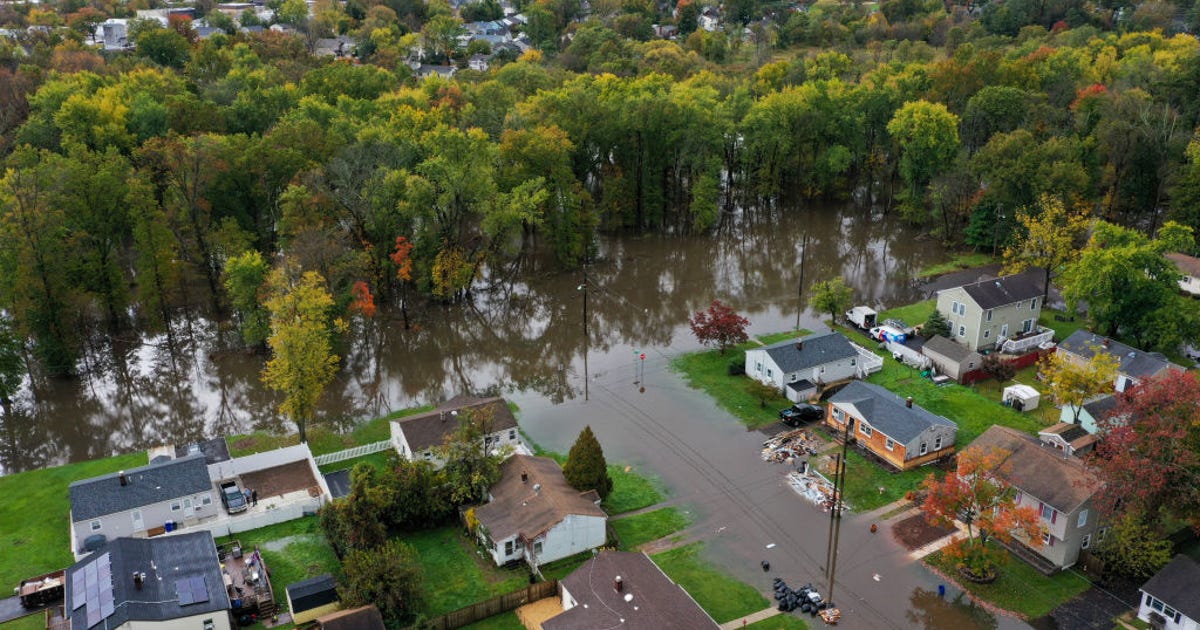
Neighborhood and houses flooded

Neighborhood flooding can lead to mass evacuation, leaving your personal finances vulnerable. 


Getty Images

This story is part of The Cost of Climate Change, CNET’s coverage of how the changing climate impacts a range of financial issues.

Evacuations are increasingly common as climate change leads to more severe weather events. Because storms, flooding and wildfires can devastate an area suddenly, it’s vital to have your finances, important documents and property prepped in case you need to get out quickly. Successful personal finance hygiene requires protecting what you’ve built for yourself from life’s uncertainties.

Of course, we hope you and your family never face an evacuation, and we know it can be grim to think about. But applying a little effort ahead of time can help in a potentially bad situation.

Make sure you have access to cash

Your top priority should be access to liquidity. Keep some cash stashed away somewhere safe in your home. A severe weather event has the potential to knock out the power and render ATMs and credit-card processors useless. Meanwhile, you might need to pay for gas, food, water, a hotel room or other incidental expenses during an evacuation. Keep enough cash on hand to at least get you out into safety. Once you are out of the affected area, you can use your debit card or emergency credit card to pay for basic necessities.

Keep all your receipts for living expenses while you’re unable to return to your home. Though you may have to front some costs, FEMA offers various forms of financial relief for climate disaster evacuees, like temporary housing, among other things. Other organizations may be able to help with costs not covered by FEMA.

What should you bring with you in an evacuation?

While you can back up important documents to a cloud-based service, it’s quite possible that you may be limited by cell service and internet outages. As such, it’s a good idea to keep physical copies of key documents and other important information you may need to access. 

In the event of an evacuation order, there will be very little time to do any packing, so it’s crucial to have your paperwork collected before you’re impacted by a severe weather event. Some documents to gather include:

  • Driver’s licenses and applicable change-of-address addendums
  • Passports
  • Social security cards
  • Birth certificates
  • Credit and debit cards
  • Mortgage account information or lease
  • Utility/recurring bill account information
  • Medical information and proof of vaccinations
  • Tax information
  • Insurance policy information
  • Deed to car(s) and house
  • List of phone numbers (family, work, lenders, service providers)
  • Wills and other legal documents

Make sure you collect these documents for the whole family, including for your partner, parents, siblings and children. And don’t forget the paperwork for your pets. During an evacuation, it’s common to use boarding facilities for your pet, and they often require proof of vaccinations.

It may be possible to take small valuables with you in an evacuation if you’re prepared. Have a to-go bag with your paperwork and a list of valuables so you can collect them quickly. Consider including a solar-powered phone charger and anything you would need to live for a few days or weeks, such as medications. Being prepared will help ensure you don’t miss anything important.

To complement your insurance protection, maintain an inventory of the items in each room of your home. This will help keep track of items for insurance purposes in case they’re damaged or stolen. Check out our guide to documenting your possessions for emergency preparation for more details.

How to protect your home

Stay on top of your homeowners insurance policy. Regularly review your coverage and make sure there are no lapses. Typical homeowners policies will cover damage from hurricanes, tornadoes, hail, wind, lightning and volcanoes. Note that flood, earthquake and mudslide damage is typically not covered in a traditional policy. If your home is in a FEMA-designated Special Flood Hazard Area, or SFHA, then you’re required to maintain flood insurance. But you might consider it in any case. 

“Roughly 40{1b90e59fe8a6c14b55fbbae1d9373c165823754d058ebf80beecafc6dee5063a} of properties suffering flood losses are not in SFHAs, and as homeowner policies don’t typically cover flood events, many incur significant financial loss year after year,” said Steve Murchison, vice president of MassiveCert, a flood certification company based in Florida. 

He added that flood maps are based on local hydrology studies, which have not historically accounted for climate change: “It’s a multiyear process from the time a community embarks on a new hydrology study to new FIRMs [flood insurance rate maps] becoming effective. By the time a new map is published, it’s often already ‘out of date.’ Not to say that new maps aren’t better than old ones, but flood risk for many communities is changing faster than the mapping and approval process can keep up.”

Consider your local risk factors and keep an eye on drainage problems and any issues that start to crop up during heavy rains around your home and neighborhood. Stay alert to pivot to flood coverage if you suspect your home may be getting vulnerable to severe weather events as they become more prevalent.

How to protect your car

If you have a car, you may use it to evacuate. If you have advance notice of an upcoming severe weather event, it’s a good idea to fuel up or charge your car ahead of time.

Consider the routes you would take in an emergency evacuation. You want to stay safe, but you also want to prevent expensive and unnecessary damage to your vehicle. Discern areas that may be prone to flooding, mudslides or downed trees, and plan viable alternative routes in case some roads get blocked. You don’t want to drive through a puddle that’s deeper than it looks. It may also prove worthwhile to keep some hard copies of maps in your car.

You’ll typically need a comprehensive car insurance policy to get covered for flood, storm or wildfire damage — basic collision and liability won’t cut it. 

Danielle Marchelle, a licensed insurance agent and spokeswoman for the insurance company The Zebra, pointed out the importance of timely preparation: “With both home and car insurance, be sure you’re covered well in advance of a storm. Disaster coverage typically doesn’t take effect for 30 days, and as inclement weather approaches, several insurance companies enact ‘binding restrictions’ making getting coverage impossible until after the storm.”

How to handle your job

Write down any phone numbers and email addresses for people you interact with on a regular basis in your job and keep it with your other important documents. If you use a work computer or have any other essential work item, take it with you when you evacuate, since you don’t know how long it could be until you return home.

If you evacuate, contact your boss and let them know what’s happening as soon as it’s safe to do so. Together you’ll figure out the best plan of action moving forward. Likewise, contact any clients or teammates who rely on you to maintain your business connections. 

Post-disaster scams and relief

Another harsh reality of climate disasters is that they come with their fair share of scammers. If you familiarize yourself with the traits of some common relief scams, you can better recognize nefarious activity post-evacuation when your focus is likely compromised.

The Consumer Financial Protection Bureau advises that disaster survivors watch out for certain suspect behaviors when accepting help after a severe weather event. One red flag includes organizations with names that are similar to official government entities. Also look out for anyone trying to sell an after-the-fact insurance policy or anyone charging upfront fees for disaster relief or loans. The bureau also recommends not accepting help from contractors offering services door to door, especially if they demand immediate payment or offer discounts.

After you’ve evacuated, contact your mortgage lender or landlord, utility providers and other service providers. Oftentimes they’ll be able to offer some sort of assistance in the wake of a disaster. Along with FEMA, charitable organizations will likely be available to offer help. Take advantage of the resources at your disposal.

Opinion: Personal finance courses should be mandatory in college

Opinion: Personal finance courses should be mandatory in college

Discovering about personal finance will established pupils up for results past graduation

A multitude of distinctive facets go into individual finance this sort of as spending costs and taxes, controlling credit rating, creating a price range and investing in investments. However, far too many school students know following to absolutely nothing on the subject matter.

In buy to give college learners the self esteem and understanding they require to make their own monetary selections and have an understanding of personalized finance, the subject matter ought to be a expected study course in every college or university curriculum.

Ann Atkinson, government director of the T.W. Lewis Centre for Particular Progress, believes in the great importance of personal finance education for younger adults.

“Mastery of standard personal finance is vital at a youthful age in buy to pave the path for economical peace in the potential,” she stated.

The U.S. is commencing to incorporate financial literacy into superior university education, with 25 states having launched legislation to involve particular finance schooling in large schools this 12 months. 

7 states currently educate a 50 {1b90e59fe8a6c14b55fbbae1d9373c165823754d058ebf80beecafc6dee5063a}-semester, standalone class focusing only on personalized finance, and just around 20 states have to have some kind of private finance education, which can be included into other programs and is not needed to be its have class.

Heber Toscano, a junior finding out aerospace engineering and peer academic chief with Barrett, The Honors College or university, hosted a “Funding in Higher education” celebration for Barrett learners. 

He experienced initially received an fascination in personal finance in the course of his freshman calendar year of faculty soon after knowing it was by no means taught to him. He reported was hungry to study about particular finance, so he had to take matters into his individual palms. 

“It would be good to have a curriculum-primarily based requirement for particular finance, as it can be mind-boggling for learners to do their possess investigation,” Toscano reported. 

If own finance is developed into higher education curricula, learners will be certain information on the fundamental principles of the subject matter in advance of they graduate university, one thing which is extremely important for individuals entering modern society and the workforce. A single topic college students know astonishingly minimal about is investing, which Atkinson explained, can do a great deal of very good for college students.

“Think about what very good you could do in the world if your income was at get the job done for you, developing even although you rest,” Atkinson stated.

Investing and earning interest on individuals investments can maximize the total of money you have 12 months by yr, without the need of anyone touching the funds. Nevertheless, these opportunities really don’t signify substantially if young men and women do not know they exist or how to use them. 

Additional, misunderstanding personal finance can final result in mishandling funds and earning blunders which can have outcomes that final for yrs.

Freshly graduated college students could be very easily targeted by ripoffs, and some learners can even accidentally dedicate money crimes. These crimes, even when dedicated accidentally, can lead to fines, very poor monetary information and even jail time. 

Comprehension finance — what is authorized and what is illegal — is critical for faculty college students.

Speaking about finance can support one particular understand much more about it. Toscano prompt “trying to get someone who’s wiser than you and has additional experience in daily life” can educate a whole lot about personalized finance, as they know what to do and what not to do, serving to to stay clear of building harmful economic blunders.


Attain the columnist at amsolom2@asu.edu and follow @_alexmarie on Twitter.

Like The Condition Press on Fb and stick to @statepress on Twitter.

Editor’s notice: The opinions introduced in this column are the author’s and do not indicate any endorsement from The State Push or its editors.

Want to join the discussion? Mail an electronic mail to opiniondesk.statepress@gmail.com. Continue to keep letters under 500 words and be confident to include your college affiliation. Anonymity will not be granted.

Proceed supporting university student journalism and donate to The Condition Push today.

Teaching Children Personal Finance In A Fun And Effective Way

Teaching Children Personal Finance In A Fun And Effective Way

Mark Twain once explained, “I by no means permit my education interfere with my training.” In a entire world where by “schooling” is more obtainable and obtainable than at any time in human history, we have billions of our global local community suffocating monetarily.

Approximately 80{1b90e59fe8a6c14b55fbbae1d9373c165823754d058ebf80beecafc6dee5063a} of the planet earns less than $10 a working day, which is regarded partially thanks to deficiency of access to schooling with “quality” education and learning. On the other hand, we have a distinctive style of monetary hardship thanks to the “overindulgence” in education. The general college student credit card debt in the US has now developed up to a staggering $1.57 trillion, acting as a fiscal millstone to an complete technology.

We hardly ever choose the time to phase back again and inquire the difference between “schooling” and “education” which Mark Twain alluded to all people decades ago. Is it the education by itself somewhat than entry to education that is the fundamental obstacle?

Paul O’Mahony, the founder of FUNancial Flexibility Ltd and Rethink Academy Ltd has a individual fascination in this topic. As the son of two instructors, he was introduced up as a result of the tried and dependable system of finding educated, acquiring a everlasting career, and retiring in your sixties which seemed to operate fairly nicely right until the late 20th century. 

What he observed on the other hand as a graduate of the 12 months 2000, that the confident-hearth method for good results seemed to have improved. At 30 several years of age, ten several years into his company job in Ireland, having followed the method to a tee, he identified himself with above 50 {1b90e59fe8a6c14b55fbbae1d9373c165823754d058ebf80beecafc6dee5063a} a million bucks of debt and nonetheless viewed as a “success” amongst his peers.

“As a 30-calendar year-previous, I discovered two significant distinctions. The 1st was that wealth and intelligence were not essentially related, which I want I had uncovered a very long time ago. Next, that we are likely to evaluate economic accomplishment based mostly on the letters right after our title (educational skills) relatively than the figures in our financial institution account,” mentioned O’Mahony. 

O’Mahony factors to four essential motives why educating little ones about personalized finances is a lot more vital than ever.

1. Our university techniques do not equip our youth with the abilities they have to have to prosper in today’s environment. Even with the best attempts of superb teachers throughout the world, in most scenarios, the predefined syllabus that dates again decades should be made use of as the main basis of the teachings. By the time textbooks are penned and posted nowadays, they are already out of day. 

2. Kids and teenagers are actively disengaging from school as they obstacle the relevance of finding out a lot of the material they are confronted with every working day. This can final result in believing from a younger age that they are not “smart” and that education is just not for them. We could as an alternative be nurturing the genius inside of every kid and see how they could possibly turn it into an entrepreneurial endeavor.

3. Empowering our youth with economic capabilities from a young age will massively aid reduce the issues we have with poverty globally. Dollars management is a talent that as soon as you have, stays with you for life. These economic skills can then be passed within and beyond households.

4. It has by no means been less complicated to get began and produce an money from home without having the reliance on owning to be employed by anyone else. Today’s youth most likely can resolve numerous of the world’s most major difficulties, including poverty, when proven how to use their most major assets in a productive and economical way. 

The goal of FUNancial Flexibility is to empower children and teenagers across the globe to lead a lifetime of good results, exciting, and economic prosperity.

By their schooling methods, they offer entertaining, participating and most of all incredibly useful competencies for the world we stay in now this kind of as understanding about different elements of funds, how the banking process is effective, how to earn funds, and then expand it through conserving and investing, even checking out progressive methods of giving back again, earning an effects, and serving to some others.

This supply is all within a virtual world not dissimilar to the metaverse, which will allow young children and teenagers to immerse them selves in an setting they can come to feel really at ease in. “The time has appear to reinvent what understanding signifies for our little ones and teens currently. We should let them to uncover their genius and permit it glow,” says O’Mahony.